
Brain Hemorrhage Treatment in Mumbai
Brain Hemorrhage Treatment in Mumbai by a Leading Neurosurgeon
Expert Brain Care by Dr. Mazda K. Turel
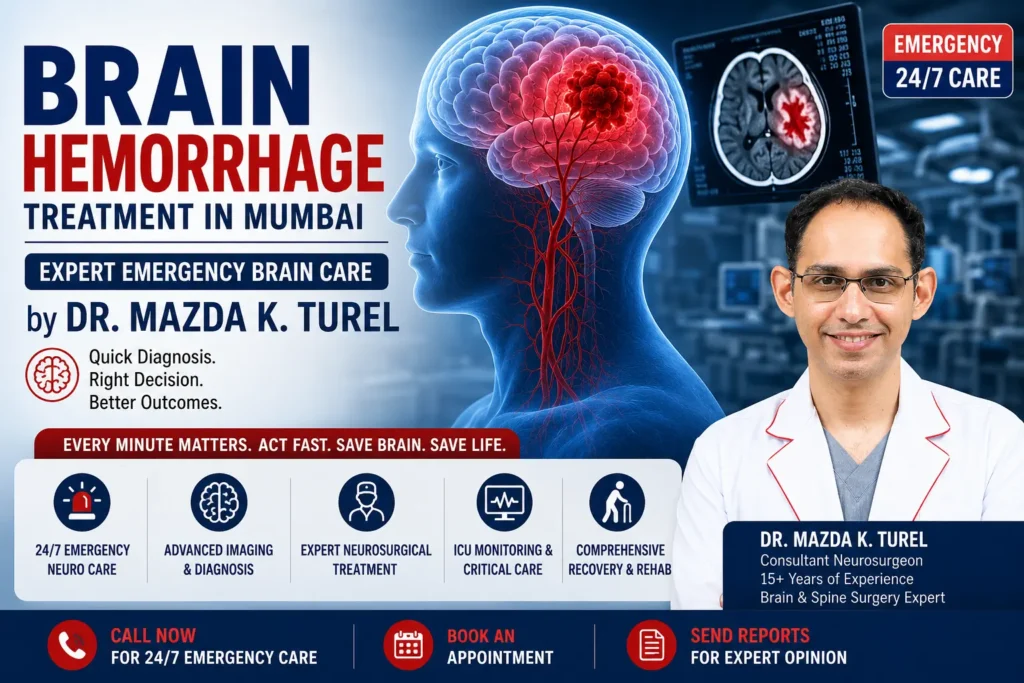
A brain hemorrhage is a serious medical emergency where bleeding occurs inside the brain or around its protective layers. It can happen suddenly and may affect speech, movement, consciousness, breathing, memory, and overall brain function. When this happens, every minute matters. The patient needs quick evaluation, accurate imaging, emergency stabilization, and the right neurosurgical decision.
Dr. Mazda K. Turel provides advanced Brain Hemorrhage treatment in Mumbai with a careful, emergency-focused approach. With 15+ years of neurosurgical experience, he helps patients and families understand the condition, the risk, the treatment options, and the next steps with clarity. The goal is to control bleeding, reduce pressure on the brain, protect neurological function, and support recovery.
If you or your loved one has sudden severe headache, vomiting, weakness, seizures, confusion, drowsiness, speech difficulty, or loss of consciousness, do not wait. Brain Hemorrhage treatment must begin as early as possible to improve the chances of a safer outcome.
What Is a Brain Hemorrhage?
A brain hemorrhage means bleeding inside the skull. This bleeding may occur within the brain tissue, on the surface of the brain, between the brain coverings, or after a head injury. Because the skull is a closed space, bleeding can increase pressure and disturb the normal working of the brain.
Brain Hemorrhage treatment depends on the location, amount of bleeding, cause of bleeding, patient’s consciousness level, blood pressure, age, medical history, and neurological condition. Some small bleeds may be managed with close monitoring and medicines, while larger or dangerous bleeds may need urgent neurosurgical care.
A hemorrhage may occur because of high blood pressure, head trauma, aneurysm rupture, blood vessel malformation, blood-thinning medicines, bleeding disorders, brain tumor, liver disease, or weak blood vessels. In many patients, the first sign is sudden and severe. That is why fast hospital care is important.
Types of Brain Hemorrhage
The treatment plan becomes clearer when the type of bleeding is identified. A neurosurgeon studies the CT scan, MRI, angiography, symptoms, and neurological examination before deciding the next step.
Intracerebral hemorrhage happens when bleeding occurs inside the brain tissue. Subarachnoid hemorrhage happens when bleeding occurs on the surface of the brain, often due to an aneurysm. Subdural hematoma develops between the brain and its outer covering, often after trauma, especially in elderly patients or people taking blood thinners. Epidural hematoma is usually linked to head injury and can become life-threatening quickly.
Each type needs a different plan. Brain Hemorrhage treatment may include ICU care, blood pressure control, medicines, repeat scans, surgery, clot evacuation, aneurysm treatment, or pressure management depending on the emergency.
Symptoms That Need Immediate Attention
Brain bleeding can look different from person to person. Some patients collapse suddenly. Others may first complain of a severe headache or vomiting. Some may become confused, weak, drowsy, or unable to speak properly.
Common warning symptoms include sudden severe headache, vomiting, seizure, fainting, weakness of one side of the body, facial drooping, slurred speech, vision changes, imbalance, neck stiffness, altered behavior, confusion, unequal pupils, or loss of consciousness. If these symptoms appear suddenly, emergency evaluation is necessary.
Families should not wait for symptoms to settle at home. Brain Hemorrhage treatment is time-sensitive because pressure and swelling can worsen quickly. Early diagnosis can help the medical team decide whether the patient needs observation, medicines, ICU support, or surgery.
Emergency Diagnosis and First Evaluation
The first priority is to stabilize the patient. The doctor examines the patient’s breathing, blood pressure, pulse, oxygen level, consciousness level, pupil response, limb strength, and signs of elevated brain pressure. Emergency imaging is usually needed to confirm bleeding and understand its size and location.
A CT scan is often the first test because it quickly detects fresh bleeding. MRI may be advised in selected cases for detailed evaluation. CT angiography, MR angiography, or digital subtraction angiography may be needed if an aneurysm, AVM, or abnormal blood vessel is suspected. Blood tests help check clotting, infection, sugar level, kidney function, and the effect of blood-thinning medicines.
Brain Hemorrhage treatment begins with correct diagnosis. Without knowing where the bleeding is and why it happened, treatment cannot be planned safely.
Treatment Approach for Brain Hemorrhage in Mumbai
The treatment approach focuses on quick decision-making and coordinated emergency care. Dr. Mazda K. Turel evaluates the patient’s scan, neurological condition, medical history, and risk factors before recommending the most suitable plan.
Brain Hemorrhage treatment may include emergency observation in ICU, control of blood pressure, medicines to reduce swelling, medicines to prevent seizures, reversal of blood-thinning medicines, oxygen support, ventilator support if required, and continuous neurological monitoring. In selected patients, surgery may be required to remove the clot, reduce pressure, treat aneurysm-related bleeding, or manage traumatic bleeding.
The treatment decision is always personalized. The same amount of bleeding may affect two patients differently depending on the location and brain pressure. That is why expert neurosurgical judgment is important.
When Is Surgery Needed?
Not every brain hemorrhage needs surgery. Some patients can be treated with medicines, monitoring, and repeat scans. Surgery may be advised when there is a large clot, worsening consciousness, increasing brain pressure, hydrocephalus, aneurysm rupture, traumatic hematoma, or bleeding that is causing dangerous compression.
Brain Hemorrhage treatment through surgery may include clot removal, decompression, drainage of fluid, aneurysm clipping, endovascular support when needed, or evacuation of subdural or epidural hematoma. The aim of surgery is to reduce pressure, prevent further damage, and give the brain the best possible chance to recover.
Dr. Mazda K. Turel explains the need for surgery, expected benefits, risks, ICU stay, recovery path, and possible rehabilitation needs to the family in simple words. In emergencies, decisions may need to be taken quickly, but families are guided with honesty and clarity.
Causes and Risk Factors
High blood pressure is one of the major risk factors for brain bleeding. Long-term uncontrolled hypertension can weaken small blood vessels in the brain. Trauma is another common cause, especially after falls, road accidents, or head injuries. Aneurysms, arteriovenous malformations, bleeding disorders, liver disease, and blood thinner use can also increase risk.
Brain Hemorrhage treatment also includes identifying and managing the cause. If the cause is not treated, the risk of repeat bleeding or complications may remain. Patients may need long-term blood pressure control, medicine review, lifestyle changes, follow-up imaging, or treatment of abnormal blood vessels.
People with diabetes, smoking habits, alcohol overuse, elderly age, previous stroke, repeated falls, or use of anticoagulants should be more careful about sudden neurological symptoms.
Brain Hemorrhage After Head Injury
Bleeding after head injury can happen immediately or slowly over hours to days. Some patients may feel normal for a short time after a fall and then become drowsy, confused, or weak later. This is especially important in elderly patients and those taking blood-thinning medicines.
Brain Hemorrhage treatment after trauma depends on the type of bleeding, size of clot, swelling, fracture, and neurological condition. A small bleed may need observation and repeat CT scans. A larger bleed may need urgent surgical evacuation. Families should never ignore symptoms after head injury, especially vomiting, severe headache, confusion, sleepiness, seizure, or weakness.
Recovery After Brain Hemorrhage
Recovery is different for every patient. It depends on the size and location of bleeding, cause, age, previous health, treatment timing, and neurological damage. Some patients recover with mild weakness or fatigue. Others may need long-term rehabilitation for speech, walking, hand movement, swallowing, memory, or daily activities.
Brain Hemorrhage treatment continues even after the emergency is controlled. Recovery may involve ICU care, ward care, physiotherapy, occupational therapy, speech therapy, nutrition support, seizure management, blood pressure control, and follow-up scans. Family support plays a major role in recovery.
Dr. Mazda K. Turel guides patients and relatives about realistic expectations, warning signs, medicines, follow-up schedule, and rehabilitation planning. The aim is not only survival, but better functional recovery and safer long-term care.
Why Choose Dr. Mazda K. Turel?
Brain hemorrhage care needs experience, calm decision-making, and strong neurosurgical judgment. Dr. Mazda K. Turel is a leading neurosurgeon in Mumbai with 15+ years of experience in brain and spine surgery. He is known for his patient-focused communication, precise surgical planning, and emergency neurosurgical care.
Patients and families choose him for Brain Hemorrhage treatment because they need a doctor who can explain a frightening condition clearly and act quickly when time matters. His experience helps in managing complex brain emergencies, reviewing imaging carefully, and choosing the right treatment approach for each patient.
Patients receive care supported by emergency services, ICU monitoring, imaging support, and multidisciplinary coordination. This is important because brain hemorrhage patients may need neurosurgery, critical care, radiology, rehabilitation, and medical management together.
Second Opinion for Brain Hemorrhage Cases
Sometimes families are told that surgery is required, or that surgery is risky, or that the patient needs ICU care. In such situations, a second opinion can help clarify the diagnosis and treatment direction. Brain Hemorrhage treatment decisions can be complex, especially when the patient is elderly, unconscious, on blood thinners, or has multiple health problems.
You can consult Dr. Mazda K. Turel for report review, CT scan review, MRI review, angiography review, and treatment planning. A second opinion may help families understand whether surgery is needed, what the risks are, whether conservative treatment is possible, and what recovery may look like.
Preventing Future Brain Hemorrhage Risk
Prevention depends on the cause. Regular blood pressure monitoring and appropriate medication are essential for patients with high blood pressure. Patients on blood thinners should take them only as advised and follow up regularly. People with aneurysms or vascular malformations may need specialist review. After trauma, fall prevention becomes very important, especially in older adults.
Brain Hemorrhage treatment should also include long-term education. Patients may need lifestyle changes such as reducing smoking, limiting alcohol, controlling diabetes, improving diet, taking medicines properly, and attending follow-up visits. Prevention cannot remove every risk, but it can reduce avoidable complications.
Family Guidance During Emergency Care
In a sudden brain emergency, families often feel helpless because the patient may not be able to explain symptoms or make decisions. Clear communication becomes very important. During Brain Hemorrhage treatment, the family is updated about scan findings, patient condition, possible risks, treatment options, and the reason behind each medical step.
Brain Hemorrhage treatment may move from emergency room care to ICU care, surgery, or rehabilitation depending on how the patient responds. This journey can feel stressful, so families should keep previous reports, medicine lists, allergy details, and information about blood thinners ready. These small details can help the team plan safer care.
Follow-Up After Discharge
Discharge from the hospital does not mean the recovery process is complete. Brain Hemorrhage treatment often requires follow-up visits, medicine adjustment, repeat imaging, blood pressure monitoring, and rehabilitation review. Patients may need help with walking, speech, swallowing, hand movement, memory, or daily routine for some time.
Long-term Brain Hemorrhage treatment also focuses on preventing repeat bleeding where possible. Dr. Mazda K. Turel guides patients about warning signs, activity precautions, follow-up scans, and when to return to the hospital. If symptoms such as new weakness, severe headache, vomiting, seizure, confusion, or drowsiness return, urgent medical care is needed.
Choosing the right team for Brain Hemorrhage treatment helps patients move from emergency care to recovery with better planning and confidence.
Book Emergency Consultation
If you are looking for Brain Hemorrhage treatment in Mumbai, consult Dr. Mazda K. Turel for expert neurosurgical evaluation and emergency brain care. Sudden headache, vomiting, weakness, seizure, confusion, speech difficulty, drowsiness, or loss of consciousness should be treated as urgent warning signs.
Call now for emergency guidance, book an appointment, or share your reports for expert neurosurgical review. Early action can make a major difference in brain emergencies.

Emergency Cases
Please feel welcome to contact our friendly reception staff with any general or medical equiry call us.
Frequently Asked Questions
What is brain hemorrhage?
Brain hemorrhage means bleeding inside the brain or around the brain coverings. It can increase pressure inside the skull and affect brain function.
Is brain hemorrhage an emergency?
Yes. Brain hemorrhage can be life-threatening and needs immediate medical evaluation.
What are the symptoms of brain hemorrhage?
Symptoms may include sudden severe headache, vomiting, weakness, seizure, confusion, speech difficulty, vision change, drowsiness, or loss of consciousness.
Is surgery always needed?
No. Some patients are managed with medicines, ICU monitoring, and repeat scans. Surgery is advised when bleeding causes serious pressure, worsening symptoms, or a surgically treatable clot.
How is brain hemorrhage diagnosed?
CT scan is commonly used in emergencies. MRI, angiography, and blood tests may be advised depending on the suspected cause.
Can a patient recover after brain hemorrhage?
Recovery depends on the severity, location, treatment timing, age, and overall health. Rehabilitation often helps patients regain strength, speech, balance, and daily function.
When should I call a neurosurgeon?
Call immediately if there is sudden severe headache, seizure, weakness, confusion, vomiting, loss of consciousness, or brain bleeding seen on CT or MRI.