
Trigeminal Neuralgia Treatment in Mumbai
Trigeminal Neuralgia Treatment in Mumbai by an Expert Neurosurgeon
Advanced Facial Pain Care by Dr. Mazda K. Turel
Face nerve conditions such as trigeminal neuralgia are among the most painful. There may be a feeling of electric shock, stabbing pain, burning or sudden face pain with a shooting sensation described by the patient. The pain may last for a few seconds, but it can return many times a day and disturb eating, speaking, brushing, smiling, shaving, washing the face, or even touching the skin.
Dr. Mazda K. Turel provides advanced Trigeminal Neuralgia Treatment in Mumbai for patients who need clear diagnosis, expert neurosurgical guidance, and long-term pain relief planning. With 15+ years of experience in brain, spine, and nerve-related conditions, he helps patients understand why the pain is happening, which treatment options are suitable, and when surgical care may be required.
The goal is not only to reduce pain but also to improve confidence, daily comfort, and quality of life.
What Is Trigeminal Neuralgia?
Trigeminal neuralgia is a condition that affects the trigeminal nerve, which carries sensation from the face to the brain. This nerve has branches that supply the forehead, cheek, jaw, teeth, gums, lips, and parts of the nose. When the nerve becomes irritated or compressed, it can send sudden pain signals even during normal activities.
Trigeminal Neuralgia Treatment depends on the pain pattern, affected nerve branch, patient age, general health, MRI findings, medicine response, and severity of attacks. In many patients, the pain is triggered by simple actions like chewing, talking, brushing teeth, drinking cold water, applying makeup, or a light breeze touching the face.
Because the pain may feel like dental pain, many patients first visit dentists and may even undergo tooth procedures before the correct diagnosis is made. A specialist evaluation helps identify whether the pain is truly nerve-related.
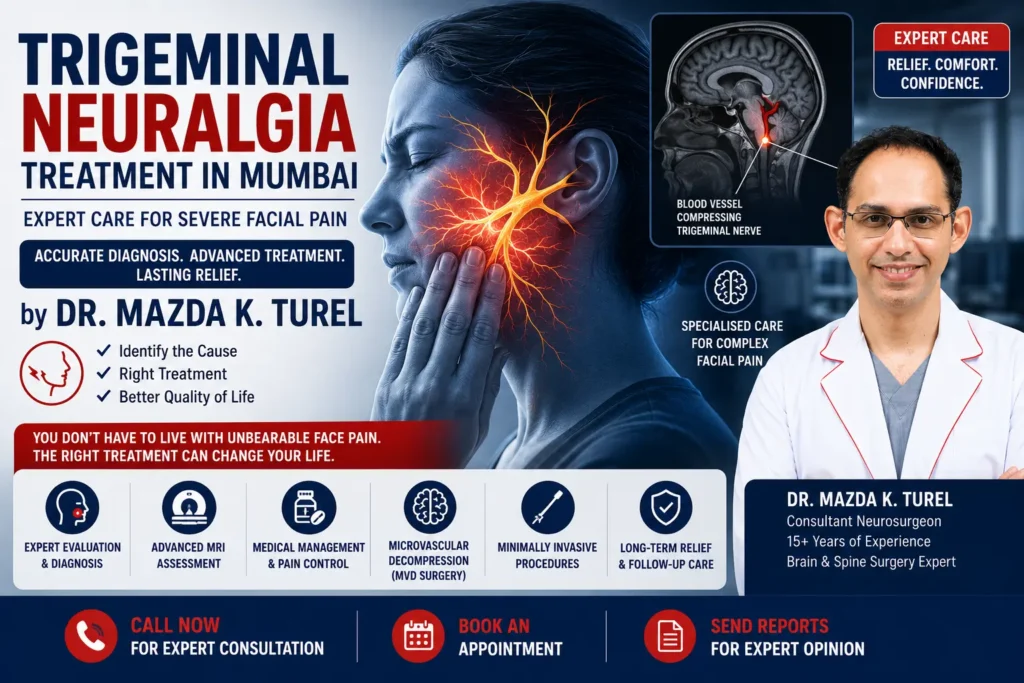
Common Symptoms of Trigeminal Neuralgia
The main symptom is sudden facial pain, usually on one side. It may affect the cheek, jaw, teeth, lips, nose, forehead, or around the eye. The pain can come in short attacks and may feel like an electric shock. Some patients have multiple attacks in a day, while others may have pain-free periods between episodes.
You should consider Trigeminal Neuralgia Treatment if you experience repeated one-sided facial pain, shock-like pain while chewing, pain triggered by touching the face, sudden jaw or cheek pain without clear dental cause, or facial pain that does not improve with routine painkillers.
Some patients become afraid to eat, talk, brush, or go outside because they fear the next p
Why Correct Diagnosis Matters
Facial pain can happen due to dental problems, sinus disease, migraine, temporomandibular joint disorder, ear conditions, nerve inflammation, tumors, or other neurological causes. That is why a careful diagnosis is important before starting treatment.
Dr. Mazda K. Turel evaluates the pain location, trigger points, duration of attacks, frequency, medical history, previous dental treatment, medicine response, and neurological signs. MRI may be advised to look for nerve compression, blood vessel contact, tumors, multiple sclerosis-related changes, or other causes.
Trigeminal Neuralgia Treatment should be planned only after understanding the exact cause and type of pain. A wrong diagnosis can lead to repeated medicines, unnecessary dental work, delayed relief, and continued suffering.
Types of Trigeminal Neuralgia
Trigeminal neuralgia may be classical, secondary, or atypical depending on the cause and pain pattern. Classical trigeminal neuralgia is often linked to a blood vessel pressing on the trigeminal nerve near the brainstem. Secondary trigeminal neuralgia may occur due to another condition such as tumor, multiple sclerosis, or structural changes. Atypical facial pain may have more constant burning or aching symptoms along with sharp attacks.
The best Trigeminal Neuralgia Treatment plan depends on identifying which type is present. Patients with classical nerve compression may respond well to medicines at first, but surgery may be considered if medicines stop working or cause side effects. Patients with secondary causes need treatment focused on the underlying condition.
Medical Management for Facial Pain Relief
Medicines are usually the first step for many patients. Commonly used medicines may include anti-seizure or nerve-calming medicines that reduce abnormal pain signals. Carbamazepine or oxcarbazepine are commonly used options, but the final medicine choice depends on the patient’s health, age, other medicines, and tolerance.
During Trigeminal Neuralgia Treatment, medicine doses may need adjustment under medical supervision. Patients should not start, stop, or change these medicines without guidance because side effects, interactions, and monitoring may be important. Some patients experience good relief for months or years. Others may notice that medicines become less effective over time or cause sleepiness, dizziness, imbalance, low sodium, or other problems.
When Medicines Are Not Enough
Surgery or procedures may be considered when medicines fail to control pain, side effects become difficult, the pain keeps returning, or the patient’s daily life is severely affected. Some patients also prefer a long-term option when pain attacks become frequent and unpredictable.
At this stage, Trigeminal Neuralgia Treatment becomes more specialized. The doctor reviews MRI findings, nerve compression, patient fitness, pain severity, age, expectations, and previous treatment history. The aim is to choose a safe and suitable option rather than offering one standard procedure for everyone.
Microvascular Decompression for Trigeminal Neuralgia
Microvascular decompression, also known as MVD, is a surgical treatment used for selected patients, especially when a blood vessel is compressing the trigeminal nerve. The aim is to separate the blood vessel from the nerve so that abnormal irritation can reduce.
For suitable patients, Trigeminal Neuralgia Treatment with MVD may offer strong long-term pain relief potential because it targets the suspected cause of classical trigeminal neuralgia. However, it is a neurosurgical procedure and requires careful patient selection, imaging review, risk discussion, and surgical planning.
Dr. Mazda K. Turel explains whether MVD is suitable, what the procedure involves, what the possible benefits are, what risks need to be understood, and what recovery may look like.
Other Advanced Treatment Options
Not every patient is suitable for microvascular decompression. Some patients may need less invasive procedures based on age, health condition, pain pattern, or surgical risk. Other options may include radiofrequency procedures, balloon compression, glycerol injection, stereotactic radiosurgery, or other pain-control procedures depending on the case.
Trigeminal Neuralgia Treatment must be individualized because each option has different benefits, risks, recurrence chances, and recovery expectations. Some procedures may provide faster relief but may carry a chance of facial numbness. Others may take time to show effect. A detailed discussion helps the patient choose wisely.
Why Choose Dr. Mazda K. Turel?
Dr. Mazda K. Turel brings neurosurgical experience, patient-friendly communication, and advanced understanding of brain and nerve-related conditions. Patients looking for Trigeminal Neuralgia Treatment often come after months or years of pain, fear, wrong diagnosis, dental procedures, medicine side effects, or repeated pain attacks. They need a doctor who can listen carefully and explain the condition in simple language.
Dr. Turel focuses on accurate diagnosis, responsible treatment planning, and clear guidance. His approach helps patients understand whether medicines, procedures, or surgery may be suitable. The patient and family are guided step by step so they do not feel lost or rushed.
Treatment Journey: What to Expect
Your consultation begins with a detailed discussion of your facial pain. The doctor will ask where the pain occurs, how long each attack lasts, what triggers it, whether there are pain-free periods, what medicines have been tried, and whether dental or sinus treatment has already been done.
For Trigeminal Neuralgia Treatment, patients are advised to bring MRI scans, prescriptions, blood reports, dental history, previous procedure details, and current medicine list. After examination and report review, a treatment plan is created. This may include medicine adjustment, further imaging, surgery planning, or procedure discussion depending on the condition.
Recovery and Long-Term Care
Recovery depends on the type of treatment used. Patients managed with medicines need monitoring for pain control and side effects. Patients undergoing procedures or surgery need follow-up to assess pain relief, facial sensation, healing, and recurrence risk.
Trigeminal Neuralgia Treatment should also include education about triggers, medicine timing, warning signs, and follow-up. Some patients may need long-term monitoring because trigeminal neuralgia can return after a pain-free period. Others may achieve strong relief after the right procedure. The plan should always remain practical and patient-specific.
Living With Trigeminal Neuralgia
Living with trigeminal neuralgia can be emotionally exhausting. Patients may avoid eating in public, stop social activities, fear brushing their teeth, or become anxious about sudden pain. It may be difficult for families to understand how intense the pain is due to the brief but intense nature of the attacks.
Good Trigeminal Neuralgia Treatment should address both pain relief and daily-life confidence. Patients need reassurance that the condition is real, treatable, and manageable with the right specialist care. Early evaluation can prevent unnecessary suffering and help patients regain control over routine activities.
Second Opinion for Facial Pain
A second opinion is helpful if you have been diagnosed with trigeminal neuralgia but are unsure about treatment, if medicines are not working, if surgery has been advised, or if MRI findings are confusing. Many patients also seek another opinion after repeated dental procedures fail to relieve pain.
Dr. Mazda K. Turel provides detailed second opinion support for Trigeminal Neuralgia Treatment in Mumbai. Patients can bring MRI scans, medicine history, pain records, dental treatment details, and previous consultation notes. This helps clarify the diagnosis and treatment choices.
When Should You Book an Appointment?
You should book a consultation if facial pain is sudden, repeated, one-sided, shock-like, triggered by touch or chewing, or not explained by dental causes. You should also seek expert help if pain medicines are no longer working, side effects are troubling you, or pain is affecting eating, speaking, sleep, work, and emotional health.
Timely Trigeminal Neuralgia Treatment can help reduce unnecessary delay and improve treatment planning. Waiting too long may allow pain cycles to become more distressing and may affect nutrition, mood, and confidence.
Benefits of Specialist Trigeminal Neuralgia Care
A specialist approach helps patients receive the right diagnosis and avoid repeated trial-and-error treatment. It also helps identify patients who may benefit from advanced neurosurgical options such as MVD.
With expert Trigeminal Neuralgia Treatment, patients receive structured evaluation, MRI-based planning, medicine review, procedure discussion, surgical guidance when needed, and long-term follow-up. This creates a clearer path for pain relief and better quality of life.
Book a Consultation for Trigeminal Neuralgia Treatment in Mumbai
If facial pain is affecting your life, do not ignore it or depend only on temporary pain relief. Consult Dr. Mazda K. Turel for Trigeminal Neuralgia Treatment in Mumbai and get expert guidance from an experienced neurosurgeon.
Whether you need diagnosis, medicine review, MVD consultation, advanced facial pain procedure planning, or a second opinion, Dr. Mazda K. Turel can help you understand the right next step. Book a consultation today and move toward better facial pain relief with confidence.

Emergency Cases
Please feel welcome to contact our friendly reception staff with any general or medical equiry call us.