
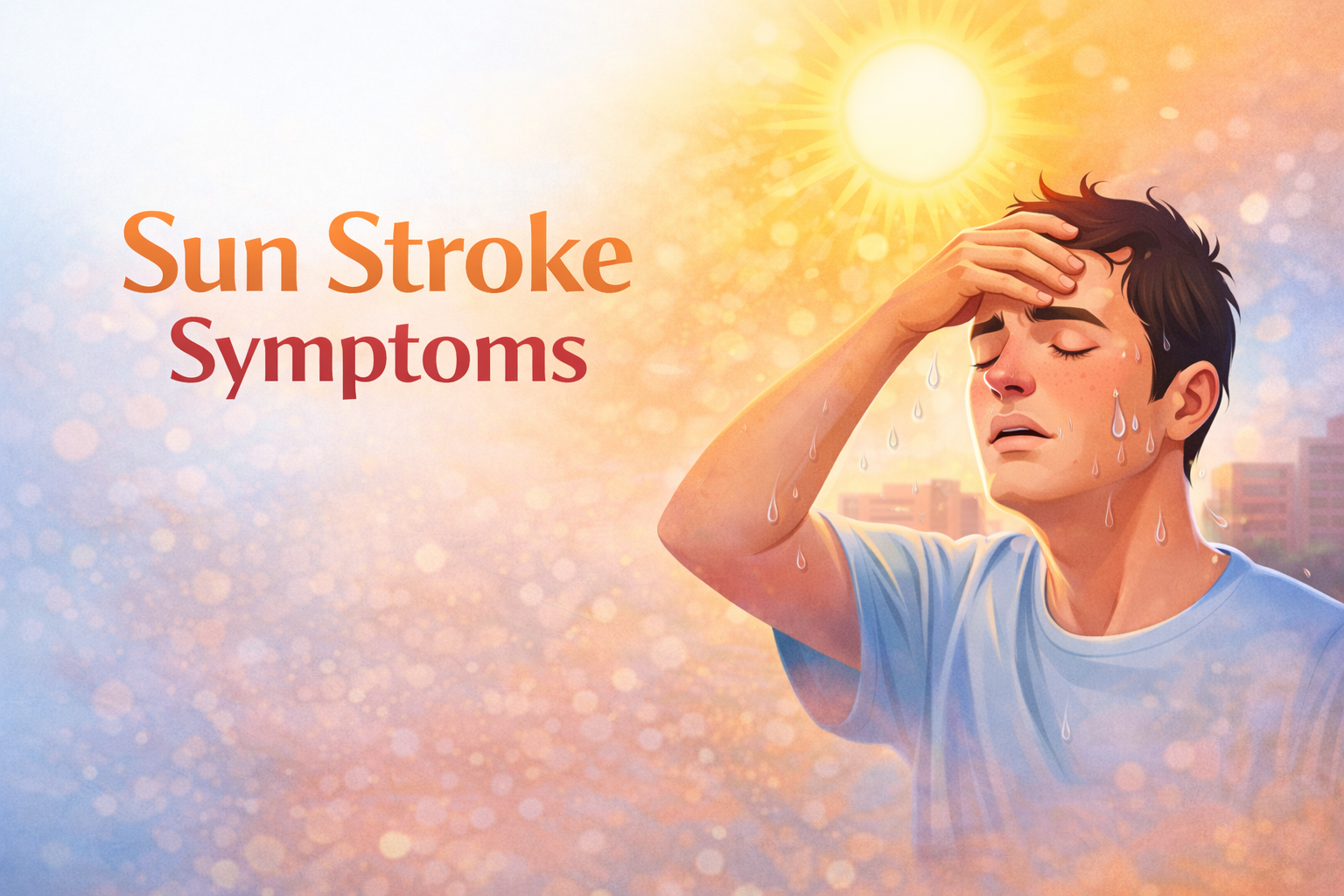
Sun stroke symptoms often start quietly. A little dizziness, slight headache, maybe more sweating than usual. Most people ignore it… until it suddenly becomes serious.
And that’s the risky part.
Sun stroke (also called heat stroke) isn’t just about feeling “too hot.” It can affect your brain, your organs, and in severe cases, it can become life-threatening.
The good news? Your body gives warning signs early. You just need to know how to read them.
In this guide, we’ll break down the symptoms of sun stroke, how they progress, what mild vs severe stages look like, and what you should do immediately if it happens.
What is Sun Stroke (Heat Stroke)?
Sun stroke, medically known as heat stroke, happens when your body temperature rises above 40°C (104°F) and your body can no longer cool itself.
Normally, your body sweats to regulate temperature. But in extreme heat:
- Sweating may stop
- Body temperature rises quickly
- Organs start getting affected
This is when things move from uncomfortable → dangerous.
Common Sun Stroke Symptoms You Shouldn’t Ignore
The tricky part about sun stroke symptoms is that they don’t all appear at once.
They usually start mild and then worsen.
Early Symptoms:
- Headache
- Dizziness or lightheadedness
- Excessive sweating
- Weakness or fatigue
- Nausea
These are often mistaken as “normal heat effects,” but they’re actually early warnings.
Mild Heat Stroke Symptoms
Before full heat stroke, the body shows signs of distress.
These are called mild heat stroke symptoms, and this is the stage where quick action can prevent serious damage.
Signs include:
- Muscle cramps
- Heavy sweating
- Pale or slightly flushed skin
- Rapid heartbeat
- Feeling faint
If you stop here and cool the body, recovery is usually quick.
But if ignored… things escalate.
Signs and Symptoms of Heat Stroke (Severe Stage)
This is where it becomes an emergency.
Severe heat stroke symptoms include:
- High body temperature (above 40°C)
- Hot, dry skin (no sweating)
- Confusion or disorientation
- Slurred speech
- Seizures
- Loss of consciousness
At this stage, immediate medical help is required.
This needs attention right now, not later.
Sun Stroke Symptoms and Treatment: What To Do Immediately
If someone shows signs of heat stroke, every minute matters.
Step-by-step immediate action:
1. Move to a Cooler Place
Get the person out of the sun immediately — indoors or at least into shade.
2. Cool the Body
- Use cold water or wet cloth
- Place ice packs on the neck, armpits, and groin.
- Fan the person
3. Hydrate (If Conscious)
Give:
- Water
- ORS (Oral Rehydration Solution)
Avoid caffeine or alcohol.
4. Loosen Clothing
Remove tight clothes to help heat escape.
5. Seek Medical Help
If symptoms are severe — don’t delay.
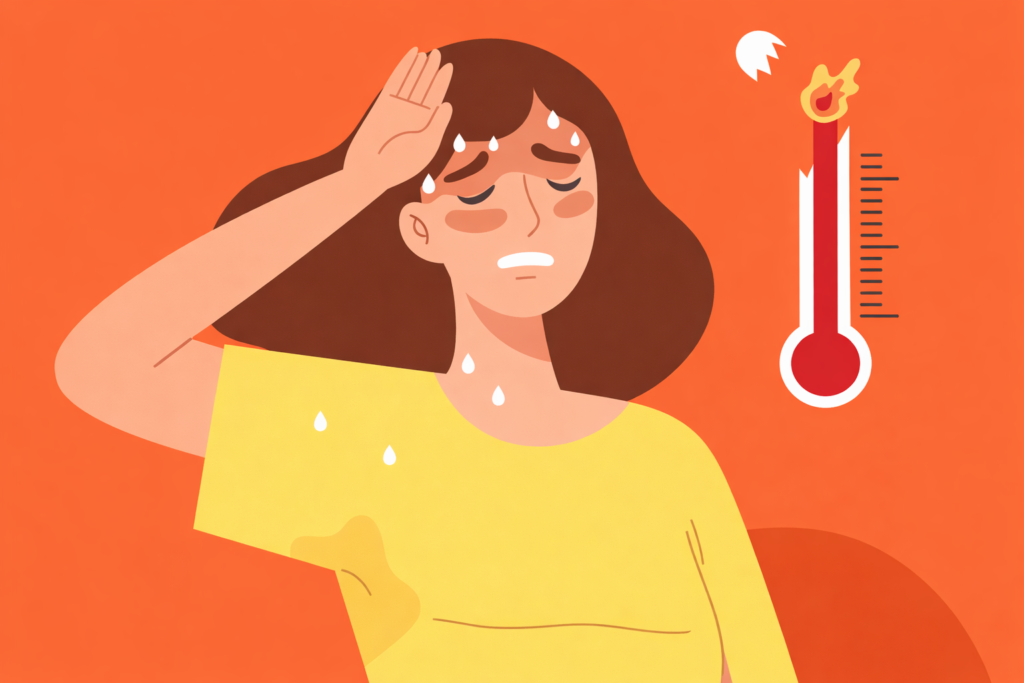
At a clinical level, treatment focuses on quickly reducing body temperature and stabilizing vital functions.
Specialists like those at Dr. Mazda Turel’s practice focus on managing neurological complications that may arise in severe cases.
Medical treatment may include:
- IV fluids
- Oxygen support
- Cooling techniques (ice baths, cooling blankets)
- Monitoring brain function
Severe heat stroke can affect the brain — which is why timely treatment is critical.
Why Sun Stroke Can Be Dangerous for the Brain
This is something most people don’t realize.
When body temperature rises too high:
- Brain cells can get damaged
- Swelling may occur
- Cognitive functions may get affected
This can lead to:
- Memory issues
- Confusion
- Long-term neurological problems
That’s why early detection of sun stroke symptoms is so important.
Who is at Higher Risk?
Some people are more vulnerable to heat stroke.
High-risk groups:
- Elderly individuals
- Children
- People with chronic illnesses
- Outdoor workers
- Athletes
- People who are dehydrated
If you fall into any of these categories, extra caution is needed.
How to Prevent Sun Stroke
Prevention is honestly easier than treatment.
Simple things that actually work:
- Drink water regularly (don’t wait for thirst)
- Avoid going out during peak heat (12 PM – 4 PM)
- Wear light, breathable clothes
- Use hats or umbrellas
- Take breaks if working outdoors
- Avoid heavy meals in extreme heat
Small habits make a big difference.
Internal Linking Suggestions
You can link this blog to:
- Neurology Services Page
- Emergency Care Services
- Brain Health Blog Section
- Headache Treatment Page
Conclusion
Sun stroke symptoms are easy to ignore in the beginning — and that’s exactly why they become dangerous.
It usually starts small. A headache. A little dizziness. Maybe just fatigue.
But your body is actually asking for help.
If you catch it early, it’s manageable. If you delay, it can turn serious very quickly.
So next time you’re out in the heat, just pay attention. Your body speaks don’t ignore what it’s telling you.
FAQs (Brain Stroke Causes)
1. What are the first sun stroke symptoms?
Early symptoms include headache, dizziness, sweating, fatigue, and nausea.
2. What is the difference between heat exhaustion and heat stroke?
Heat exhaustion is mild and reversible, while heat stroke is severe and requires immediate medical attention.
3. Can sun stroke happen without sweating?
Yes, in severe heat stroke, sweating may stop and skin becomes hot and dry.
4. How long does it take to recover from heat stroke?
Mild cases recover within hours, but severe cases may take days or require hospitalization.
5. What should I drink during heat stroke?
Water and ORS are best. Avoid caffeine and alcohol.
2 thoughts on “Sun Stroke Symptoms: Signs, Causes & Heat Stroke Treatment Guide”
With 2, 000 plus pokies, table games, and live trader options,
Royal Reels Casino caters to Australian bettors.
supports a$ 10 payment and quick withdrawals using PayID and crypto.
uses SSL and RNGs, offers a pleasant bonus, and offers VIP privileges.
secure bank, simple sign-up, and mobile-friendly features.
Best for responsible gamers who value pleasure
and assortment.
Have a look at my blog; Blackjack Real Money Wizardo
I loved as much as you will receive carried out right
here. The sketch is attractive, your authored subject matter stylish.
nonetheless, you command get got an nervousness over that you wish be delivering
the following. unwell unquestionably come more formerly again as exactly the same
nearly a lot often inside case you shield this hike.