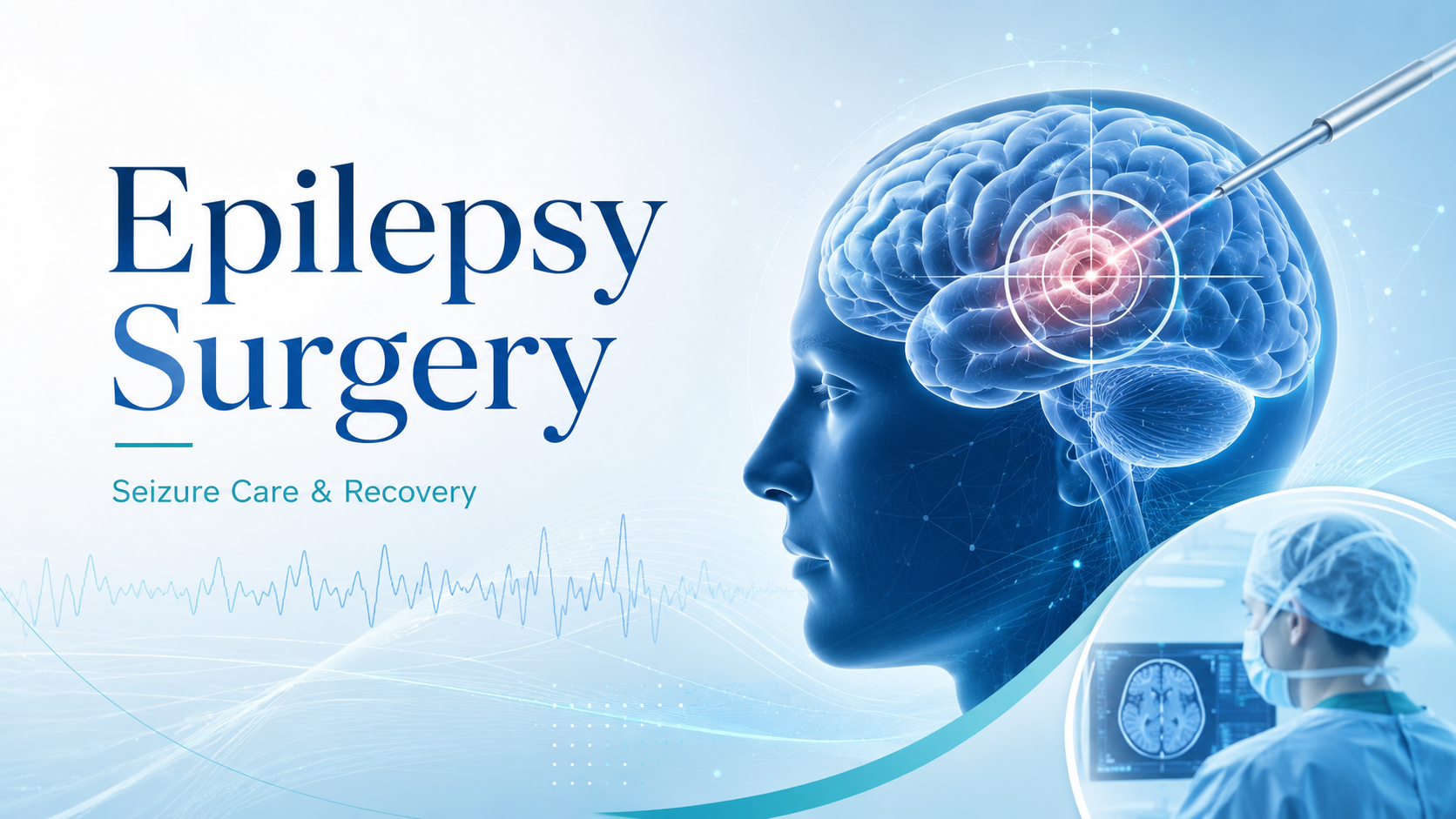
Epilepsy is a neurological condition that causes repeated seizures due to abnormal electrical activity in the brain. For many people, seizures can be controlled with medicines. However, some patients continue to experience seizures despite regular treatment. In such cases, doctors may evaluate whether epilepsy surgery can help.
Epilepsy surgery is not recommended for every person with seizures. It is considered only after careful evaluation, detailed testing, and specialist assessment. The goal of surgery is to reduce seizures, improve seizure control, and in selected cases, help patients live with significantly fewer or no seizures.
A common question patients and families ask is: Can epilepsy surgery cure seizures permanently?
The answer depends on the cause of epilepsy, the part of the brain involved, the type of seizures, test results, and whether the seizure focus can be treated safely. Some patients may become seizure-free after surgery, while others may experience a major reduction in seizure frequency or severity. Surgery is not a guaranteed cure for every patient, but for the right candidate, it can be life-changing.
This guide explains epilepsy surgery, who may need it, how doctors decide eligibility, what recovery may involve, and what patients should know before considering surgical treatment.
What Is Epilepsy Surgery?
Epilepsy surgery is a treatment option for selected patients whose seizures are not adequately controlled with medicines. The surgery aims to treat the part of the brain responsible for starting seizures, also known as the seizure focus.
The purpose of epilepsy surgery may be to:
- Remove the seizure-causing area
- Disconnect abnormal seizure pathways
- Reduce seizure spread
- Improve seizure control
- Reduce dependency on repeated emergency care
- Improve quality of life
Epilepsy surgery is a specialized neurosurgical procedure. It requires careful planning because the brain controls movement, speech, memory, vision, sensation, behavior, and many other important functions.
Before surgery is considered, doctors perform a detailed evaluation to understand whether surgery is safe and likely to help.
When Is Epilepsy Surgery Considered?
Epilepsy surgery may be considered when seizures continue despite proper medical treatment. Some patients have seizures even after trying multiple anti-seizure medicines under medical supervision. This situation is often called drug-resistant or medicine-resistant epilepsy.
Surgery may be discussed when:
- Seizures continue despite medication
- Seizures affect daily life, education, work, or safety
- The seizure focus can be identified
- The seizure-causing area can be treated safely
- Tests suggest surgery may improve seizure control
- The benefits of surgery may outweigh the risks
Not every patient with uncontrolled seizures is automatically a surgical candidate. Some patients may need medication adjustments, further investigations, or alternative treatment approaches.
Can Epilepsy Surgery Cure Seizures Permanently?
Epilepsy surgery can lead to long-term seizure freedom in carefully selected patients, but it should not be presented as a guaranteed permanent cure for everyone.
The outcome depends on several factors, such as:
- Type of epilepsy
- Location of seizure focus
- Cause of seizures
- Duration of epilepsy
- Brain imaging findings
- EEG findings
- Whether the seizure focus is clearly localized
- Whether surgery can be done without harming important brain functions
Some patients may stop having seizures after surgery. Some may have fewer seizures. Some may continue to need medicines after surgery. The aim is always to improve seizure control and quality of life while maintaining safety.
Patients should discuss realistic expectations with their neurosurgeon and epilepsy care team before surgery.
Why Some Seizures Need Surgical Evaluation
Seizures can affect life in many ways. They may cause falls, injuries, loss of awareness, memory difficulty, emotional stress, social limitations, and uncertainty in daily activities.
When seizures are frequent or unpredictable, patients may struggle with:
- Driving restrictions
- Work limitations
- Academic difficulties
- Sleep disturbance
- Fear of injury
- Social embarrassment
- Anxiety about future seizures
- Dependence on family support
For some patients, surgery may offer better seizure control when medicines alone are not enough.
Common Goals of Epilepsy Surgery
The goals of epilepsy surgery vary depending on the patient’s condition.
Seizure Freedom
In some patients, the goal is complete seizure freedom after surgery.
Seizure Reduction
In others, the goal may be to reduce seizure frequency, intensity, or severity.
Improved Safety
Fewer seizures may reduce the risk of falls, injuries, or emergency situations.
Better Daily Function
Improved seizure control may help patients return to education, work, social activities, and independent living.
Improved Quality of Life
Even if seizures do not stop completely, meaningful reduction may improve confidence and daily comfort.
Who Is the Right Candidate for Epilepsy Surgery?
The right candidate for epilepsy surgery is usually someone whose seizures are not controlled despite appropriate medical treatment and whose seizure focus can be identified clearly.
A suitable candidate may have:
- Repeated seizures despite medicines
- Seizures coming from a specific brain area
- Imaging or EEG findings supporting a surgical target
- Symptoms that match test findings
- A seizure focus that can be safely treated
- Overall health suitable for surgery
- Realistic expectations about outcomes
A patient may not be suitable for surgery if seizures come from multiple unrelated brain areas, if the seizure focus cannot be identified, or if surgery could affect essential brain functions.
Tests Done Before Epilepsy Surgery
Epilepsy surgery requires detailed evaluation. The aim is to understand where seizures start and whether that area can be treated safely.
Pre-surgical evaluation may include:
Medical History
Doctors review seizure history, triggers, frequency, duration, medication response, family history, and previous investigations.
Neurological Examination
This helps assess brain and nerve function, including movement, sensation, speech, balance, and cognition.
EEG Testing
EEG helps record electrical activity in the brain and may help identify seizure patterns.
Brain Imaging
Brain scans may help detect structural causes such as scars, tumors, malformations, or other abnormalities.
Video Monitoring
Some patients may need monitoring to record seizures and match symptoms with brain electrical activity.
Memory and Functional Assessment
Doctors may evaluate memory, speech, and other brain functions depending on the suspected seizure area.
The evaluation process may take time because surgery should be planned only when there is enough clarity.
Types of Epilepsy Surgery
Different types of epilepsy surgery may be used depending on the patient’s condition and seizure origin.
Resective Surgery
This involves removing the brain area responsible for starting seizures when it can be safely removed.
Lesion-Based Surgery
If seizures are caused by a clear structural abnormality, such as a lesion, surgery may focus on removing that abnormal area.
Disconnection Surgery
In some cases, surgery may aim to disconnect pathways that allow seizures to spread.
Palliative Procedures
When complete seizure control is not possible, some procedures may aim to reduce severity or frequency.
The exact approach depends on the patient’s diagnosis, test results, and safety considerations.
What Happens Before Epilepsy Surgery?
Before epilepsy surgery, patients and families usually go through a detailed counseling process. The neurosurgeon explains the condition, test findings, expected benefits, possible risks, and recovery plan.
Before surgery, patients may need:
- Blood tests
- Brain imaging review
- Medication review
- Anesthesia assessment
- Admission planning
- Discussion of risks and benefits
- Family counseling
- Consent for surgery
Patients should ask questions freely. A clear understanding of the procedure helps reduce fear and improves decision-making.
What Happens During Epilepsy Surgery?
The exact surgical steps depend on the type of epilepsy surgery. In general, epilepsy surgery is performed in a hospital setting under anesthesia.
In brain surgery cases, the neurosurgeon carefully accesses the planned area of the brain. The surgical plan is based on pre-operative tests and imaging. The goal is to treat the seizure-causing region while protecting important brain functions.
Epilepsy surgery requires precision, planning, and experience because even small brain areas may control important functions.
Recovery After Epilepsy Surgery
Recovery after epilepsy surgery varies from patient to patient. It depends on the type of surgery, the brain area involved, the patient’s general health, and whether any complications occur.
Recovery may include:
- Hospital monitoring
- Pain control
- Wound care
- Medication management
- Gradual return to activity
- Follow-up visits
- Seizure monitoring
- Rehabilitation if needed
- Continued neurological care
Some patients may feel tired for a period after surgery. Others may need time to regain routine confidence. The treating team provides instructions about rest, activity, medicines, wound care, and warning signs.
Will Medicines Continue After Surgery?
Many patients continue anti-seizure medicines after epilepsy surgery, at least for some time. Medicines should never be stopped suddenly without medical advice.
The decision to continue, reduce, or adjust medicines depends on:
- Surgery outcome
- Seizure control after surgery
- EEG findings
- Doctor’s assessment
- Time since surgery
- Type of epilepsy
- Individual risk factors
Even if a patient becomes seizure-free, medicine changes must be made cautiously and only under medical supervision.
Risks of Epilepsy Surgery
Like any brain surgery, epilepsy surgery has risks. The exact risks depend on the type and location of surgery.
Possible risks may include:
- Infection
- Bleeding
- Swelling
- Temporary weakness
- Speech or memory changes
- Vision-related issues
- Seizure recurrence
- Headache
- Wound-related problems
- Anesthesia-related risks
A neurosurgeon explains the specific risks based on the patient’s surgical plan. The goal is always to balance potential benefit with safety.
Benefits of Epilepsy Surgery
For selected patients, epilepsy surgery may offer important benefits.
Possible benefits include:
- Better seizure control
- Reduced seizure frequency
- Reduced seizure severity
- Improved independence
- Better confidence in daily life
- Improved sleep and routine
- Reduced emergency visits
- Better quality of life
The benefits vary from patient to patient. The most important step is correct candidate selection.
Myths About Epilepsy Surgery
Myth 1: Epilepsy Surgery Is for Everyone with Seizures
This is not true. Surgery is only for selected patients after detailed evaluation.
Myth 2: Surgery Always Cures Epilepsy Permanently
Surgery can help many patients, but results vary. Some patients become seizure-free, while others improve but may still need medicines.
Myth 3: Brain Surgery Is Always Extremely Dangerous
Any brain surgery has risks, but modern neurosurgical planning is designed to improve safety. Patients should discuss individual risks with their doctor.
Myth 4: Medicines Can Be Stopped Immediately After Surgery
Medicines should not be stopped without medical guidance. Many patients continue treatment after surgery.
Myth 5: Seizures After Surgery Mean Failure
Some patients may still have seizures during recovery or later. Follow-up evaluation helps guide further treatment.
Questions to Ask Before Epilepsy Surgery
Patients and families should ask important questions before making a decision.
Helpful questions include:
- Where are my seizures starting from?
- Why is surgery being considered?
- What tests support the surgical plan?
- What type of surgery is recommended?
- What are the expected benefits?
- What are the possible risks?
- Will I still need medicines?
- How long is recovery expected to take?
- What restrictions will I have after surgery?
- What follow-up will be needed?
Clear communication helps families feel more prepared.
Epilepsy Surgery and Emotional Readiness
Living with epilepsy can be emotionally challenging. The thought of brain surgery can also create fear and anxiety. Patients may worry about risks, recovery, memory, speech, work, education, and long-term outcomes.
Emotional readiness is an important part of treatment. Patients should involve family members, discuss concerns with the care team, and understand the plan clearly.
A supportive environment can make the treatment journey easier.
Epilepsy Surgery in Children and Adults
Epilepsy surgery may be considered in both children and adults, depending on the condition and test results. In children, uncontrolled seizures may affect learning, development, and safety. In adults, seizures may affect work, driving, independence, and personal confidence.
The evaluation process differs according to age, seizure type, and medical condition. A specialist team decides whether surgery is appropriate.
Life After Epilepsy Surgery
Life after epilepsy surgery depends on seizure control and recovery. Some patients may gradually return to normal routines with fewer restrictions. Others may continue needing medicines and follow-up care.
Patients may need to track:
- Seizure frequency
- Medicine schedule
- Sleep patterns
- Triggers
- Recovery symptoms
- Wound healing
- Mood changes
- Activity tolerance
Regular follow-up helps the medical team assess progress and make adjustments.
When to Contact a Doctor After Surgery
Patients should follow their surgeon’s instructions after discharge. Medical attention may be needed if there are concerning symptoms.
Warning signs may include:
- Fever
- Wound redness or discharge
- Severe headache
- Repeated vomiting
- New weakness
- Confusion
- Seizure worsening
- Speech difficulty
- Drowsiness
- Sudden neurological changes
Patients should not delay contacting their doctor if symptoms feel unusual or severe.
Epilepsy Surgery and Dr. Mazda K. Turel
Dr. Mazda K. Turel’s website lists epilepsy surgery among brain-related specialty care areas. His practice focuses on brain, spine, and peripheral nerve conditions. The website presents him as a neurosurgeon in Mumbai practicing at Wockhardt Hospital, Mumbai Central.
The website also highlights his neurosurgical background, including MBBS from Grant Medical College and Sir JJ Group of Hospitals, Mumbai, and MCh Neurosurgery from Christian Medical College, Vellore. His experience and training are presented on the official website.
Patients with uncontrolled seizures or complex brain-related concerns may benefit from specialist evaluation to understand whether surgery is appropriate.
Who Should Consider a Neurosurgical Opinion?
A neurosurgical opinion may be useful when:
- Seizures are not controlled despite medicines
- Brain imaging shows a possible surgical cause
- A neurologist recommends surgical evaluation
- Seizures are affecting safety or daily life
- The diagnosis needs further clarity
- The patient wants to understand surgical options
A neurosurgical consultation does not automatically mean surgery will be done. It helps determine whether surgery is possible, safe, and appropriate.
Conclusion
Epilepsy surgery can be an important treatment option for selected patients whose seizures are not controlled with medicines. It may help reduce seizures, improve quality of life, and in some cases, lead to long-term seizure freedom. However, it is not a guaranteed permanent cure for every patient.
The success of epilepsy surgery depends on careful evaluation, correct diagnosis, precise identification of the seizure focus, and safe surgical planning. Patients and families should discuss expectations, risks, recovery, and long-term care with their specialist.
For patients living with uncontrolled seizures, a specialist consultation can help determine whether epilepsy surgery may be a suitable option.
1. What is epilepsy surgery?
Epilepsy surgery is a treatment option for selected patients whose seizures are not well controlled with medicines. It aims to treat the brain area responsible for seizures.
2. Can epilepsy surgery cure seizures permanently?
Some carefully selected patients may become seizure-free after surgery, but results vary. Surgery cannot be guaranteed as a permanent cure for every patient.
3. Who is the right candidate for epilepsy surgery?
Patients with seizures that continue despite proper medication and whose seizure focus can be clearly identified may be considered for surgery.
4. Is epilepsy surgery risky?
Like any brain surgery, epilepsy surgery has risks. The risks depend on the brain area involved and the type of procedure. A neurosurgeon explains patient-specific risks before surgery.
5. Will I need medicines after epilepsy surgery?
Many patients continue anti-seizure medicines after surgery. Any change in medicines should be done only under medical supervision.
6. How long does recovery take after epilepsy surgery?
Recovery varies depending on the surgery type, patient health, and brain area involved. Some patients recover gradually over weeks, while others may need longer follow-up.
7. Can seizures return after epilepsy surgery?
Yes, seizures may return in some patients. Regular follow-up is important to monitor progress and adjust treatment if needed.
8. When should I consult a neurosurgeon for epilepsy?
A neurosurgical opinion may be considered when seizures continue despite medicines, imaging suggests a surgical cause, or a neurologist recommends surgical evaluation.