
Neck Pain Doctor Specialist in Mumbai
Neck Pain Doctor Specialist in Mumbai | Dr. Mazda Turel

Neck pain can start as a small stiffness and slowly become a daily problem. It may disturb your sleep, make office work difficult, limit driving, or send pain down your shoulder, arm, or fingers.
When neck pain keeps coming back, feels sharp, causes tingling, or affects arm strength, it may not be just a muscle strain. It could be linked to the cervical spine, disc, nerve root, or spinal cord.
If you are looking for a neck pain doctor specialist in Mumbai, Dr. Mazda Turel, MCh Neurosurgery, offers expert evaluation for cervical spine problems, nerve compression, disc-related neck pain, and complex spine conditions.
The aim is simple: find the real cause of your pain, explain it clearly, and plan treatment that is safe, practical, and suited to your condition.
Why Choose Us
Choosing the right doctor for neck pain matters because the neck protects important nerves and the spinal cord. A careful diagnosis can prevent wrong treatment, delayed care, and unnecessary procedures.
- Experienced Neurosurgical Care
Dr. Mazda Turel is an MCh Neurosurgery specialist with experience in brain and spine conditions. His approach focuses on understanding whether neck pain is muscular, disc-related, nerve-related, or linked to spinal cord compression.
- Cervical Spine-Focused Evaluation
Neck pain is not treated with a one-size plan. The cervical spine includes the first seven vertebrae of the spine and supports head movement, posture, nerves, muscles, and the spinal cord. A proper evaluation helps identify which structure is causing the symptoms.
- Advanced Diagnostic Support
Diagnosis may include physical examination, neurological testing, X-rays, MRI, CT scan, nerve studies, and clinical correlation. Imaging is used only when needed and interpreted along with your symptoms.
- Patient-First Treatment Planning
Many neck pain cases improve with non-surgical care. Surgery is considered only when there is serious nerve compression, spinal cord involvement, worsening weakness, or pain that does not improve with proper treatment. AAOS notes that cervical radiculopathy often responds well to conservative care such as medication and physiotherapy.
- Safety and Clear Guidance
Patients are guided about warning signs, treatment options, recovery expectations, lifestyle changes, and when urgent care is needed. The goal is not only pain relief, but also safe movement, better function, and long-term spine health.
What Is Neck Pain Doctor Specialist Care?
A neck pain doctor specialist evaluates pain, stiffness, nerve symptoms, and cervical spine disorders that affect the neck, shoulders, arms, hands, and sometimes balance.
Neck pain can come from muscles, ligaments, joints, discs, nerves, or the spinal cord. Common symptoms include pain that worsens after sitting in one position, muscle tightness, reduced neck movement, and headaches.
Specialist care becomes important when neck pain is severe, recurrent, linked with arm pain, or associated with numbness, weakness, walking difficulty, or loss of hand coordination.
At Dr. Mazda Turel’s consultation, the focus is on:
- Understanding the exact pain pattern
- Checking for nerve or spinal cord involvement
- Reviewing posture, work habits, previous injury, and medical history
- Using imaging only when clinically needed
- Offering medical, physiotherapy-based, injection-based, or surgical treatment when appropriate
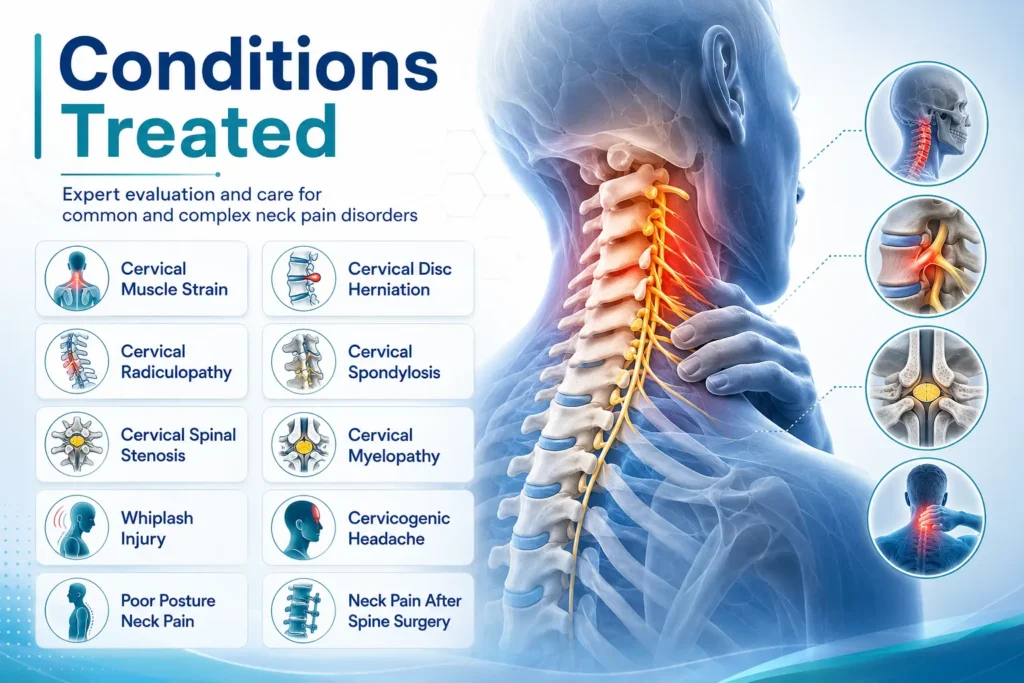
Conditions Treated
- Cervical Muscle Strain
Cervical muscle strain happens when neck muscles or soft tissues are overstretched. It may occur due to poor posture, sudden movement, long screen time, sleeping awkwardly, or lifting strain.
- Symptoms:
- Neck stiffness
- Local pain
- Pain while turning the head
- Muscle tightness
- Mild headache
- Pain after long computer or mobile use
- When treatment is needed:
You should see a specialist if pain lasts more than a few days, keeps returning, becomes severe, or is associated with arm pain, numbness, or weakness.
2. Cervical Disc Herniation
A cervical disc herniation occurs when the soft inner part of a spinal disc presses outward and irritates or compresses a nearby nerve. This can cause neck pain with arm symptoms. Herniated cervical discs may cause sharp or shock-like pain in the neck or arm when a nerve root is affected.
- Symptoms:
- Neck pain radiating to shoulder or arm
- Tingling in fingers
- Numbness
- Burning pain
- Weak grip
- Pain that increases with neck movement
- When treatment is needed:
Specialist care is needed if pain travels down the arm, does not improve with medicines, or causes weakness, numbness, or difficulty using the hand.
3. Cervical Radiculopathy
Cervical radiculopathy is commonly called a pinched nerve in the neck. It happens when a cervical nerve root is compressed or irritated, often due to disc herniation, bone spur, or narrowing of the nerve passage.
- Symptoms:
- Neck pain with arm pain
- Electric-shock-like pain
- Numbness or tingling
- Weakness in shoulder, arm, wrist, or fingers
- Pain worsening with certain neck positions
- When treatment is needed:
Treatment is needed when arm pain is severe, symptoms last despite rest and medicines, or there is weakness. Surgery may be considered when non-surgical treatment fails or when neurological symptoms worsen.
Cervical spondylosis means age-related wear and tear in the neck spine. It may involve disc degeneration, joint changes, stiffness, bone spurs, or narrowing around nerves.
- Symptoms:
- Chronic neck stiffness
- Pain at the back of the neck
- Crackling sensation during movement
- Shoulder pain
- Headache
- Arm symptoms if nerves are compressed
- When treatment is needed:
Many people with cervical spondylosis have no symptoms, and when symptoms occur, non-surgical treatment is often effective. Treatment is needed when pain affects daily life or signs of nerve compression appear.
5. Cervical Spinal Stenosis
Cervical spinal stenosis means narrowing of the spinal canal in the neck. This can put pressure on the spinal cord or nerve roots.
- Symptoms:
- Neck pain
- Numbness in arms or hands
- Weakness
- Poor hand grip
- Balance issues
- Walking difficulty in advanced cases
- When treatment is needed:
Urgent evaluation is needed if there are signs of spinal cord compression, such as hand clumsiness, frequent falls, leg stiffness, or walking imbalance.
6. Cervical Myelopathy
Cervical myelopathy occurs when the spinal cord is compressed in the neck. This is more serious than routine neck pain because it can affect hand function, walking, and body coordination.
- Symptoms:
- Difficulty buttoning clothes
- Dropping objects
- Weak hands
- Numbness in both arms
- Walking imbalance
- Leg stiffness
- Bladder changes in severe cases
- When treatment is needed:
This condition needs specialist evaluation as early as possible. Delayed treatment can allow nerve function to worsen.
7. Whiplash Injury
Whiplash happens when the neck moves suddenly forward and backward, often after a road accident, sports injury, or fall.
- Symptoms:
- Neck pain after injury
- Stiffness
- Shoulder pain
- Headache
- Dizziness
- Pain with movement
- When treatment is needed:
See a specialist if pain follows trauma, becomes severe, causes arm symptoms, or is linked with dizziness, weakness, or difficulty walking.
8. Cervicogenic Headache
A cervicogenic headache starts from a neck problem but is felt in the head. It may be linked to cervical joints, muscles, posture, or nerve irritation.
- Symptoms:
- Headache starting from the neck
- Pain on one side of the head
- Neck stiffness
- Pain after long sitting
- Pain with neck movement
- When treatment is needed:
Treatment is needed if headaches are frequent, linked with neck pain, or do not improve with basic care.
9. Neck Pain Due to Poor Posture
Long laptop use, mobile scrolling, poor sitting habits, weak neck muscles, and unsupported sleep posture can strain the cervical spine.
- Symptoms:
- Dull neck ache
- Shoulder tightness
- Upper back pain
- Head heaviness
- Pain after screen use
- Morning stiffness
- When treatment is needed:
If posture correction, rest, and basic medicines do not help, a specialist can check whether there is an underlying disc or nerve issue.
10. Neck Pain After Spine Surgery
Some patients may have persistent or recurrent neck pain after previous cervical spine treatment or surgery.
- Symptoms:
- Ongoing neck pain
- Arm pain
- Tingling
- Weakness
- Pain around the operated area
- Reduced movement
- When treatment is needed:
A second opinion is useful if symptoms continue after previous treatment, worsen again, or new nerve symptoms appear.
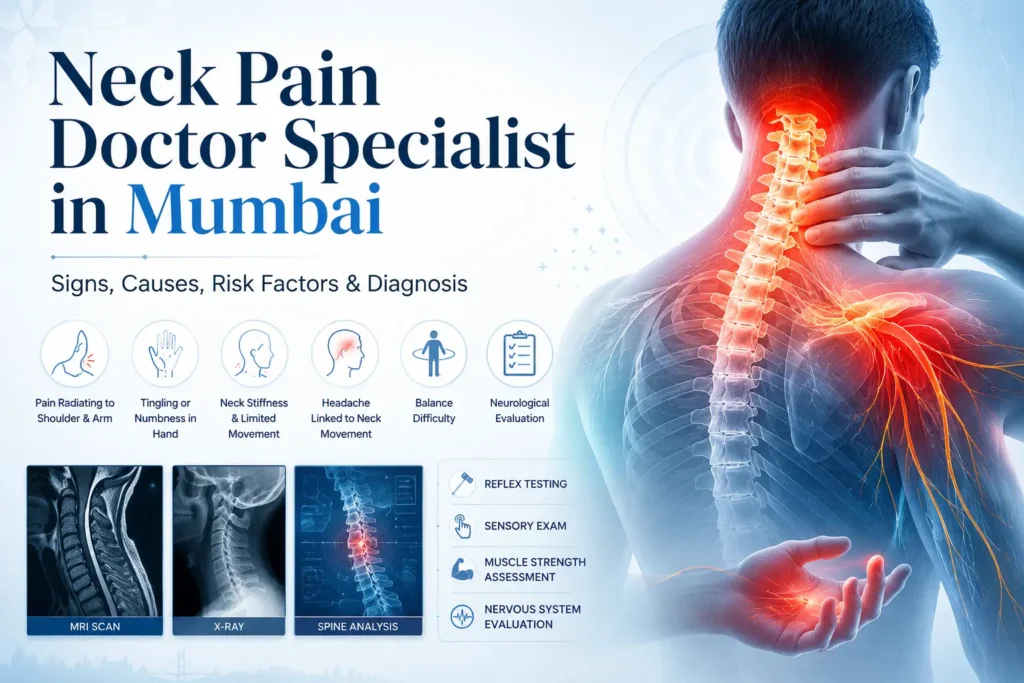
Signs You Should See a Specialist
You should consult a neck pain doctor specialist in Mumbai if you have:
- Neck pain lasting more than 1–2 weeks
- Pain spreading to the shoulder, arm, or fingers
- Numbness or tingling in the arm or hand
- Weak grip or dropping objects
- Severe stiffness that limits movement
- Neck pain after an accident or fall
- Headache linked with neck movement
- Pain that disturbs sleep
- Difficulty walking or maintaining balance
- Hand clumsiness
- Fever, weight loss, or unexplained pain
- Pain not improving with basic medicines
- Repeated episodes of neck pain
- Pain with electric-shock-like sensation
- Bladder or bowel changes with spine symptoms
Causes / Risk Factors
Neck pain can develop for many reasons. Some are simple and temporary, while others need medical attention.
- Poor Posture
Long screen time, forward head posture, weak neck muscles, and poor desk setup can overload the cervical spine.
- Disc Degeneration
As discs age, they may lose height and flexibility. This can lead to stiffness, nerve irritation, and cervical spondylosis.
- Cervical Disc Herniation
A slipped or herniated disc can press on a nerve root and cause neck pain with arm pain.
- Bone Spurs
Bone spurs may form due to long-term wear and tear. These can narrow the nerve passage or spinal canal.
- Injury or Accident
Falls, sports injuries, sudden jerks, and road accidents can strain muscles, damage discs, or affect the cervical spine.
- Repetitive Work Strain
People who work long hours on laptops, use mobile phones for extended periods, drive frequently, or lift heavy weights may develop recurring neck pain.
- Weak Muscles
Weak deep neck muscles and poor upper back strength can increase pressure on the cervical spine.
- Arthritis
Osteoarthritis or inflammatory conditions may affect cervical joints and cause pain, stiffness, or nerve irritation.
- Stress and Muscle Tightness
Stress can increase muscle tension around the neck, shoulders, and upper back, which may worsen pain.
- Smoking and Poor Lifestyle
Smoking, poor sleep, low activity, and excess body weight can affect spine health and healing.
Diagnosis
A correct diagnosis is the most important step in neck pain treatment. Pain location alone is not enough. The specialist checks how your symptoms behave, where pain travels, and whether nerves are involved.
- Detailed Medical History
The doctor asks about:
- When the pain started
- Whether it followed injury
- Pain location and severity
- Arm pain, numbness, or tingling
- Work posture and daily habits
- Previous treatment
- Medical conditions
- Medicines already taken
- Physical Examination
This includes checking neck movement, tenderness, posture, muscle tightness, and pain triggers.
- Neurological Examination
A neurological check helps identify nerve or spinal cord involvement. It may include:
- Muscle strength testing
- Reflex testing
- Sensation testing
- Hand coordination
- Walking and balance assessment
- X-Ray
A cervical spine X-ray may show alignment, arthritis, disc space narrowing, instability, or bone changes.
- MRI Cervical Spine
MRI is useful for seeing discs, nerves, spinal cord, and soft tissues. It is commonly advised when there is arm pain, numbness, weakness, suspected disc herniation, or spinal cord compression.
- CT Scan
CT scan may be used when detailed bone assessment is needed, especially after injury, fracture suspicion, previous surgery, or complex spine anatomy.
- Nerve Conduction Study / EMG
These tests may help when symptoms suggest nerve involvement but the exact source needs clarification.
- Blood Tests
Blood tests may be suggested if infection, inflammation, autoimmune disease, or other medical causes are suspected.
- Diagnostic Injections
In select cases, image-guided injections may help confirm the pain source and provide relief.
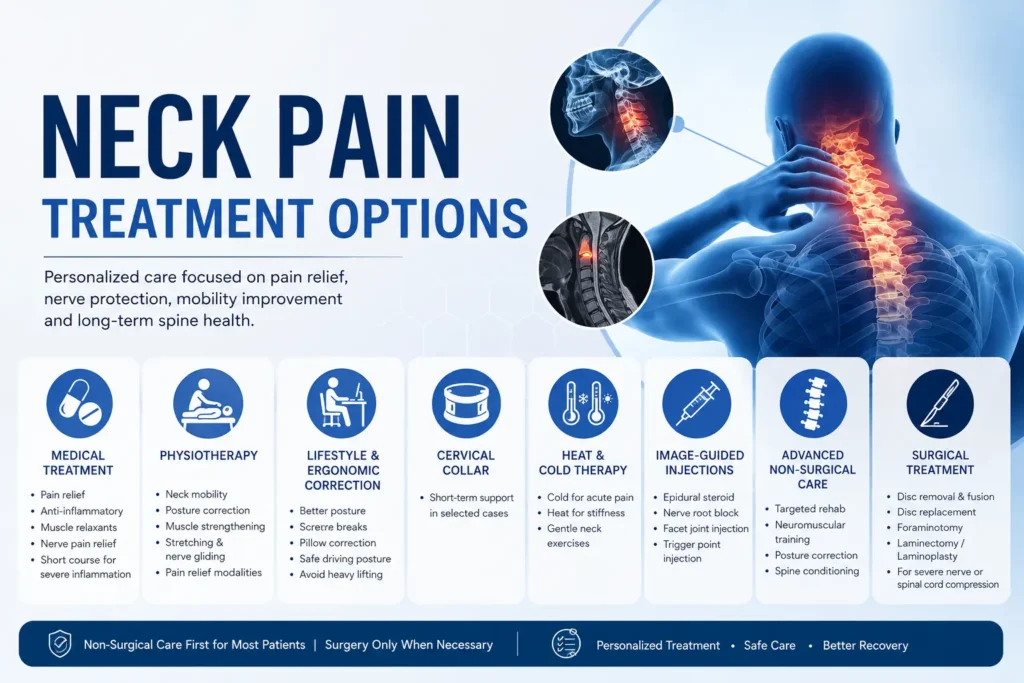
Treatment Options
Treatment depends on the cause, severity, nerve involvement, and how much pain affects daily life. Most patients do not need surgery at the first visit. The aim is to reduce pain, protect nerve function, improve movement, and prevent recurrence.
- Medical Treatment
Medicines may be used for short-term pain control and inflammation. These may include:
- Pain relief medicines
- Anti-inflammatory medicines
- Muscle relaxants
- Nerve pain medicines
- Short course of medication for severe inflammation when appropriate
Medicines should always be taken under medical guidance, especially if you have acidity, kidney disease, heart disease, blood pressure issues, diabetes, or are already on other medicines.
- Physiotherapy
Physiotherapy helps improve mobility, reduce stiffness, and strengthen the neck and upper back.
It may include:
- Neck mobility exercises
- Posture correction
- Deep neck muscle strengthening
- Shoulder blade strengthening
- Gentle stretching
- Nerve gliding exercises
- Ergonomic training
- Pain-relief modalities
Physiotherapy should be planned according to diagnosis. Exercises that help one patient may worsen symptoms in another if nerve compression is present.
- Lifestyle and Ergonomic Correction
Daily habits play a major role in neck pain. Treatment may include:
- Laptop height correction
- Better chair support
- Avoiding long mobile bending
- Screen breaks
- Pillow correction
- Safer driving posture
- Reduced heavy lifting
- Regular stretching
- Cervical Collar
A soft cervical collar may be used for short-term support in selected cases. Long-term use is usually avoided unless advised because it can weaken neck muscles.
- Heat and Cold Therapy
Cold packs may help after sudden strain or injury. Heat may help muscle tightness and stiffness. NHS guidance also lists heat or cold packs and gentle neck exercises among simple self-care measures for many neck pain cases.
- Image-Guided Injections
If pain is severe or not improving, injections may be considered. These may include:
- Cervical epidural steroid injection
- Selective nerve root block
- Facet joint injection
- Trigger point injection
These are usually done with imaging guidance for accuracy and safety.
- Advanced Non-Surgical Care
For selected patients, advanced pain management and rehabilitation may include:
- Targeted cervical rehabilitation
- Neuromuscular training
- Guided nerve root treatment
- Posture and workplace correction
- Long-term spine conditioning
- Surgical Treatment
Surgery is not the first option for most neck pain patients. It is considered when there is:
- Severe nerve compression
- Progressive weakness
- Spinal cord compression
- Cervical myelopathy
- Pain not improving with proper non-surgical care
- Loss of function
- Serious instability or trauma-related damage
Common cervical spine procedures may include:
- Anterior Cervical Discectomy and Fusion
This procedure removes a damaged disc pressing on a nerve or spinal cord and stabilizes the segment with fusion.
- Cervical Disc Replacement
In selected cases, the damaged disc may be replaced with an artificial disc to preserve motion.
- Posterior Cervical Foraminotomy
This may be used to relieve nerve pressure from the back of the neck in selected nerve compression cases.
- Cervical Laminectomy / Laminoplasty
These procedures may be considered when the spinal cord is compressed at multiple levels.
The choice of surgery depends on the exact diagnosis, MRI findings, symptoms, age, spine alignment, and overall health. AAOS describes ACDF, artificial disc replacement, and posterior cervical laminoforaminotomy as common surgical options for cervical radiculopathy.
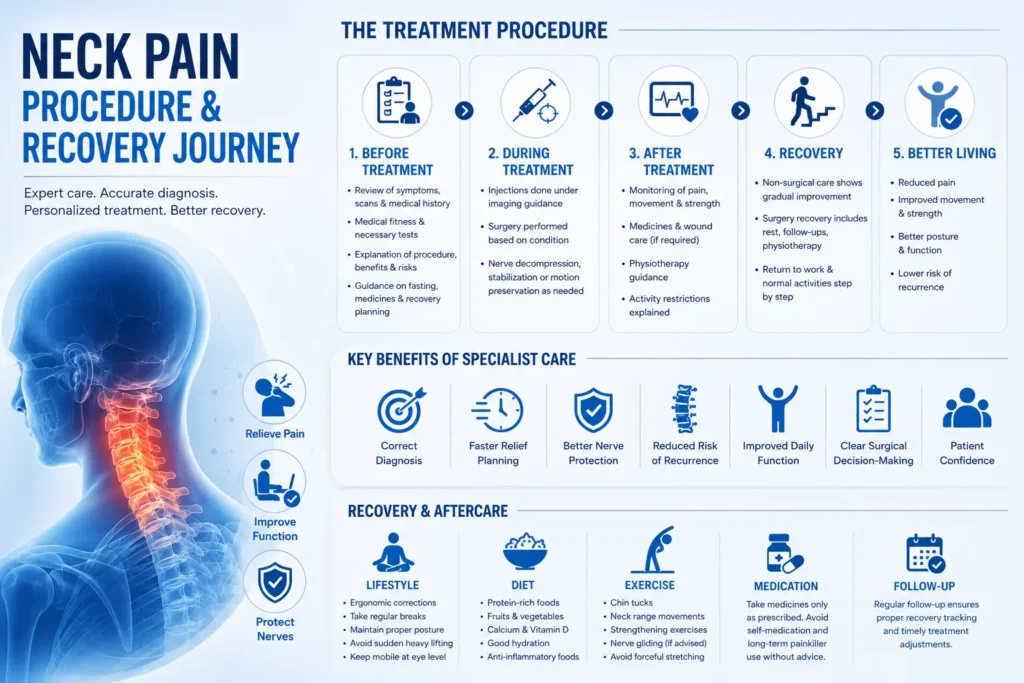
Procedure
Not every neck pain patient needs a procedure. If a procedure or surgery is advised, the plan is explained clearly before treatment.
- Before Treatment
Before a procedure, the doctor may review:
- Symptoms and neurological signs
- MRI, X-ray, or CT findings
- Previous medicines and therapy
- Medical fitness
- Blood tests
- Heart and anesthesia clearance if needed
- Expected benefits and possible risks
You will also be guided about fasting, medicines to stop or continue, hospital stay, and recovery planning.
- During Treatment
For injections, the procedure is usually done under imaging guidance. The aim is to place medication near the affected nerve or joint.
For surgery, the approach depends on the condition. The surgeon may remove pressure from the nerve or spinal cord, stabilize the spine, or preserve motion where suitable.
- After Treatment
After the procedure, the team monitors pain, movement, strength, and comfort. You may be advised medicines, wound care, physiotherapy, and activity restrictions.
- Recovery
Recovery depends on the diagnosis and treatment type.
For non-surgical care, improvement may happen gradually with medicines, physiotherapy, posture correction, and activity changes.
For surgery, recovery may include hospital stay, follow-up visits, physiotherapy, walking, wound care, and gradual return to work. The timeline varies from patient to patient.
Benefits
Specialist neck pain care can help in many ways.
- Correct Diagnosis
You know whether the pain is muscular, disc-related, nerve-related, joint-related, or due to spinal cord compression.
- Faster Relief Planning
The right treatment can reduce trial-and-error and help you move toward recovery with clarity.
- Better Nerve Protection
Early evaluation can identify warning signs like weakness, numbness, poor grip, or spinal cord compression.
- Reduced Risk of Recurrence
Posture correction, strengthening, and lifestyle changes help reduce repeated flare-ups.
- Improved Daily Function
Treatment aims to improve sleep, driving, work comfort, neck movement, and hand use.
- Clear Surgical Decision-Making
If surgery is needed, the decision is based on symptoms, examination, imaging, and functional impact—not fear or guesswork.
- Patient Confidence
Patients feel more comfortable when they understand their condition and know what to expect from treatment.
Why Early Treatment Matters
Neck pain should not be ignored when it keeps returning or spreads to the arm. Simple stiffness may settle, but nerve compression can worsen if left untreated.
Early treatment matters because it can:
- Prevent worsening nerve irritation
- Reduce long-term pain
- Improve response to physiotherapy
- Lower dependence on pain medicines
- Detect spinal cord compression early
- Help avoid avoidable complications
- Improve daily function sooner
In cervical radiculopathy, the goal of surgery, when needed, is to remove pressure from the nerve. Mayo Clinic notes that when cervical radiculopathy is surgically treatable, timely surgery may lead to better outcomes because severely compressed nerves may develop injury that may not fully recover.
Do not wait if neck pain is associated with weakness, numbness, balance trouble, hand clumsiness, or bladder changes.
Recovery & Aftercare
Recovery is not only about pain relief. It is about building a stronger, safer neck and reducing future episodes.
- Lifestyle
- Avoid long hours in one neck position
- Keep the screen at eye level
- Take breaks every 30–45 minutes
- Avoid sleeping on the stomach
- Use a supportive pillow
- Avoid sudden heavy lifting
- Keep mobile use at eye level
- Maintain a healthy body weight
- Diet
A balanced diet supports healing and muscle health. Include:
- Protein-rich foods
- Fruits and vegetables
- Calcium sources
- Vitamin D as advised
- Good hydration
- Anti-inflammatory foods such as nuts, seeds, and leafy vegetables
Do not start supplements without medical advice, especially if you have kidney disease, thyroid issues, or are on long-term medicines.
- Exercise
Exercises should be started only after diagnosis. Commonly advised exercises may include:
- Chin tucks
- Gentle neck range movements
- Shoulder blade strengthening
- Upper back mobility
- Deep neck flexor strengthening
- Nerve gliding exercises when appropriate
Avoid aggressive neck cracking, heavy gym exercises, or forceful stretching without guidance.
- Medication
Take medicines only as prescribed. Avoid repeated self-medication with painkillers because long-term or wrong use may affect the stomach, kidneys, liver, or blood pressure.
- Follow-Up
Follow-up helps track recovery, strength, pain pattern, and response to therapy. It also allows timely treatment changes if symptoms are not improving.

Emergency Cases
Please feel welcome to contact our friendly reception staff with any general or medical equiry call us.
Frequently Asked Questions
1. Who is the right doctor for neck pain in Mumbai?
For mild neck stiffness, a general physician or physiotherapist may help. But if neck pain is severe, recurrent, spreading to the arm, or linked with numbness, tingling, weakness, or balance problems, you should consult a spine specialist or neurosurgeon. Dr. Mazda Turel, MCh Neurosurgery, evaluates cervical spine and nerve-related neck pain in Mumbai.
2. When should I see a neck pain doctor specialist?
You should see a specialist if neck pain lasts more than 1–2 weeks, keeps coming back, spreads to the shoulder or arm, causes tingling or numbness, affects hand strength, or follows an accident. You should seek urgent care if you have weakness, walking difficulty, hand clumsiness, fever, or bladder changes.
3. Is neck pain always due to cervical spondylosis?
No. Neck pain can happen due to muscle strain, poor posture, disc herniation, cervical radiculopathy, arthritis, whiplash injury, spinal stenosis, infection, inflammation, or rarely tumors. A proper examination helps identify the real cause.
4. Can neck pain cause arm pain?
Yes. If a cervical nerve root is compressed or irritated, pain may travel from the neck to the shoulder, arm, forearm, or fingers. This is often seen in cervical radiculopathy or cervical disc herniation.
5. What are warning signs of serious neck pain?
Warning signs include arm weakness, numbness, tingling, loss of grip, difficulty walking, hand clumsiness, pain after injury, fever, unexplained weight loss, severe night pain, or bladder and bowel changes. These symptoms need medical evaluation.
6. Is MRI needed for neck pain?
MRI is not needed for every neck pain case. It may be advised if there is arm pain, numbness, weakness, suspected disc herniation, spinal cord compression, trauma, or pain that does not improve with proper treatment.
7. Can cervical disc herniation heal without surgery?
Many cervical disc herniation cases improve with non-surgical treatment such as medicines, physiotherapy, posture correction, and activity changes. Surgery may be considered if symptoms are severe, progressive, or not improving despite proper care.
8. What is the best treatment for neck pain?
The best treatment depends on the cause. Muscle strain may need medicines, rest, and physiotherapy. Nerve compression may need targeted medicines, physiotherapy, injections, or surgery in selected cases. Spinal cord compression needs more careful evaluation.
9. Can poor posture cause neck pain?
Yes. Long screen time, forward head posture, poor chair support, low laptop height, and mobile overuse can strain neck muscles and joints. If posture-related pain keeps recurring, a specialist can check for disc or nerve involvement.
10. Is neck surgery risky?
Every surgery has risks, but modern cervical spine surgery is planned carefully with imaging, neurological assessment, anesthesia fitness, and safety protocols. Surgery is advised only when expected benefits outweigh risks. Your doctor will explain the need, options, risks, and recovery before surgery.
11. How long does recovery from neck pain take?
Recovery depends on the cause. Muscle strain may improve in days to weeks. Disc or nerve-related pain may take longer and may need structured treatment. Surgical recovery varies based on the procedure, nerve condition, and patient health.
12. Can neck pain cause headaches?
Yes. Neck problems can cause cervicogenic headaches, where pain starts from the neck and moves toward the head. This may be linked to cervical joints, muscles, posture, or nerve irritation.
13. What exercises are good for neck pain?
Gentle neck mobility, chin tucks, shoulder blade strengthening, and posture exercises may help many patients. However, exercises should match your diagnosis. If you have nerve compression, severe pain, or weakness, start exercises only after medical advice.
14. Can stress increase neck pain?
Yes. Stress can tighten neck and shoulder muscles, worsen posture, disturb sleep, and increase pain sensitivity. Stress management, stretching, sleep correction, and posture improvement can support recovery.
15. Why choose Dr. Mazda Turel for neck pain treatment in Mumbai?
Dr. Mazda Turel is an MCh Neurosurgery specialist in Mumbai with experience in spine and nerve-related conditions. Patients consult him for cervical spine evaluation, neck pain with arm symptoms, disc problems, nerve compression, and complex spine care.