
Lower Back Pain Specialist in Mumbai
Lower Back Pain Specialist in Mumbai | Dr. Mazda Turel
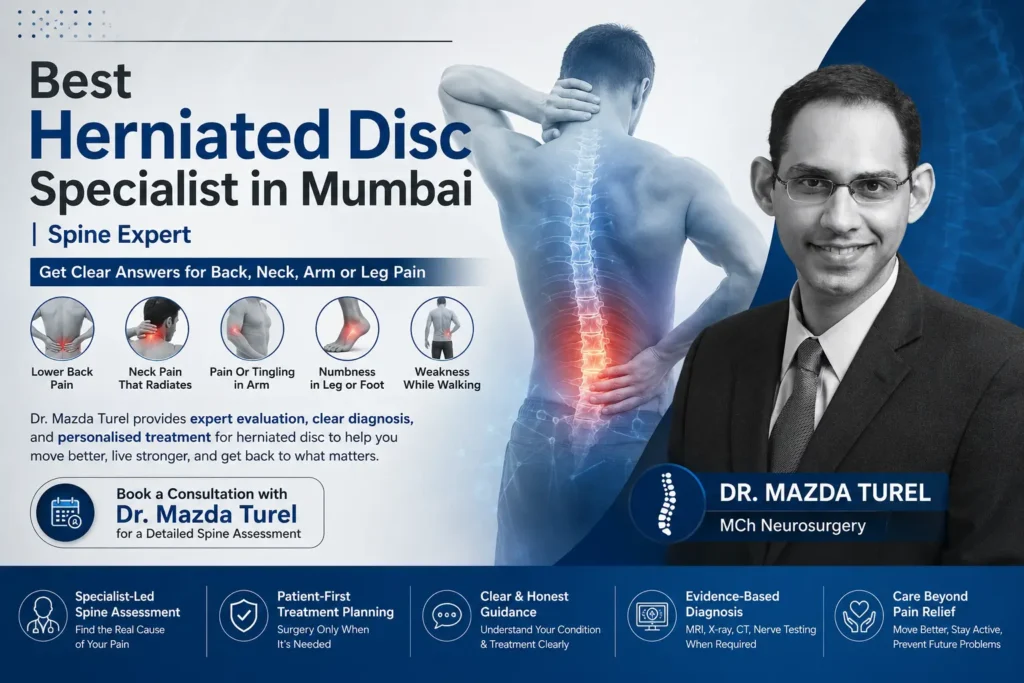
Lower back pain can disturb everything — sitting, walking, sleeping, working, travelling, and even simple daily movements. For some people, it starts as a mild ache. For others, it becomes sharp pain that travels to the hip, buttock, or leg.
When back pain keeps coming back, lasts for weeks, or starts affecting your routine, it should not be ignored.
Dr. Mazda Turel, MCh Neurosurgery, is a lower back pain specialist in Mumbai who evaluates spine-related pain with a focused, step-by-step approach. The aim is simple: understand the exact cause of your pain, protect your nerves, reduce discomfort, and help you return to daily life safely.
Lower back pain may come from muscles, discs, joints, nerves, bones, posture issues, or age-related spine changes. Many cases improve with medicines, physiotherapy, lifestyle correction, and guided care. Surgery is considered only when clearly needed, such as severe nerve compression, weakness, spinal instability, or pain that does not improve with conservative treatment.
Why Choose Us
Choosing the right back pain specialist doctor matters because lower back pain is not the same for every patient. Two people may feel pain in the same area, but the cause can be completely different.
Dr. Mazda Turel, MCh Neurosurgery, brings focused expertise in brain and spine conditions. His approach is based on careful diagnosis, clinical examination, imaging when needed, and patient-specific treatment planning.
- Diagnosis Before Treatment
Back pain treatment should not start with guesswork. A proper history, neurological examination, movement assessment, and suitable investigations help identify whether the pain is muscular, disc-related, nerve-related, joint-related, or due to another spine condition.
- Conservative Treatment First, Surgery Only When Needed
Most lower back pain cases do not need surgery. Treatment often starts with medicines, physiotherapy, posture correction, activity changes, and pain-relieving interventions when required. Surgery is discussed only when there is a clear medical reason.
- Advanced Spine Care
For patients who need further care, treatment may include image-guided injections, minimally invasive spine procedures, decompression surgery, disc surgery, spinal stabilization, or fusion surgery depending on the diagnosis.
- Patient-First Communication
Patients are explained their condition in simple words. The focus is not only on the MRI report but also on the patient’s pain pattern, lifestyle, symptoms, work demands, and long-term spine health.
- Safe and Ethical Care
Every treatment plan is created with safety in mind. The aim is to offer the least invasive effective option first, avoid unnecessary procedures, and support recovery through follow-up care.
What Is Lower Back Pain Specialist Care?
A lower back pain specialist focuses on diagnosing and treating pain that affects the lumbar spine, which is the lower part of the back. This area carries much of the body’s weight and is involved in bending, lifting, twisting, sitting, and walking.
Lower back pain may feel like:
- A dull ache in the lower back.
- Sharp pain while bending or standing.
- Pain that travels to the buttock or leg.
- Stiffness after sitting for long hours.
- Weakness, numbness, or tingling in the leg.
- Pain that becomes worse after lifting weight.
A lower back pain specialist does not treat only the pain. The real goal is to find the root cause. For example, pain may be due to a muscle strain, slipped disc, sciatica, spinal stenosis, arthritis, spondylolisthesis, spinal fracture, or nerve compression.
A back pain specialist doctor checks whether the pain is simple and short-term or linked to a deeper spine problem. This helps patients get the right treatment at the right time.
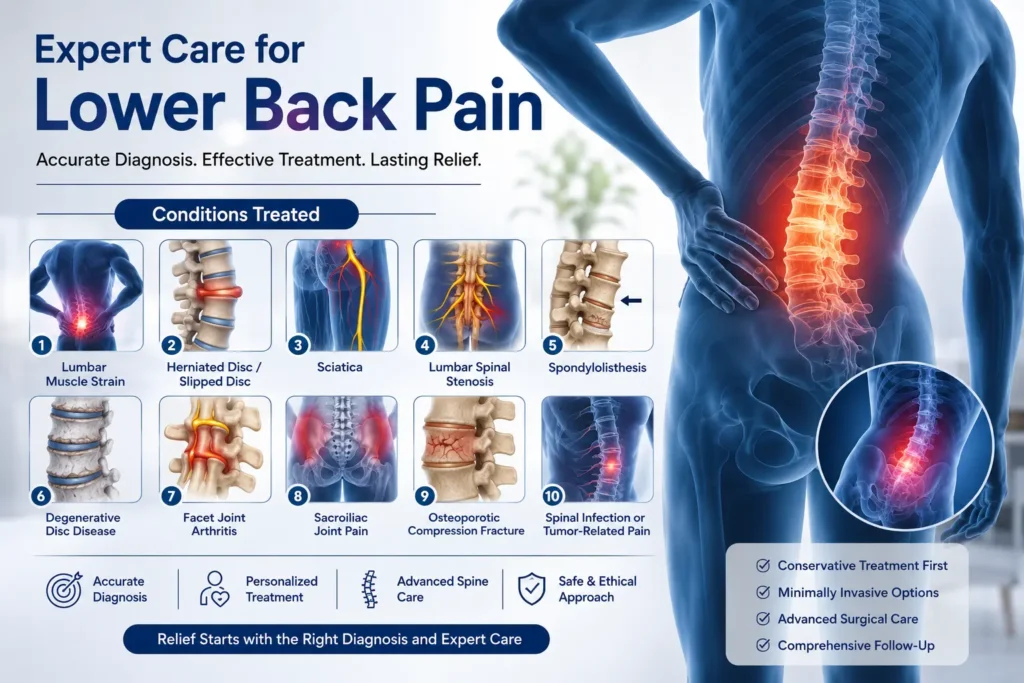
Conditions Treated
1. Lumbar Muscle Strain
Lumbar muscle strain is one of the common causes of lower back pain. It usually happens when muscles or ligaments in the lower back are overstretched due to sudden movement, heavy lifting, poor posture, or long sitting hours.
- Symptoms:
Pain in the lower back.
Stiffness while bending.
Muscle tightness or spasm.
Pain after lifting or twisting.
Pain that improves with rest.
- When treatment is needed:
You should see a specialist if the pain lasts more than a few days, keeps returning, affects walking or sleep, or does not improve with basic care.
2. Herniated Disc / Slipped Disc
A slipped disc happens when the soft inner part of a spinal disc presses outward and irritates a nearby nerve. This can cause lower back pain and leg pain. When the pain travels down the leg, it is often called sciatica.
- Symptoms:
Lower back pain.
Pain going to the buttock, thigh, calf, or foot.
Numbness or tingling.
Leg weakness.
Pain that worsens while sitting, coughing, or bending.
- When treatment is needed:
Treatment is needed when pain is severe, leg symptoms are increasing, weakness appears, or daily movement becomes difficult. Surgery may be considered if nerve compression is severe or symptoms do not improve with conservative care.
3. Sciatica
Sciatica is nerve pain that usually starts in the lower back and travels down one leg. It commonly occurs due to disc prolapse, spinal stenosis, or nerve root compression.
- Symptoms:
Shooting pain from back to leg.
Burning or electric-like pain.
Numbness in the leg or foot.
Tingling sensation.
Pain that increases while sitting.
- When treatment is needed:
You should consult a specialist if sciatica lasts more than a few days, keeps worsening, causes weakness, or affects walking.
4. Lumbar Spinal Stenosis
Lumbar spinal stenosis means narrowing of the spinal canal in the lower back. This can put pressure on nerves. It is more common with age-related spine changes.
- Symptoms:
Lower back pain.
Pain, heaviness, or numbness in both legs.
Difficulty walking long distances.
Relief after sitting or bending forward.
Leg weakness in advanced cases.
- When treatment is needed:
Treatment is needed when walking becomes limited, leg pain increases, or symptoms affect independence. Some patients may need decompression surgery if nerve pressure is severe.
Spondylolisthesis occurs when one vertebra slips forward over another. It can cause lower back pain, nerve compression, stiffness, and leg symptoms.
- Symptoms:
Lower back pain.
Pain after standing or walking.
Tight hamstrings.
Leg pain or numbness.
Difficulty bending backward.
- When treatment is needed:
Specialist care is important if pain is persistent, the slip is progressing, or nerve symptoms are present.
6. Degenerative Disc Disease
Degenerative disc disease refers to wear-and-tear changes in spinal discs. It does not always cause pain, but in some patients, disc degeneration can lead to chronic lower back pain.
- Symptoms:
Deep lower back ache.
Pain after sitting for long periods.
Pain while bending or lifting.
Stiffness in the morning.
Flare-ups that come and go.
- When treatment is needed:
Treatment is needed when pain becomes frequent, affects daily life, or is linked to nerve compression.
7. Facet Joint Arthritis
Facet joints are small joints at the back of the spine. Arthritis or inflammation in these joints can cause lower back pain, especially during twisting or bending backward.
- Symptoms:
- Pain on one or both sides of the lower back.
- Stiffness after rest.
- Pain while standing long.
- Pain during twisting movements.
- Pain that may spread to the hip.
- When treatment is needed:
A specialist may suggest medicines, physiotherapy, posture correction, or targeted injections if symptoms persist.
8. Sacroiliac Joint Pain
The sacroiliac joint connects the spine to the pelvis. Pain from this joint can feel like lower back pain or hip pain.
- Symptoms:
- Pain near the lower back and buttock.
- Pain while climbing stairs.
- Pain after standing on one leg.
- Pain while turning in bed.
- Pain that may spread to the thigh.
- When treatment is needed:
Specialist evaluation is needed when pain is one-sided, keeps returning, or does not improve with rest and physiotherapy.
9. Osteoporotic Compression Fracture
Weak bones due to osteoporosis can lead to small fractures in the spine. These fractures may happen after minor falls or even simple bending in elderly patients.
- Symptoms:
- Sudden back pain.
- Pain after a fall.
- Pain that worsens while standing.
- Height loss or bending posture.
- Tenderness over the spine.
- When treatment is needed:
Urgent evaluation is needed if an elderly patient develops sudden back pain after a fall or minor injury.
10. Spinal Infection or Tumor-Related Pain
These causes are less common, but they must not be missed. Infection or tumor-related spine pain may cause constant pain, night pain, fever, weight loss, or neurological symptoms.
- Symptoms:
- Severe pain at night.
- Fever with back pain.
- Unexplained weight loss.
- History of cancer.
- Weakness or numbness.
- When treatment is needed:
Immediate medical evaluation is important if these warning signs are present.
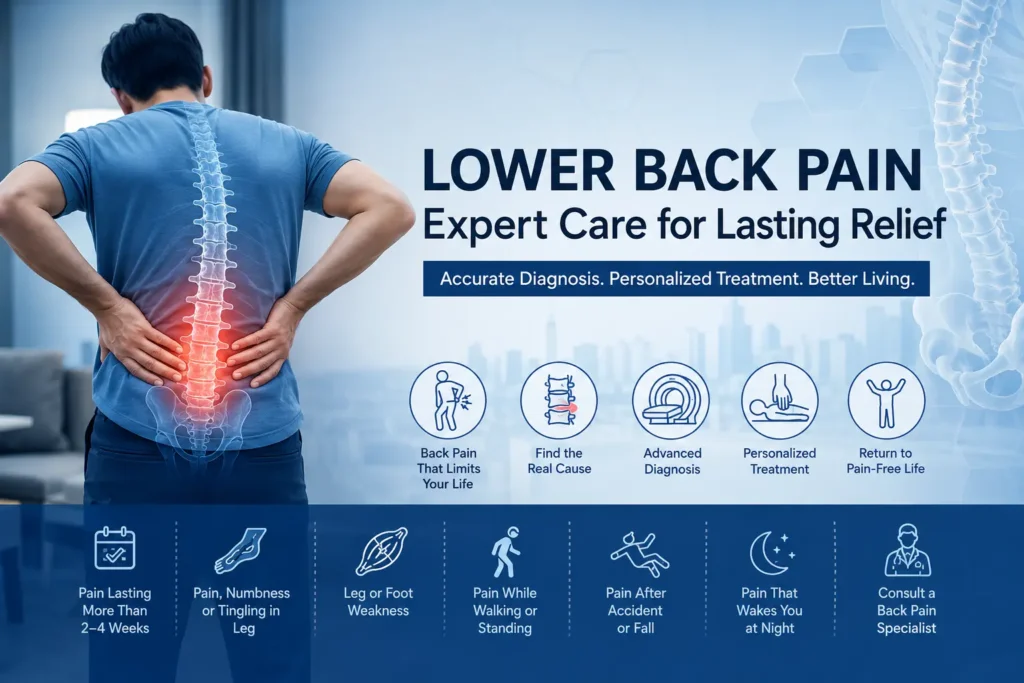
Signs You Should See a Specialist
You should consult a lower back pain specialist in Mumbai if you have:
- Lower back pain lasting more than 2–4 weeks.
- Pain travelling to the leg.
- Numbness, tingling, or burning sensation.
- Weakness in the leg or foot.
- Difficulty walking or standing.
- Pain after an accident or fall.
- Back pain with fever.
- Pain that wakes you at night.
- Loss of bladder or bowel control.
- Pain with unexplained weight loss.
- Repeated back pain episodes.
- Pain not improving with medicines or physiotherapy.
- Back pain in an elderly patient after minor injury.
- Severe pain after lifting weight.
- Back pain with known cancer history.
Loss of bladder or bowel control, severe weakness, or numbness around the private area can be emergency signs and need urgent medical care.
Causes / Risk Factors
Lower back pain can happen for many reasons. Sometimes the cause is simple. Sometimes it is linked to the spine, nerves, joints, or bones.
- Poor Posture
Long hours of sitting, bending over a laptop, driving, or using a mobile phone can strain the lower back.
- Heavy Lifting
Incorrect lifting technique can put pressure on discs, muscles, and ligaments.
- Weak Core Muscles
Weak abdominal and back muscles reduce support for the spine.
- Disc Problems
A bulging or herniated disc can irritate spinal nerves and cause back pain with leg pain.
- Age-Related Spine Changes
With age, discs may lose hydration, joints may develop arthritis, and the spinal canal may narrow.
- Sedentary Lifestyle
Low physical activity can make muscles weak and stiff.
- Excess Body Weight
Extra weight can increase stress on the lower spine.
- Smoking
Smoking can affect blood flow and tissue healing, which may contribute to spine health issues.
- Osteoporosis
Weak bones can increase the risk of spinal compression fractures.
- Repeated Bending or Twisting
Certain jobs and sports can place repeated stress on the lower back.
- Previous Injury
Old injuries can lead to recurring pain, stiffness, or early degeneration.
Diagnosis
Correct diagnosis is the foundation of safe lower back pain treatment. A back pain specialist doctor may use the following methods.
- Medical History
The doctor will ask about pain location, duration, type of pain, triggers, previous injuries, work pattern, sleep disturbance, walking ability, and any leg symptoms.
- Physical Examination
This includes checking posture, spinal movement, tenderness, muscle spasm, flexibility, and pain pattern.
- Neurological Examination
A neurological check helps assess nerve function. This may include muscle strength, reflexes, sensation, walking pattern, and straight leg raise test.
- X-Ray
An X-ray can help detect spinal alignment issues, fractures, arthritis, deformity, or spondylolisthesis.
- MRI Spine
MRI is useful for viewing discs, nerves, spinal canal narrowing, infection, tumors, and soft tissue structures. It is often advised when pain is persistent, severe, or linked to nerve symptoms.
- CT Scan
A CT scan provides detailed bone images. It may be used for fractures, complex spine anatomy, or surgical planning.
- Blood Tests
Blood tests may be advised when infection, inflammation, or other medical conditions are suspected.
- Nerve Tests
Electromyography and nerve conduction studies may be used in selected cases to assess nerve function.
- Diagnostic Injections
In some patients, targeted injections may help confirm whether pain is coming from a facet joint, sacroiliac joint, or nerve root.
Not every patient needs every test. Investigations are selected based on symptoms and clinical examination.
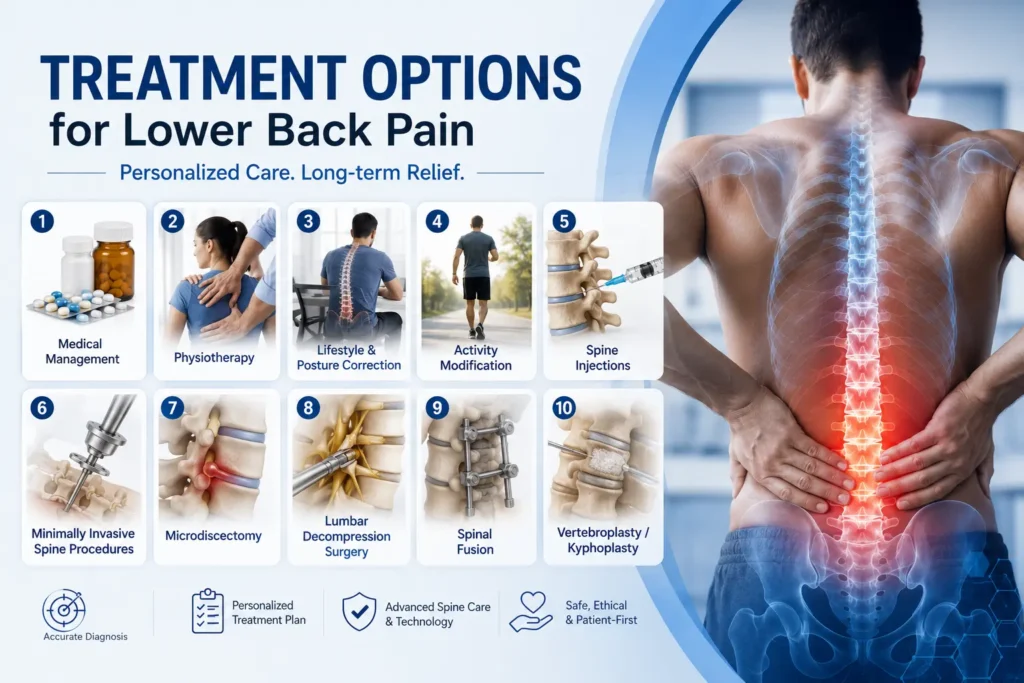
Treatment Options
Lower back pain treatment depends on the cause, severity, duration, age, lifestyle, nerve involvement, and response to previous care.
1. Medical Management
Medicines may help reduce pain, inflammation, muscle spasm, or nerve-related discomfort.
Commonly used medicines may include:
- Pain relievers.
- Anti-inflammatory medicines.
- Muscle relaxants.
- Nerve pain medicines.
- Short-term medication for acute flare-ups.
Medicines should be taken only as advised by a doctor, especially in patients with kidney disease, acidity, heart disease, diabetes, blood pressure, or those taking blood thinners.
2. Physiotherapy
Physiotherapy is an important part of lower back pain care. It helps improve flexibility, strength, posture, movement, and spine support.
A physiotherapy plan may include:
- Core strengthening.
- Stretching.
- McKenzie-based exercises.
- Nerve gliding exercises.
- Posture training.
- Walking program.
- Back muscle conditioning.
- Ergonomic correction.
Exercise should be guided properly because the wrong movement can worsen some spine conditions.
3. Lifestyle and Posture Correction
Small changes can reduce repeated stress on the lower back.
This may include:
- Correct sitting posture.
- Proper chair height.
- Avoiding long sitting.
- Safe bending and lifting.
- Weight management.
- Better sleep posture.
- Regular walking.
- Avoiding sudden heavy lifting.
4. Activity Modification
Complete bed rest is usually not recommended for most back pain cases. Gentle activity, walking, and guided movement are often better than staying inactive for long periods.
5. Spine Injections
In selected patients, injections may help reduce inflammation and pain.
Options may include:
- Epidural Steroid Injection
Used when nerve irritation causes leg pain or sciatica.
- Facet Joint Injection
Used when pain may be coming from small spinal joints.
- Nerve Root Block
Used for targeted nerve-related pain.
- Sacroiliac Joint Injection
Used when pain comes from the sacroiliac joint.
Injections may reduce pain enough for patients to move better and continue rehabilitation. They are not suitable for every patient.
6. Minimally Invasive Spine Procedures
Minimally invasive techniques use smaller incisions and focused access to the affected area. These may be considered for selected disc, nerve compression, or spinal stenosis cases.
Possible benefits may include:
- Smaller incision.
- Less tissue disruption.
- Reduced hospital stay in suitable cases.
- Faster movement after surgery.
- Focused nerve decompression.
Suitability depends on the diagnosis and imaging findings.
7. Microdiscectomy
Microdiscectomy may be advised for a herniated disc causing severe sciatica, leg weakness, or persistent nerve pain. The goal is to remove the disc fragment pressing on the nerve.
8. Lumbar Decompression Surgery
Decompression surgery may be used for spinal stenosis or nerve compression. The goal is to create more space for compressed nerves.
9. Spinal Fusion
Fusion may be considered when there is spinal instability, severe spondylolisthesis, deformity, or painful movement between vertebrae. It is not needed for every back pain patient.
10. Vertebroplasty / Kyphoplasty
These procedures may be considered in selected spinal compression fractures, especially when pain is severe and linked to osteoporosis-related vertebral collapse.
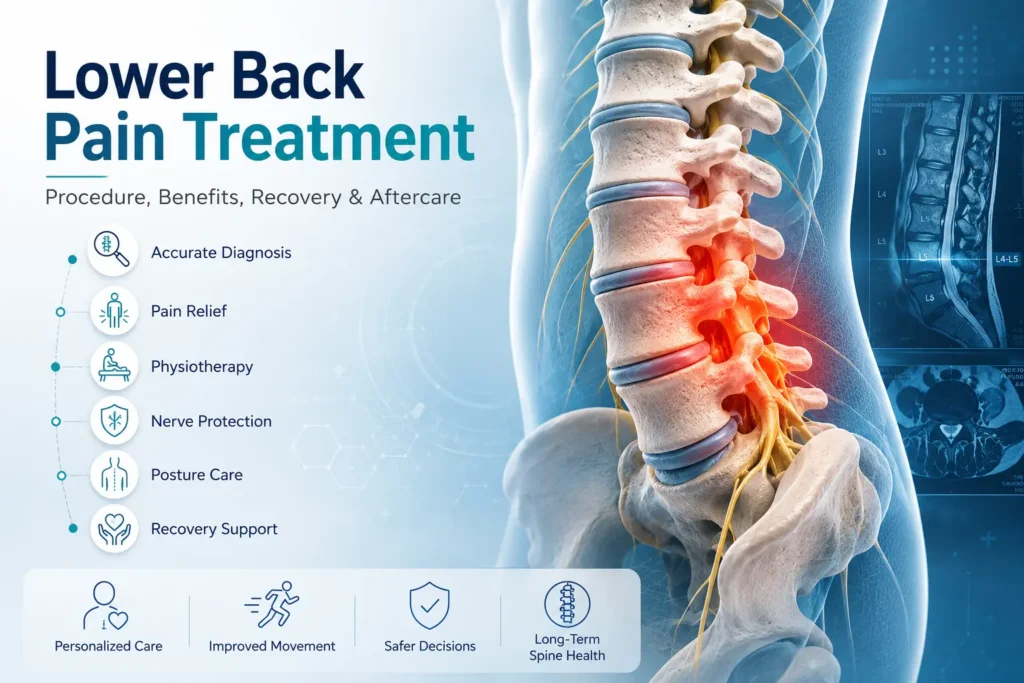
Procedure
Lower back pain care is usually a treatment pathway, not a single procedure. The process is planned according to your diagnosis.
- Before Treatment
The doctor reviews your symptoms, medical history, previous reports, medicines, lifestyle, and pain triggers. A physical and neurological examination is done. Imaging may be advised if needed.
You may be asked:
- When did the pain start?
- Does pain travel to the leg?
- Is there numbness or weakness?
- What makes pain worse?
- What gives relief?
- Have you tried medicines or physiotherapy?
- Do you have diabetes, osteoporosis, or other conditions?
- During Treatment
Treatment may begin with medicines, guided physiotherapy, posture correction, and activity changes. If pain is severe or nerve irritation is present, injections or advanced interventions may be considered.
If surgery is needed, the procedure is chosen based on the condition. For example, a disc prolapse may need microdiscectomy, while spinal stenosis may need decompression.
- After Treatment
Follow-up care is important. The doctor monitors pain relief, walking ability, nerve recovery, wound healing if surgery is done, and return to daily activity.
- Recovery
Recovery depends on the diagnosis and treatment type.
Muscle strain may improve within days to weeks.
Disc-related pain may need a few weeks of structured care.
Nerve symptoms may take longer to recover.
Post-surgery recovery depends on the procedure and patient health.
The recovery plan may include walking, physiotherapy, medicines, posture care, and follow-up visits.
Benefits
- Correct Diagnosis
A specialist evaluation helps identify the real cause of pain instead of treating only symptoms.
- Better Pain Control
A planned approach can help reduce pain safely through medicines, therapy, injections, or surgery when needed.
- Improved Movement
Treatment can help patients walk, sit, sleep, and bend more comfortably.
- Nerve Protection
Early care can help detect nerve compression before weakness becomes serious.
- Less Dependence on Painkillers
Finding the cause and treating it properly may reduce repeated painkiller use.
- Personalised Treatment
Every patient receives care based on symptoms, MRI findings, age, lifestyle, work needs, and health condition.
- Safer Decision-Making
A spine specialist can guide whether surgery is required or whether non-surgical care is enough.
- Better Long-Term Spine Health
Aftercare, exercises, posture correction, and lifestyle changes help reduce the chances of repeated pain episodes.
Why Early Treatment Matters
Many people ignore lower back pain until it becomes severe. This delay can make recovery harder, especially when nerve compression is involved.
Early treatment helps in many ways.
- It can detect serious causes such as fracture, infection, tumor, or severe nerve compression.
- It can prevent avoidable worsening of disc-related pain.
- It can reduce repeated flare-ups.
- It can help patients avoid wrong exercises or unnecessary treatments.
- It can protect walking ability in cases of spinal stenosis.
- It can reduce the risk of chronic pain patterns.
- It can guide patients on whether they need rest, therapy, injections, or surgical opinion.
Back pain that lasts for a few days may not always be serious. But pain that keeps returning, spreads to the leg, causes numbness, or affects movement needs proper evaluation.
Recovery & Aftercare
Recovery does not stop after pain relief. Long-term care is important to keep the spine strong and reduce recurrence.
1. Lifestyle
- Avoid sitting for long hours.
- Take short walking breaks.
- Use proper back support.
- Avoid sudden heavy lifting.
- Maintain healthy body weight.
- Sleep on a supportive mattress.
- Avoid smoking.
- Build a regular walking habit.
2. Diet
A balanced diet supports healing, muscle health, and bone strength.
Include:
- Protein-rich foods.
- Calcium sources.
- Vitamin D as advised.
- Fruits and vegetables.
- Adequate water.
- Healthy fats.
Patients with osteoporosis, diabetes, kidney disease, or other medical conditions should follow a doctor-approved diet plan.
3. Exercise
Exercises should be started only after diagnosis and medical advice.
Commonly recommended exercises may include:
- Walking.
- Core strengthening.
- Pelvic tilts.
- Hamstring stretching.
- Back extension exercises.
- Hip mobility exercises.
- Gentle strengthening.
Avoid self-starting heavy gym workouts, deep bending, twisting, or high-impact exercise during active pain.
4. Medication
Take medicines only as prescribed. Do not continue painkillers for long periods without medical advice.
5. Follow-Up
Follow-up visits help track recovery, adjust medicines, review physiotherapy progress, and decide whether further treatment is needed.

Emergency Cases
Please feel welcome to contact our friendly reception staff with any general or medical equiry call us.
Frequently Asked Questions
1. Who is the best lower back pain specialist in Mumbai?
A good lower back pain specialist in Mumbai should be experienced in diagnosing spine, disc, nerve, joint, and muscle-related causes of back pain. Dr. Mazda Turel, MCh Neurosurgery, provides focused spine evaluation and treatment planning for patients with lower back pain, sciatica, slipped disc, spinal stenosis, and related conditions.
2. When should I see a back pain specialist doctor?
You should see a back pain specialist doctor if pain lasts more than 2–4 weeks, travels to the leg, causes numbness or weakness, affects walking, disturbs sleep, or keeps coming back. You should seek urgent care if you have bladder or bowel problems, severe weakness, fever, trauma, or unexplained weight loss with back pain.
3. Is lower back pain always due to a slipped disc?
No. Lower back pain can be due to muscle strain, facet joint arthritis, sacroiliac joint pain, spinal stenosis, spondylolisthesis, osteoporosis-related fracture, posture problems, or nerve compression. A slipped disc is only one possible cause.
4. Can lower back pain be treated without surgery?
Yes. Many patients improve with non-surgical treatment such as medicines, physiotherapy, posture correction, lifestyle changes, guided exercises, and injections when needed. Surgery is usually considered only when there is severe nerve compression, weakness, instability, or pain that does not improve with proper conservative care.
5. What tests are needed for lower back pain?
Not every patient needs tests. A doctor may advise an X-ray, MRI, CT scan, blood tests, or nerve tests depending on symptoms. MRI is commonly used when pain travels to the leg, nerve compression is suspected, or pain does not improve.
6. What is the difference between normal back pain and nerve pain?
Normal muscular back pain usually stays in the lower back and may feel like stiffness or soreness. Nerve pain often travels to the buttock, thigh, calf, or foot. It may feel sharp, burning, electric, or tingling. Nerve pain can also cause numbness or weakness.
7. Can sitting for long hours cause lower back pain?
Yes. Long sitting can strain the lower back, tighten hip muscles, weaken core muscles, and increase disc pressure. People who work on laptops or drive for long hours often develop posture-related back pain.
8. Is walking good for lower back pain?
Walking is helpful for many patients because it keeps the spine mobile and improves circulation. However, if walking increases leg pain, numbness, or weakness, you should consult a specialist before continuing.
9. Which doctor should I consult for lower back pain with leg pain?
Lower back pain with leg pain may suggest sciatica or nerve compression. A spine specialist or neurosurgeon with experience in spine conditions can evaluate the cause and suggest suitable treatment.
10. How long does lower back pain take to recover?
Recovery depends on the cause. Simple muscle strain may improve within days to weeks. Disc-related pain, sciatica, or spinal stenosis may take longer and may need structured treatment. Chronic pain needs a proper plan instead of repeated short-term painkiller use.
11. Can lower back pain come back after treatment?
Yes, it can return if the root cause is not managed or if posture, weight, muscle strength, and work habits are not corrected. Aftercare, exercises, and lifestyle changes reduce the risk of recurrence.
12. Is MRI necessary for every back pain patient?
No. MRI is not required for every case. It is usually advised when symptoms are severe, persistent, linked to nerve problems, or when the doctor suspects disc prolapse, stenosis, infection, tumor, or other significant spine conditions.
13. What are the danger signs of lower back pain?
Danger signs include loss of bladder or bowel control, weakness in the legs, numbness around the private area, fever, unexplained weight loss, pain after trauma, cancer history, or severe night pain. These symptoms need urgent medical attention.
14. Can physiotherapy cure lower back pain?
Physiotherapy can help many patients by improving strength, flexibility, posture, and movement. However, it should be based on the correct diagnosis. Some conditions need medicines, injections, or surgical evaluation along with physiotherapy.
15. When is surgery needed for lower back pain?
Surgery may be needed when there is severe nerve compression, progressive weakness, spinal instability, spinal stenosis affecting walking, severe disc prolapse, or pain that does not improve after proper non-surgical treatment. The decision is made after clinical examination and imaging review.