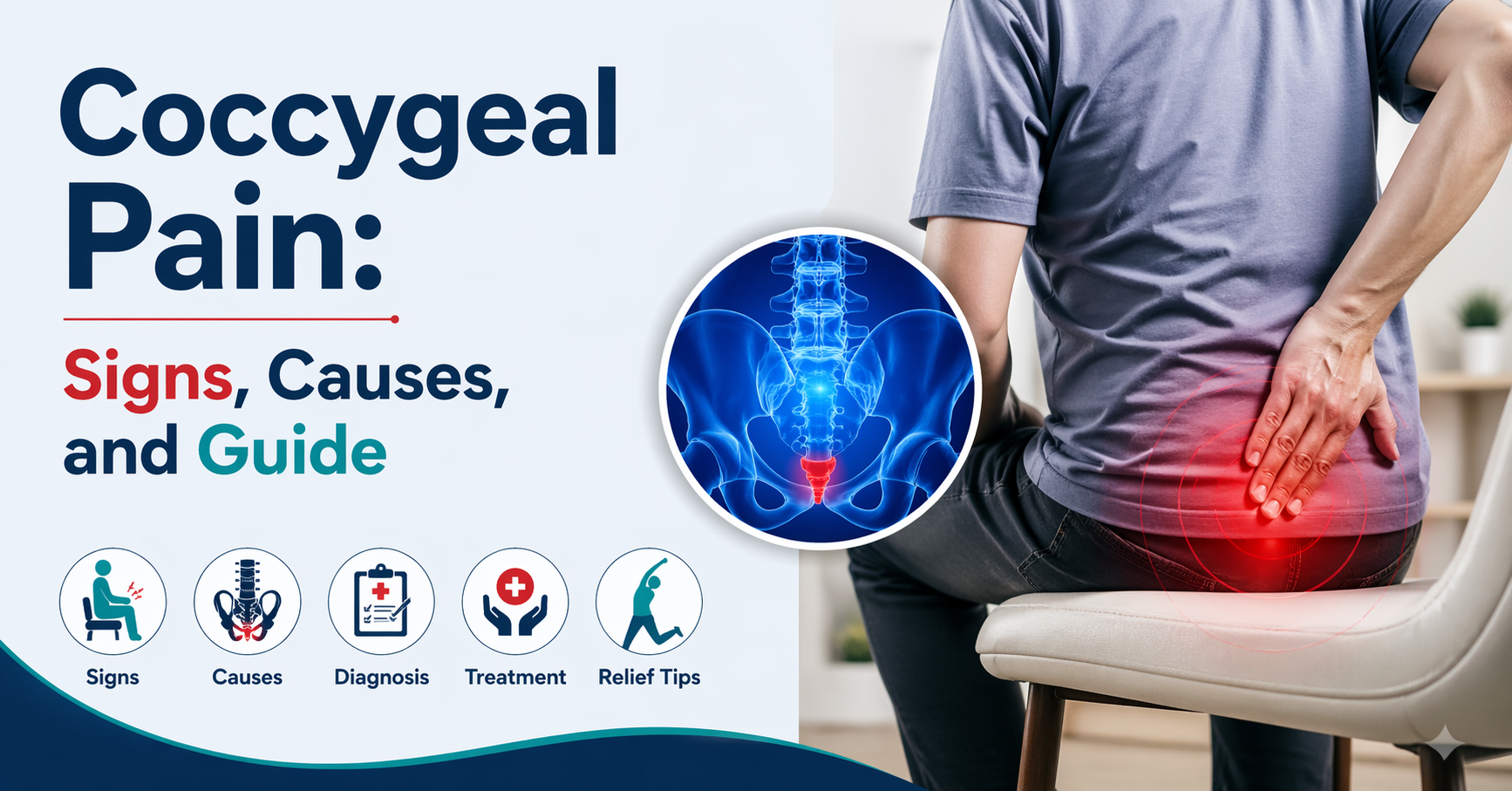
Coccygeal pain is one of those conditions people don’t talk about enough yet it can quietly affect daily life in a big way. Sitting becomes uncomfortable, long drives feel exhausting, and even simple movements like standing up can trigger sharp discomfort.
The term coccygeal relates to the coccyx, commonly known as the tailbone. When this small bone at the bottom of your spine becomes inflamed or injured, it can lead to persistent pain that interferes with routine activities.
This guide breaks down everything you need to know about coccygeal pain, what causes it, how to recognize it early, and what you can do to find real relief.
What Is Coccygeal Pain?
Coccygeal pain, also called coccydynia, refers to pain in the coccyx region, the small triangular bone at the very bottom of the spine.
This area may seem minor, but it plays a role in:
- Supporting your body while sitting
- Anchoring muscles, ligaments, and tendons
- Helping maintain posture and balance
When something disrupts this structure whether injury, pressure, or inflammation it can lead to discomfort that ranges from mild irritation to severe, long-lasting pain.
Common Signs of Coccygeal Pain
Coccygeal pain doesn’t feel the same for everyone, but there are some clear patterns.
Typical Symptoms:
- Pain while sitting, especially on hard surfaces
- Sharp discomfort when standing up from a seated position
- Tenderness at the base of the spine
- Pain during long periods of sitting
- Discomfort during bowel movements
- Pain that worsens with movement or pressure
How It Progresses:
In early stages, you might feel slight discomfort only after long sitting hours. But if ignored, it can gradually turn into constant pain – even affecting sleep and mobility.
Causes of Coccygeal Pain
Understanding the cause is key to treating coccygeal pain effectively.
1. Injury or Trauma
A direct fall on the tailbone is one of the most common reasons. Even a minor slip can lead to bruising or fractures.
2. Prolonged Sitting
Sitting for long hours – especially on hard or poorly cushioned surfaces puts constant pressure on the coccyx.
3. Poor Posture
Leaning back or slouching shifts weight directly onto the tailbone, increasing strain.
4. Childbirth
During delivery, the coccyx can be strained or injured, leading to postpartum coccygeal pain.
5. Degenerative Changes
With age, joints and discs can wear down, causing inflammation around the coccyx.
6. Infections or Rare Conditions
In some cases, infections or tumors may cause pain in the coccygeal region.
Risk Factors You Should Know
Some people are more likely to develop coccygeal pain than others.
- Sedentary lifestyle
- Obesity or rapid weight loss
- Frequent cycling or long sitting jobs
- History of spinal injuries
- Women (especially after childbirth)
Recognizing these risks early can help you take preventive steps.
When Should You See a Specialist?
Not all coccygeal pain needs immediate medical attention. But certain signs shouldn’t be ignored.
Seek help if:
- Pain lasts more than a few weeks
- Sitting becomes extremely difficult
- Pain is severe after an injury
- There is swelling, numbness, or radiating pain
- Daily life is affected
If symptoms persist, consulting an experienced neurosurgeon can help identify the exact cause and guide the right treatment approach. You can explore more about advanced spine care and treatment approaches here:
https://mazdaturel.com/
Diagnosis of Coccygeal Pain
Diagnosis usually begins with a physical examination and medical history.
Common Diagnostic Methods:
- Physical Examination: Checking tenderness and movement
- X-rays: To detect fractures or abnormal positioning
- MRI Scans: To identify inflammation or soft tissue damage
- Posture Analysis: To evaluate sitting habits
Accurate diagnosis is essential because treatment depends heavily on the root cause.
Treatment Options for Coccygeal Pain
Treatment varies depending on severity, but most cases improve without surgery.
1. Non-Surgical Treatments (First Line)
Lifestyle Changes
- Avoid prolonged sitting
- Use soft cushions or donut pillows
- Maintain proper posture
Medications
- Pain relievers
- Anti-inflammatory drugs
Physical Therapy
- Stretching exercises
- Strengthening surrounding muscles
- Posture correction techniques
2. Advanced Non-Surgical Options
- Local steroid injections
- Nerve blocks
- Manual manipulation techniques
These are usually recommended if basic treatments don’t provide relief.
3. Surgical Treatment (Rare Cases)
Surgery is considered only when pain is severe and persistent.
- Coccygectomy (removal of coccyx)
- Performed only after careful evaluation
For patients dealing with long-term coccygeal issues, consulting a specialist can help determine whether advanced intervention is needed. Learn more about expert care and treatment pathways here:
https://mazdaturel.com/
Home Remedies for Coccygeal Pain Relief
Simple home care can significantly reduce discomfort.
Try These:
- Use a coccyx cushion while sitting
- Apply ice packs for 15–20 minutes
- Switch to heat therapy after initial swelling reduces
- Avoid sitting on hard surfaces
- Practice gentle stretching
Consistency is key. Small changes can bring noticeable improvement over time.
Prevention Tips
Preventing coccygeal pain is often easier than treating it.
- Maintain correct sitting posture
- Take breaks if sitting for long hours
- Use ergonomic chairs
- Strengthen core and back muscles
- Avoid sudden pressure or falls
These habits not only protect your tailbone but also support overall spinal health.
Recovery Timeline
Recovery depends on the cause and severity.
- Mild cases: Few days to weeks
- Moderate cases: Several weeks
- Chronic cases: May take months with treatment
The earlier you address the issue, the faster the recovery.
Final Thoughts
Coccygeal pain might seem minor at first, but it can slowly affect your quality of life if ignored. The good news is that most cases respond well to simple treatments and lifestyle changes.
Understanding your body, recognizing early symptoms, and taking timely action can make a huge difference. And if pain persists, getting expert guidance ensures you don’t just manage the symptoms but address the root cause.
1. What does coccygeal pain feel like?
It usually feels like a sharp or aching pain at the base of the spine, especially while sitting or getting up.
2. Is coccygeal pain serious?
In most cases, it is not serious and improves with simple treatments. However, persistent pain should be evaluated by a specialist.
3. How long does coccygeal pain last?
It can last from a few days to several weeks. Chronic cases may take longer depending on the cause.
4. Can coccygeal pain go away on its own?
Yes, many mild cases resolve with rest, posture correction, and basic care.
5. Which doctor should I consult for coccygeal pain?
A spine specialist or neurosurgeon is best suited to diagnose and treat coccygeal pain effectively.
6. Does sitting make coccygeal pain worse?
Yes, especially on hard surfaces or with poor posture.
7. Are cushions helpful for coccygeal pain?
Yes, specially designed cushions reduce pressure on the tailbone and provide relief.
8. Can exercise help coccygeal pain?
Yes, gentle stretching and strengthening exercises can improve recovery and prevent recurrence.