
Sciatica Specialist in Mumbai
Sciatica Specialist in Mumbai – Expert Care for Lasting Relief
Living with pain that starts in your lower back and shoots down your leg can make even simple activities feel difficult. Walking, sitting, climbing stairs, or sleeping comfortably may become a daily challenge. If this sounds familiar, it may be time to consult a sciatica specialist.
Dr. Mazda K. Turel, MCh Neurosurgery, is an experienced brain and spine surgeon in Mumbai who provides comprehensive evaluation and advanced treatment for sciatica and related spinal disorders. Every treatment plan is designed after identifying the exact cause of your symptoms, helping you receive care that matches your condition instead of temporary pain relief alone.
Whether your pain has just started or has been affecting your quality of life for months, early diagnosis can help prevent further nerve damage and improve recovery.
Why Patients Choose Dr. Mazda Turel
- MCh Neurosurgery with extensive expertise in spine disorders
- Comprehensive diagnosis focused on finding the root cause
- Advanced non-surgical and minimally invasive treatment options
- Personalized treatment plans based on individual needs
- Modern imaging and diagnostic support
- Patient-focused care from consultation through recovery
Why Choose Dr. Mazda Turel for Sciatica Treatment in Mumbai?
Choosing the right spine specialist is one of the most important decisions when dealing with persistent leg or back pain. Sciatica is not a disease by itself—it is a symptom caused by pressure or irritation of the sciatic nerve. Successful treatment depends on accurately identifying the underlying problem.
Dr. Mazda Turel follows a structured approach that combines detailed clinical assessment, advanced imaging, and evidence-based treatment to provide safe and effective care.
- Expertise in Complex Spine Disorders
Dr. Mazda Turel specializes in diagnosing and treating conditions affecting the spine and nervous system. His experience includes managing simple as well as complex cases involving nerve compression, slipped discs, spinal stenosis, and degenerative spine disorders.
- Accurate Diagnosis Before Treatment
Not every patient with leg pain requires surgery. A thorough neurological examination and appropriate imaging help determine the actual cause of symptoms before recommending treatment.
- Personalized Treatment Plans
Every patient’s condition is unique. Factors such as age, occupation, lifestyle, symptom severity, medical history, and imaging findings are carefully considered while developing an individualized treatment strategy.
- Modern Spine Care
Treatment may include:
- Medication management
- Physical rehabilitation
- Lifestyle modification
- Image-guided injections when appropriate
- Minimally invasive spine surgery for selected patients
- Patient-Centered Care
Patients receive clear explanations about their condition, available treatment options, expected recovery, possible risks, and long-term prevention strategies so they can make informed decisions about their health.
- Focus on Long-Term Recovery
The goal is not only to relieve pain but also to restore movement, improve nerve function, reduce recurrence, and help patients return safely to their normal daily activities.
What Is Sciatica?
Sciatica is a condition caused by irritation, inflammation, or compression of the sciatic nerve, the largest nerve in the human body. The sciatic nerve begins in the lower spine, passes through the buttocks, and travels down each leg to the feet.
When this nerve becomes compressed, pain usually travels from the lower back into one buttock and down the back or side of the leg. Some people experience mild discomfort, while others develop severe pain that interferes with walking, sitting, working, or sleeping.
Many people search for a sciatica specialist when over-the-counter medicines fail to provide relief or when symptoms continue to worsen.
- Common Symptoms of Sciatica
- Pain radiating from the lower back to the leg
- Burning or sharp shooting pain
- Tingling sensation
- Numbness in the leg or foot
- Muscle weakness
- Pain while sitting
- Difficulty walking
- Pain that worsens while coughing or sneezing
- Reduced leg strength
- Foot drop in severe cases
Sciatica usually affects only one side of the body, although severe spinal disorders may involve both legs.
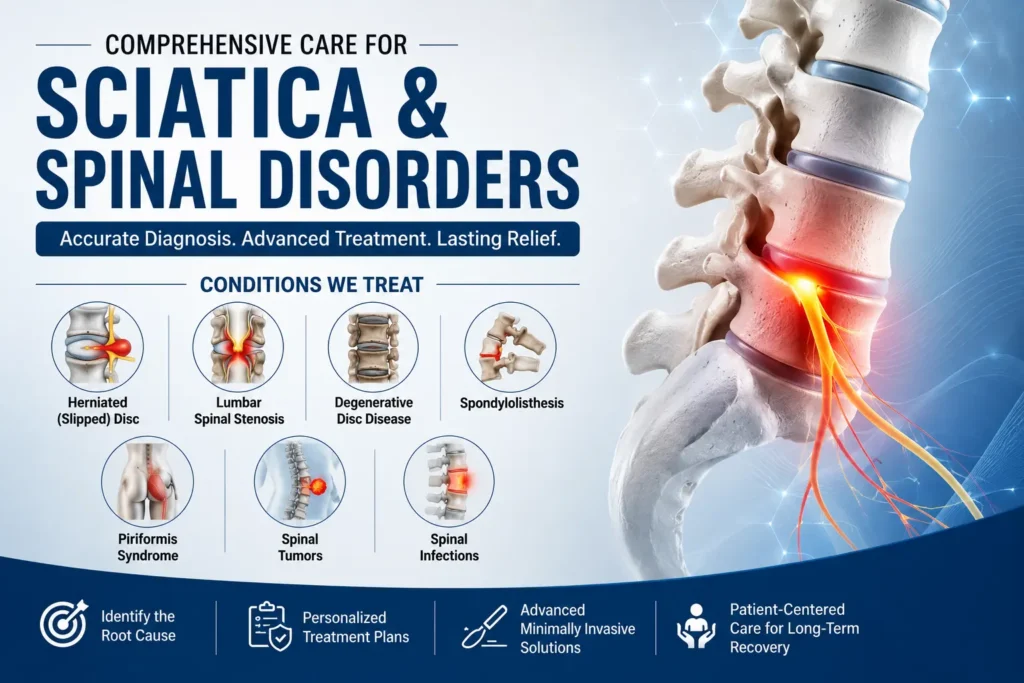
Conditions Treated
Sciatica can develop due to several spinal disorders. Identifying the exact cause is essential for selecting the most effective treatment.
A herniated disc is one of the most common causes of sciatica. The soft center of a spinal disc pushes outward and presses on nearby nerve roots.
- Symptoms
- Sudden lower back pain
- Pain radiating down one leg
- Numbness
- Tingling
- Muscle weakness
- When Treatment Is Needed
Treatment should be considered if pain persists for several weeks, becomes severe, or is associated with weakness or difficulty walking.
2. Lumbar Spinal Stenosis
Lumbar spinal stenosis occurs when the spinal canal becomes narrower, placing pressure on nerves in the lower back.
- Symptoms
- Pain while walking
- Leg heaviness
- Numbness
- Difficulty standing for long periods
- Relief after sitting or bending forward
- When Treatment Is Needed
Persistent walking difficulty, worsening nerve symptoms, or reduced mobility should be evaluated promptly.
3. Degenerative Disc Disease
As spinal discs naturally age, they lose hydration and flexibility. This may lead to disc degeneration and nerve irritation.
- Symptoms
- Chronic lower back pain
- Stiffness
- Pain during prolonged sitting
- Intermittent leg pain
- When Treatment Is Needed
Treatment is recommended when symptoms begin interfering with work, exercise, or daily activities.
This condition occurs when one vertebra slips forward over another, leading to instability and nerve compression.
- Symptoms
- Lower back pain
- Pain radiating to the legs
- Muscle tightness
- Difficulty walking
- Numbness
- When Treatment Is Needed
Progressive symptoms or neurological deficits require specialist evaluation.
5. Piriformis Syndrome
The piriformis muscle located deep in the buttock may irritate the sciatic nerve.
- Symptoms
- Buttock pain
- Pain after prolonged sitting
- Tingling down the leg
- Pain while climbing stairs
- When Treatment Is Needed
Persistent symptoms despite conservative management may require further assessment.
6. Spinal Tumors
Although uncommon, spinal tumors may compress nerve roots and produce symptoms similar to sciatica.
- Symptoms
- Persistent back pain
- Night pain
- Progressive weakness
- Numbness
- Walking difficulty
- When Treatment Is Needed
Immediate medical evaluation is necessary if a spinal tumor is suspected.
7. Spinal Infections
Infections involving the spine can cause inflammation around nerves.
- Symptoms
- Severe back pain
- Fever
- Weakness
- Difficulty walking
- When Treatment Is Needed
Prompt diagnosis and treatment are essential to prevent complications.
8. Traumatic Spine Injuries
Falls, road traffic accidents, or sports injuries can damage spinal structures and compress the sciatic nerve.
- Symptoms
- Sudden severe pain
- Numbness
- Weakness
- Reduced movement
- When Treatment Is Needed
Immediate evaluation is recommended following significant spinal trauma.
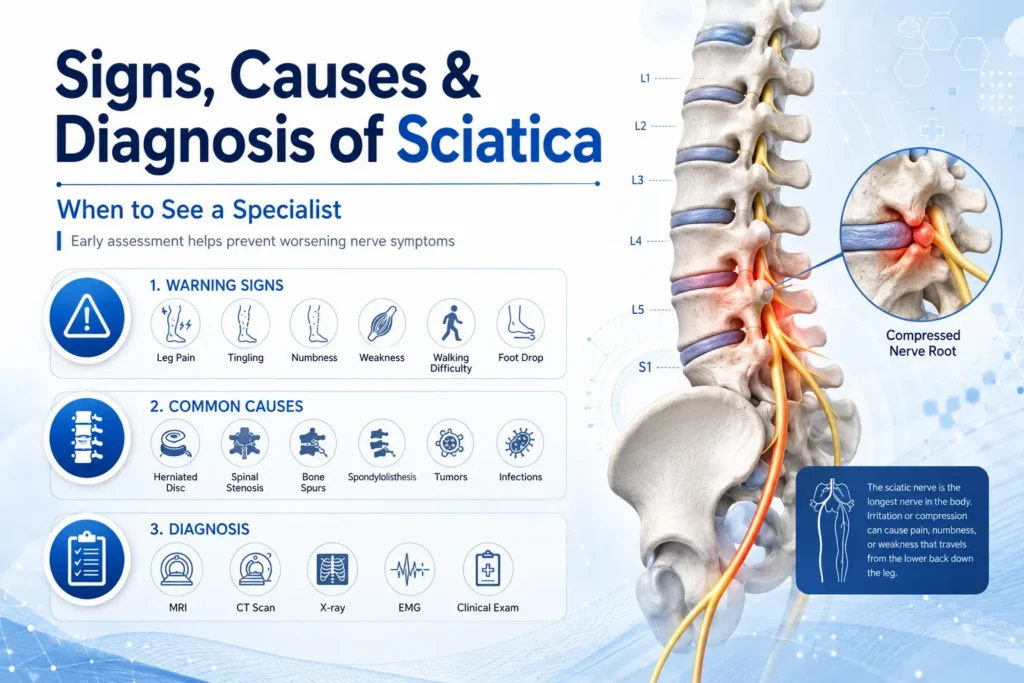
Signs You Should See a Sciatica Specialist
Do not ignore persistent nerve pain. Early assessment can help prevent worsening symptoms and long-term nerve damage.
You should consult a specialist if you experience:
- Lower back pain lasting more than two to four weeks
- Pain radiating into one or both legs
- Tingling or numbness in the foot or leg
- Burning or electric shock–like pain
- Muscle weakness in the leg
- Difficulty standing or walking
- Pain that disrupts sleep
- Pain that worsens while coughing or sneezing
- Difficulty lifting the front of the foot (foot drop)
- Loss of balance
- Recurrent episodes of sciatica
- Symptoms not improving with rest or medication
- Pain affecting work or daily activities
- Sudden loss of bladder or bowel control (seek emergency medical care immediately)
Causes and Risk Factors
Sciatica develops when the sciatic nerve becomes compressed, irritated, or inflamed. Several medical conditions and lifestyle factors can increase the likelihood of developing this problem.
- Common Causes
- Herniated lumbar disc
- Degenerative spine disease
- Spinal stenosis
- Bone spurs
- Spondylolisthesis
- Spinal cysts
- Tumors
- Infections
- Traumatic injuries
- Risk Factors
- Increasing age
- Sedentary lifestyle
- Obesity
- Repetitive heavy lifting
- Poor posture
- Smoking
- Diabetes
- Weak core muscles
- Physically demanding occupations
- Long hours of sitting
- Previous spine injuries
Understanding these risk factors can help patients make lifestyle changes that reduce future episodes of sciatica.
Diagnosis of Sciatica
Accurate diagnosis is the foundation of effective treatment. Since several spine conditions can produce similar symptoms, identifying the precise cause is essential before planning treatment.
Dr. Mazda Turel performs a detailed clinical evaluation that includes medical history, neurological examination, and advanced imaging when necessary.
- Medical History
The consultation begins with understanding:
- When symptoms started
- Pain location
- Pain severity
- Activities that worsen or relieve symptoms
- Previous treatments
- Medical conditions
- Lifestyle and occupation
- Physical Examination
The examination may include assessment of:
- Muscle strength
- Walking pattern
- Reflexes
- Sensation
- Spine flexibility
- Range of motion
- Straight Leg Raise Test
- Neurological function
- MRI Scan
An MRI is one of the most useful investigations for identifying:
- Herniated discs
- Nerve compression
- Spinal stenosis
- Tumors
- Infections
- Degenerative changes
It provides detailed images of soft tissues, spinal discs, and nerves.
- CT Scan
A CT scan may be recommended when detailed evaluation of the spinal bones is required or when MRI is not suitable.
- X-rays
X-rays help evaluate:
- Spine alignment
- Bone abnormalities
- Degenerative changes
- Vertebral instability
Although X-rays do not show nerves or discs clearly, they provide useful information about spinal structure.
- Nerve Conduction Studies and Electromyography (EMG)
These tests evaluate nerve function and muscle activity. They can help determine whether symptoms are caused by nerve damage and identify the affected nerve.
- Diagnostic Injections
In selected patients, image-guided injections may be used to confirm the source of pain while also providing temporary symptom relief.
A careful diagnosis helps distinguish sciatica from other conditions that can mimic it, such as hip disorders, peripheral neuropathy, vascular disease, or muscle injuries. Once the underlying cause is identified, an individualized treatment plan can be developed to relieve pain, improve mobility, and support long-term spinal health.
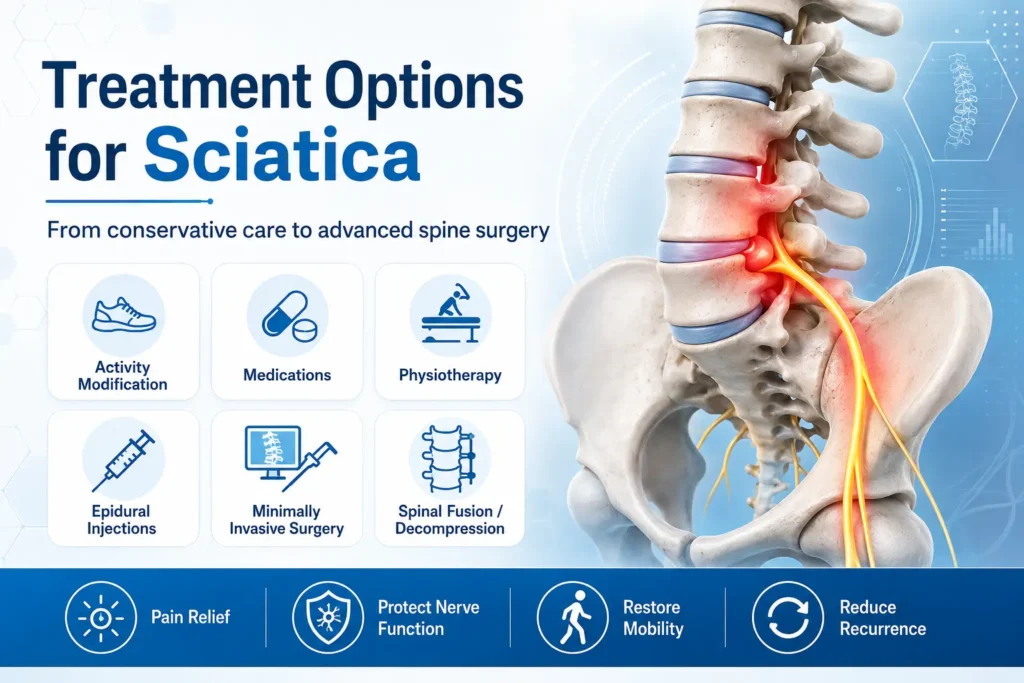
Treatment Options for Sciatica
The best treatment for sciatica depends on the underlying cause, the severity of symptoms, and how long the pain has been present. Many patients improve with conservative treatment, while others may require minimally invasive procedures or surgery if nerve compression is significant.
Dr. Mazda Turel recommends treatment only after a thorough evaluation and confirmation of the diagnosis. The focus is always on relieving pain, protecting nerve function, restoring mobility, and reducing the risk of recurrence.
- Conservative (Non-Surgical) Treatment
Most patients with mild to moderate sciatica improve without surgery.
- Activity Modification
Complete bed rest is usually not recommended. Gentle movement and avoiding activities that worsen symptoms often support recovery.
This may include:
- Avoiding prolonged sitting
- Maintaining proper posture
- Using correct lifting techniques
- Taking short walking breaks throughout the day
- Medications
Medicines may help control pain and inflammation during the early stages of treatment.
Depending on your condition, treatment may include:
- Anti-inflammatory medications
- Pain-relieving medicines
- Muscle relaxants
- Medicines for nerve pain
Medication should always be taken under medical supervision.
- Physiotherapy
A structured rehabilitation program plays an important role in recovery.
Physiotherapy may focus on:
- Stretching tight muscles
- Improving spinal flexibility
- Strengthening the core
- Correcting posture
- Improving balance
- Teaching safe body mechanics
A personalized exercise program can also help reduce future episodes of sciatica.
- Lifestyle Modifications
Simple lifestyle changes can reduce pressure on the spine and improve long-term outcomes.
These include:
- Maintaining a healthy body weight
- Regular low-impact exercise
- Ergonomic workplace adjustments
- Smoking cessation
- Proper sleeping posture
- Daily stretching routines
- Epidural Steroid Injections
For patients with severe nerve inflammation that does not respond to medication, image-guided epidural steroid injections may provide temporary relief by reducing inflammation around the affected nerve.
These injections can:
- Reduce leg pain
- Improve mobility
- Help patients participate in physiotherapy
- Delay or avoid surgery in selected cases
Not every patient is a suitable candidate, and the decision is made after careful evaluation.
Minimally Invasive Spine Surgery
If symptoms persist despite conservative treatment or neurological deficits develop, minimally invasive surgery may be considered.
Compared to traditional open surgery, minimally invasive techniques generally involve:
- Smaller skin incisions
- Less muscle damage
- Reduced blood loss
- Lower risk of infection
- Shorter hospital stay
- Faster recovery
- Earlier return to daily activities
The exact surgical approach depends on the underlying spinal condition.
Surgical Treatment Options
Surgery is usually recommended only when there is clear evidence of nerve compression, significant weakness, or persistent pain affecting quality of life.
- Microdiscectomy
A microdiscectomy is one of the most common procedures performed for sciatica caused by a herniated lumbar disc.
During this procedure:
- A small incision is made.
- Specialized instruments and magnification are used.
- The portion of the disc compressing the nerve is removed.
- Healthy disc tissue is preserved whenever possible.
This procedure often provides relief from radiating leg pain while preserving spinal stability.
- Lumbar Decompression Surgery
When spinal stenosis narrows the spinal canal, decompression surgery may be recommended.
The goal is to:
- Remove pressure on spinal nerves
- Improve walking ability
- Reduce leg pain
- Restore nerve function
- Spinal Fusion
In selected patients with spinal instability, spondylolisthesis, or significant degeneration, spinal fusion may be advised.
This procedure stabilizes the spine by joining two or more vertebrae together.
It may be recommended when spinal movement itself contributes to nerve compression or persistent pain.
- Advanced Image-Guided Spine Surgery
Modern surgical planning may include advanced imaging and precision techniques that help improve surgical accuracy while protecting nearby nerves and healthy tissues.
The appropriate technology depends on each patient’s condition and surgical requirements.
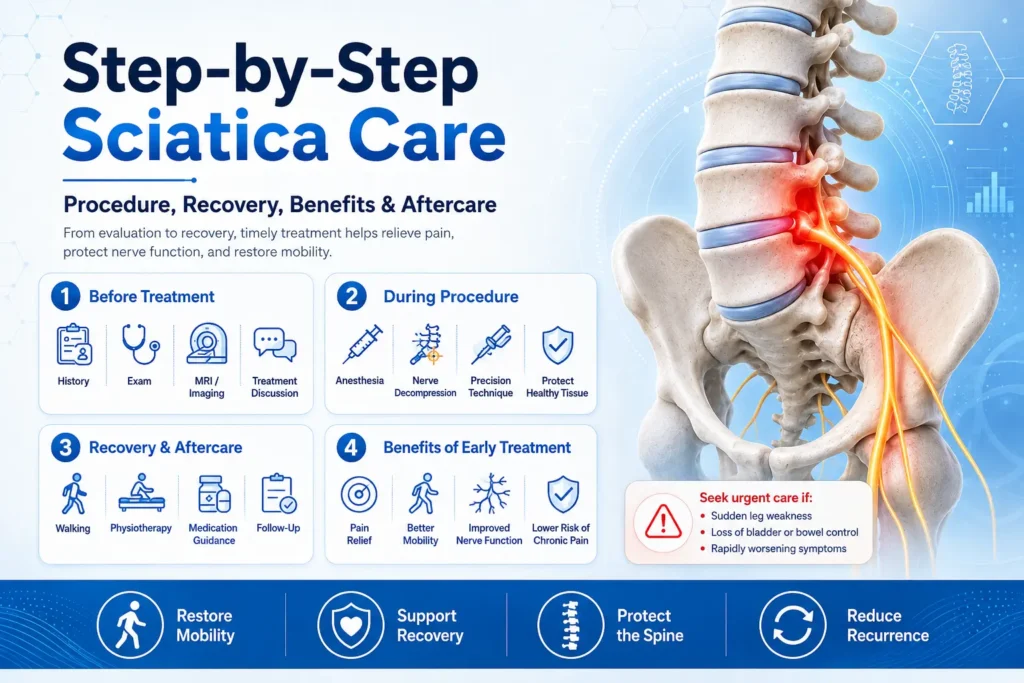
Step-by-Step Procedure
The exact procedure varies depending on the diagnosis. However, the treatment journey generally follows these stages.
- Before Treatment
The process begins with a detailed assessment.
This includes:
- Medical history
- Physical examination
- Neurological evaluation
- MRI or other imaging if required
- Review of previous treatments
- Discussion of available options
- Explanation of benefits and possible risks
- Pre-operative investigations if surgery is planned
Patients are encouraged to ask questions so they fully understand their treatment plan.
- During the Procedure
If surgery is required:
- Appropriate anesthesia is administered.
- The affected spinal level is confirmed.
- Specialized surgical techniques are used to access the compressed nerve.
- The cause of compression is carefully removed.
- Surrounding healthy structures are preserved as much as possible.
- The incision is closed after confirming adequate nerve decompression.
The duration depends on the type and complexity of the procedure.
- After the Procedure
Following surgery:
- Patients are monitored closely.
- Pain management is provided.
- Walking is often encouraged as advised by the treating team.
- Physiotherapy may begin early depending on the procedure.
- Detailed discharge instructions are explained before going home.
Recovery varies from patient to patient.
- Recovery Timeline
Recovery depends on:
- Type of spinal condition
- Surgical procedure performed
- Overall health
- Age
- Commitment to rehabilitation
Many patients gradually resume routine daily activities over the following weeks, while complete recovery may take longer in more complex cases.
Regular follow-up appointments help monitor healing and ensure safe progress.
Benefits of Early and Appropriate Treatment
Receiving timely treatment offers several important advantages.
- Pain Relief
Reducing pressure on the sciatic nerve can significantly decrease pain traveling from the lower back into the leg.
- Improved Mobility
Walking, standing, climbing stairs, and daily activities often become easier as symptoms improve.
- Better Nerve Function
Treating nerve compression early may help prevent further nerve irritation and support recovery of muscle strength and sensation.
- Improved Quality of Life
Patients often experience:
- Better sleep
- Greater independence
- Increased confidence in movement
- Improved work performance
- Better participation in family and social life
- Reduced Risk of Chronic Pain
Persistent nerve compression can sometimes lead to long-term symptoms. Early management may help reduce this risk.
- Personalized Long-Term Spine Care
Treatment is not limited to pain relief. Patients also receive guidance on preventing future episodes through posture correction, exercise, weight management, and spine care education.
Why Early Treatment Matters
Many people ignore leg pain, assuming it will resolve on its own. While mild symptoms may improve with conservative care, persistent or worsening sciatica should not be overlooked.
Delaying treatment may allow ongoing nerve compression to continue, increasing the risk of more severe symptoms.
Early evaluation allows the underlying cause to be identified before complications develop.
Seeking timely care may help:
- Prevent worsening nerve irritation
- Preserve muscle strength
- Improve mobility
- Reduce the duration of symptoms
- Avoid unnecessary disability
- Identify serious spinal conditions that require urgent treatment
Seek urgent medical care if you experience:
- Sudden weakness in one or both legs
- Loss of bladder control
- Loss of bowel control
- Numbness around the groin or saddle area
- Severe pain after major trauma
- Rapidly worsening neurological symptoms
These may indicate a serious spinal emergency requiring immediate assessment.
Recovery and Aftercare
Recovery does not end when the pain improves. Long-term success depends on protecting the spine and maintaining healthy movement habits.
Dr. Mazda Turel provides individualized aftercare guidance based on each patient’s diagnosis and treatment.
- Activity and Movement
Patients are usually encouraged to remain active within comfortable limits.
Recommended activities may include:
- Short daily walks
- Gentle stretching
- Gradual return to normal activities
- Avoiding prolonged bed rest
- Following physiotherapy instructions
- Exercise
Once healing has progressed, exercises focus on:
- Core strengthening
- Back muscle conditioning
- Hip flexibility
- Hamstring stretching
- Balance improvement
- Posture correction
Exercises should always be performed under professional guidance, particularly after surgery.
- Healthy Diet
Good nutrition supports healing and overall spine health.
A balanced diet should include:
- Lean protein
- Fresh fruits
- Vegetables
- Whole grains
- Calcium-rich foods
- Vitamin D sources
- Adequate hydration
Maintaining a healthy weight also reduces stress on the lower back.
- Medication Management
Patients should:
- Take medicines exactly as prescribed.
- Avoid self-medicating.
- Report new symptoms promptly.
- Attend scheduled reviews if pain changes unexpectedly.
- Follow-Up Care
Regular follow-up visits allow the treating specialist to:
- Assess recovery
- Monitor nerve function
- Review imaging when needed
- Adjust medications
- Modify rehabilitation plans
- Discuss safe return to work, driving, and exercise
Preventing Future Episodes of Sciatica
While not every episode can be prevented, healthy habits can lower the risk of recurrence.
Helpful preventive measures include:
- Maintaining proper posture while sitting and standing
- Using ergonomic workstations
- Lifting heavy objects correctly
- Exercising regularly
- Strengthening the core muscles
- Avoiding smoking
- Managing body weight
- Taking movement breaks during long periods of sitting
- Wearing supportive footwear when appropriate
With the right diagnosis, timely treatment, and ongoing spine care, many patients are able to return to their daily routines with improved comfort, mobility, and confidence.

Emergency Cases
Please feel welcome to contact our friendly reception staff with any general or medical equiry call us.
Frequently Asked Questions
1. What does a sciatica specialist do?
A sciatica specialist diagnoses and treats pain caused by irritation or compression of the sciatic nerve. The specialist identifies the exact cause of your symptoms—such as a herniated disc, spinal stenosis, or degenerative spine disease—and recommends the most appropriate treatment, which may include medication, physiotherapy, injections, or surgery when necessary.
2. When should I see a sciatica specialist?
You should consult a specialist if:
- Pain lasts longer than two to four weeks
- Pain travels from your lower back into your leg
- You experience numbness or tingling
- Your leg feels weak
- Walking becomes difficult
- Pain keeps returning
- Home remedies are not helping
Immediate medical attention is needed if you develop bladder or bowel control problems or sudden leg weakness.
3. Can sciatica go away without surgery?
Yes. Many patients improve with conservative treatment, including medications, physiotherapy, activity modification, and lifestyle changes. Surgery is generally considered only when symptoms persist despite appropriate treatment or when there is significant nerve compression or neurological weakness.
4. What is the most common cause of sciatica?
A herniated lumbar disc is one of the most common causes. Other causes include lumbar spinal stenosis, degenerative disc disease, spondylolisthesis, spinal cysts, spinal tumors, infections, and traumatic spine injuries.
5. How is sciatica diagnosed?
Diagnosis usually includes:
- Detailed medical history
- Physical and neurological examination
- MRI scan
- X-rays (when indicated)
- CT scan in selected cases
- Electromyography (EMG) and nerve conduction studies if required
The goal is to identify the exact source of nerve compression before treatment begins.
6. What are the warning signs that sciatica is getting worse?
Symptoms that require prompt medical review include:
- Increasing leg weakness
- Foot drop
- Persistent numbness
- Difficulty walking
- Severe pain despite medication
- Loss of bladder or bowel control
- Numbness around the groin area
These symptoms may indicate significant nerve compression that requires urgent evaluation.
7. How long does sciatica recovery take?
Recovery varies depending on the cause and treatment.
- Mild cases may improve within a few weeks.
- Moderate cases often require several weeks of rehabilitation.
- Recovery after spine surgery depends on the procedure performed, overall health, and adherence to rehabilitation.
Your specialist will provide guidance based on your individual condition.
8. Is walking good for sciatica?
In many cases, gentle walking can help maintain mobility and reduce stiffness. However, activity should be tailored to your symptoms. If walking significantly increases pain, consult your doctor before continuing an exercise program.
9. Will I need an MRI for sciatica?
Not every patient requires an MRI immediately. However, an MRI is commonly recommended when symptoms are severe, persistent, associated with weakness, or when surgery is being considered. It provides detailed images of the spine, discs, and nerves.
10. Can sitting make sciatica worse?
Yes. Prolonged sitting may increase pressure on the lower spine and aggravate sciatic nerve pain in some individuals. Taking regular movement breaks and maintaining proper sitting posture may help reduce discomfort.
11. Can physiotherapy cure sciatica?
Physiotherapy can play an important role in relieving symptoms, improving flexibility, strengthening supporting muscles, and preventing recurrence. Its effectiveness depends on the underlying cause of sciatica.
12. Is surgery always necessary for sciatica?
No. Surgery is recommended only for selected patients when non-surgical treatment has not provided sufficient relief or when there is progressive neurological weakness or significant nerve compression.
13. What happens if sciatica is left untreated?
Persistent nerve compression may lead to chronic pain, muscle weakness, reduced mobility, or permanent nerve damage in some cases. Early assessment helps determine the appropriate treatment before complications develop.
14. How can I reduce the risk of sciatica returning?
You can lower the risk by:
- Maintaining a healthy weight
- Exercising regularly
- Strengthening your core muscles
- Practising good posture
- Avoiding prolonged sitting
- Using proper lifting techniques
- Following your rehabilitation plan
15. Why choose Dr. Mazda Turel for sciatica treatment in Mumbai?
Dr. Mazda Turel is an MCh Neurosurgeon with expertise in brain and spine disorders. He focuses on identifying the underlying cause of sciatica through detailed evaluation and offers individualized treatment plans ranging from conservative care to advanced minimally invasive spine surgery when appropriate.