
Spondylolisthesis Treatment in Mumbai
Spondylolisthesis Treatment in Mumbai by Dr. Mazda Turel
- Regain Stability. Relieve Back Pain. Move with Confidence Again.
Back pain that refuses to go away can affect every part of your life. Simple activities such as standing, walking, climbing stairs, or even getting out of bed may become painful. If you also experience leg pain, numbness, tingling, or weakness, the problem could be more than a muscle strain. One possible cause is spondylolisthesis, a condition where one vertebra slips forward over the bone below it, affecting the stability of your spine.
If you are looking for expert spondylolisthesis treatment in Mumbai, Dr. Mazda Turel offers comprehensive evaluation, precise diagnosis, and personalized treatment plans based on the severity of your condition. As an experienced neurosurgeon specializing in spine disorders, he focuses on relieving pain, protecting nerve function, restoring mobility, and helping patients return to an active lifestyle with the most appropriate treatment—whether non-surgical or surgical.
Every patient receives individualized care because no two spine conditions are exactly alike.
Why Choose Dr. Mazda Turel for Spondylolisthesis Treatment in Mumbai?
Choosing the right spine specialist is an important step toward long-term recovery. Successful treatment requires accurate diagnosis, careful planning, and a patient-centered approach that balances pain relief with preserving spinal function.
- Experienced Spine Neurosurgeon
Dr. Mazda Turel is an MCh Neurosurgeon with extensive experience treating a wide range of spinal disorders, including degenerative spine disease, slipped vertebrae, spinal instability, nerve compression, and complex spinal conditions.
- Personalized Treatment Plans
Not every patient with spondylolisthesis requires surgery. Treatment recommendations are based on factors such as:
- Age
- Activity level
- Degree of vertebral slippage
- Severity of symptoms
- Presence of nerve compression
- Overall spinal stability
- Lifestyle goals
- Advanced Diagnostic Evaluation
Treatment begins with a thorough clinical assessment supported by advanced imaging techniques to determine the exact cause of pain and neurological symptoms.
- Focus on Conservative Care First
Whenever appropriate, non-surgical treatments such as medication, physiotherapy, activity modification, and targeted rehabilitation are recommended before considering surgery.
- Modern Spine Surgery Techniques
When surgery becomes necessary, advanced spinal procedures are performed with careful attention to precision, spinal stability, nerve protection, and faster recovery.
- Comprehensive Patient Support
From diagnosis through rehabilitation, patients receive continuous guidance regarding recovery, exercises, pain management, and long-term spine health.
What Is Spondylolisthesis?
Spondylolisthesis is a spinal condition in which one vertebra slips forward over the vertebra beneath it. This movement may narrow the spinal canal or compress nearby spinal nerves, resulting in pain, numbness, weakness, or difficulty walking.
Although the condition most commonly affects the lower back (lumbar spine), it can occur in other parts of the spine as well.
Some individuals have mild slippage with few symptoms, while others experience significant nerve compression that interferes with daily life.
Many patients searching for spondylolisthesis treatment initially assume they have a slipped disc or simple back pain. A proper evaluation helps distinguish between these conditions and identify the most effective treatment.
Understanding Spondylosis vs Spondylolisthesis
Many people confuse spondylosis vs spondylolisthesis, but they are different spinal conditions.
Spondylosis refers to age-related wear and tear of the spine. It includes degeneration of:
- Intervertebral discs
- Facet joints
- Vertebral bones
- Ligaments
It is essentially spinal arthritis and becomes more common with aging.
- Spondylolisthesis
Spondylolisthesis occurs when one vertebra slips forward over another. This instability may result from degeneration, stress fractures, congenital abnormalities, trauma, or previous spinal surgery.
Although spondylosis and spondylolisthesis can occur together, they are separate diagnoses and require different treatment strategies.
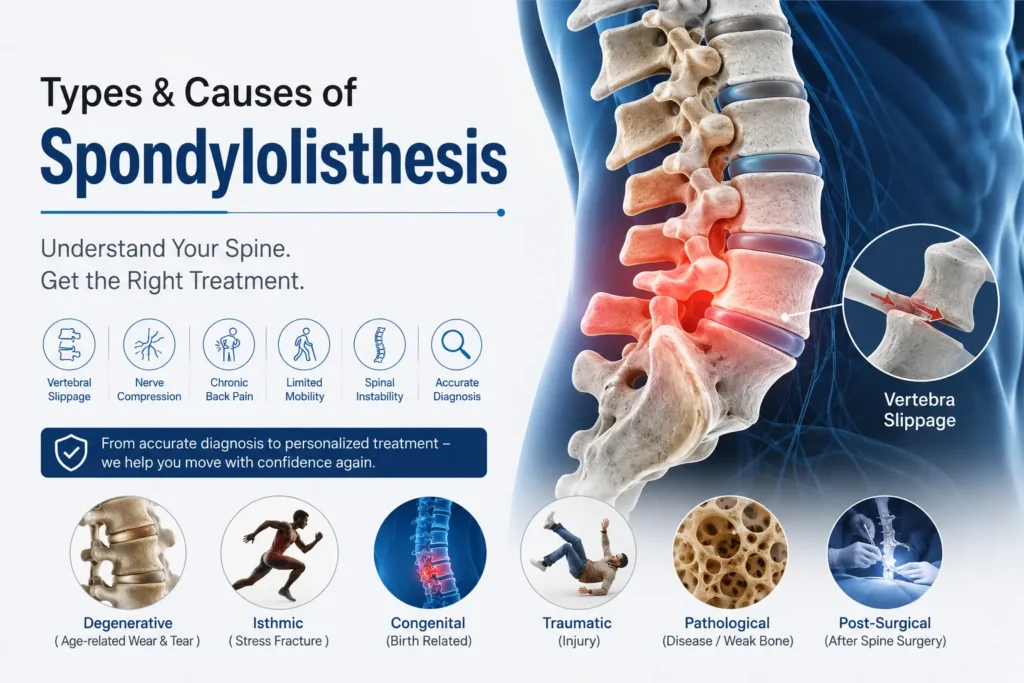
Types of Spondylolisthesis
Understanding the underlying cause helps determine the most suitable treatment.
- Degenerative Spondylolisthesis
This is the most common type in adults over the age of 50. As spinal discs and joints wear down, the vertebrae gradually lose stability and may begin to slip.
Common symptoms include:
- Chronic lower back pain
- Pain while standing
- Leg pain
- Walking difficulty
- Numbness
- Tingling
Isthmic Spondylolisthesis
This occurs due to a small defect or stress fracture in a part of the vertebra called the pars interarticularis.
It often affects:
- Young athletes
- Gymnasts
- Weightlifters
- Cricket fast bowlers
- Football players
Repeated stress on the lower back increases the risk.
Congenital Spondylolisthesis
Some individuals are born with abnormal spinal development, making vertebral slippage more likely later in life.
Symptoms may appear during adolescence or adulthood.
Traumatic Spondylolisthesis
A sudden injury from:
- Road traffic accidents
- Falls
- Sports injuries
can damage spinal structures and cause vertebral displacement.
Pathological Spondylolisthesis
Less commonly, spinal infections, tumors, osteoporosis, or other bone disorders weaken the vertebrae and result in spinal instability.
Post-Surgical Spondylolisthesis
In some cases, spinal instability develops after previous spinal surgery due to altered biomechanics or progressive degeneration.
Conditions Treated
Dr. Mazda Turel provides evaluation and treatment for a wide range of spinal disorders associated with vertebral instability.
- Lumbar Spondylolisthesis
The lower back is the most common location for vertebral slippage. Patients often experience back pain that radiates into one or both legs.
- Common Symptoms
- Persistent lower back pain
- Pain while standing
- Difficulty walking
- Leg numbness
- Muscle weakness
- Stiffness
- When Treatment Is Needed
Treatment is recommended when symptoms interfere with daily activities or when neurological deficits begin to develop.
2. Cervical Spondylolisthesis
Although less common, vertebral slippage in the neck may compress the spinal cord or cervical nerves.
- Symptoms
- Neck pain
- Shoulder pain
- Arm numbness
- Hand weakness
- Balance problems
- Reduced coordination
- When Treatment Is Needed
Prompt assessment is important if spinal cord compression is suspected.
3. Spondylolisthesis with Sciatica
Compression of the sciatic nerve often causes:
- Shooting leg pain
- Burning sensation
- Tingling
- Foot numbness
- Difficulty standing for long periods
Treatment focuses on relieving nerve compression while stabilizing the spine.
4. Spondylolisthesis with Spinal Stenosis
As vertebral slippage progresses, narrowing of the spinal canal may occur.
- Symptoms
- Leg heaviness
- Walking intolerance
- Pain relieved by sitting
- Balance issues
- Progressive weakness
This condition often requires advanced imaging to determine the most appropriate treatment.
5. Spondylolisthesis Causing Nerve Compression
Pressure on spinal nerves may lead to:
- Weakness
- Reduced reflexes
- Persistent numbness
- Loss of sensation
- Difficulty lifting the foot
- Muscle wasting in severe cases
Early diagnosis helps reduce the risk of permanent nerve damage.
Signs You Should See a Spine Specialist
Seek medical evaluation if you experience:
- Persistent lower back pain lasting several weeks
- Pain radiating into one or both legs
- Numbness or tingling in the legs or feet
- Weakness while walking
- Difficulty standing for long periods
- Pain that worsens during activity
- Reduced walking distance
- Loss of balance
- Back pain following a sports injury or accident
- Difficulty climbing stairs
- Progressive spinal deformity
- Changes in bladder or bowel control (requires urgent medical attention)
Causes and Risk Factors of Spondylolisthesis
Spondylolisthesis develops when the normal stability of the spine is disrupted. Several factors can contribute to this condition.
- Age-Related Degeneration
Natural wear and tear weakens spinal discs, joints, and supporting ligaments over time, increasing the likelihood of vertebral slippage.
- Repetitive Stress Injuries
Sports involving repeated spinal extension place extra stress on the lower back. Athletes participating in gymnastics, wrestling, cricket, football, weightlifting, and athletics may have a higher risk.
- Congenital Spine Abnormalities
Some people are born with structural differences in the spine that increase susceptibility to instability.
- Previous Spine Injury
Falls, accidents, or fractures can damage spinal structures and lead to vertebral displacement.
- Osteoporosis
Reduced bone density weakens vertebrae, making them more vulnerable to fractures and spinal instability, particularly in older adults.
- Family History
Certain inherited anatomical characteristics may increase the likelihood of developing spinal instability.
- Obesity
Excess body weight places additional mechanical stress on the lumbar spine, accelerating degeneration and worsening symptoms.
- Occupation
People whose jobs involve:
- Heavy lifting
- Repeated bending
- Twisting movements
- Long hours of standing
- Frequent vibration exposure
may have an increased risk of developing symptomatic spondylolisthesis.
- Smoking
Smoking reduces blood supply to spinal tissues, delays healing, and contributes to faster degeneration of discs and joints.
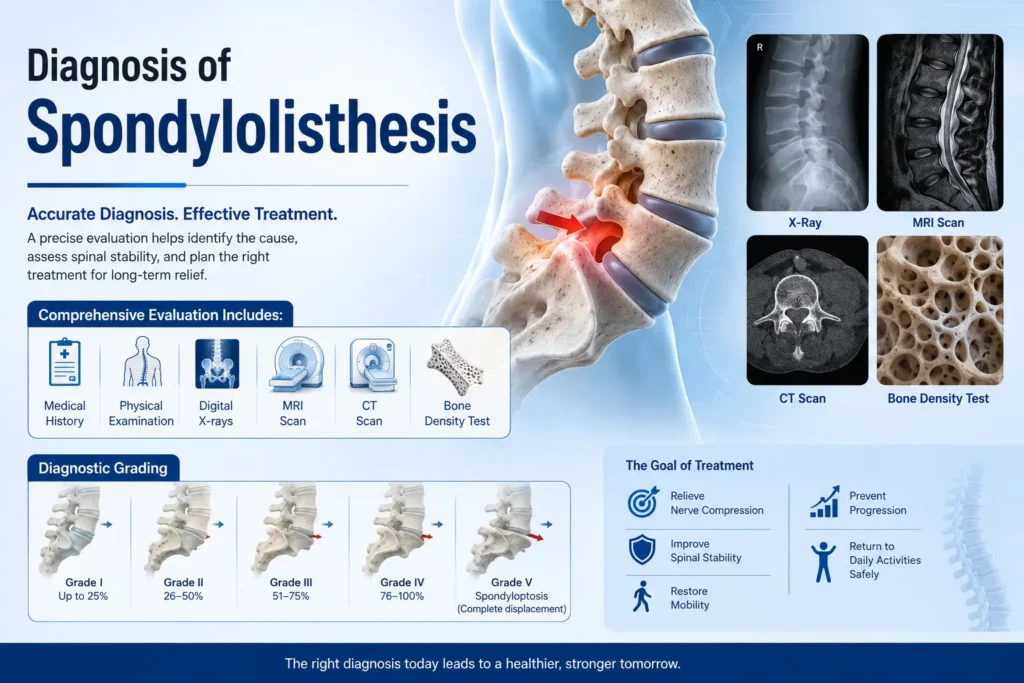
Diagnosis of Spondylolisthesis
An accurate diagnosis is the foundation of successful spondylolisthesis treatment. Back pain can result from many conditions, including a slipped disc, spinal stenosis, muscle strain, or arthritis. Identifying the exact cause helps ensure that treatment is both effective and appropriate.
Dr. Mazda Turel performs a detailed evaluation to determine the type of spondylolisthesis, the degree of vertebral slippage, whether nerves are compressed, and how the condition is affecting your daily activities.
- Medical History
Your consultation begins with a discussion about:
- When your pain started
- How the symptoms have changed over time
- Activities that worsen or relieve the pain
- Previous spine injuries or surgeries
- Occupation and lifestyle
- Sports participation
- Existing medical conditions such as osteoporosis
Understanding your history often provides important clues about the underlying cause.
2. Physical Examination
A comprehensive neurological and spinal examination helps assess:
- Posture
- Walking pattern (gait)
- Spine alignment
- Range of motion
- Muscle strength
- Reflexes
- Sensation in the legs
- Balance and coordination
Your doctor may also perform specific tests to identify nerve irritation or spinal instability.
3. Digital X-rays
Standing X-rays are usually the first imaging test.
They help evaluate:
- Vertebral alignment
- Degree of slippage
- Spine stability
- Bone abnormalities
- Progression of the condition
Flexion and extension X-rays may also be performed to determine whether the vertebra moves excessively during bending.
4. MRI Scan
An MRI provides detailed images of the soft tissues surrounding the spine.
It helps identify:
- Nerve compression
- Disc degeneration
- Spinal canal narrowing
- Ligament damage
- Inflammation
- Spinal cord involvement
MRI is particularly valuable when patients experience leg pain, numbness, or weakness.
5. CT Scan
A CT scan provides detailed images of the bones and is useful for:
- Evaluating fractures
- Assessing pars defects
- Surgical planning
- Complex spinal anatomy
6. Bone Density Test
For older adults, especially postmenopausal women, a bone density scan may be recommended to evaluate osteoporosis, which can contribute to spinal instability.
7. Diagnostic Grading
Spondylolisthesis is commonly classified according to the degree of vertebral slippage.
- Grade I: Up to 25% slippage
- Grade II: 26–50%
- Grade III: 51–75%
- Grade IV: 76–100%
- Grade V (Spondyloptosis): Complete vertebral displacement (rare)
The grade alone does not determine treatment. Symptoms, nerve involvement, lifestyle, and overall spinal stability are equally important.
Spondylolisthesis Treatment Options
The goal of spondylolisthesis treatment in Mumbai is not simply to reduce pain. Treatment aims to:
- Relieve nerve compression
- Improve spinal stability
- Restore mobility
- Prevent progression
- Help patients return to normal activities safely
Treatment is tailored to each patient’s condition rather than following a one-size-fits-all approach.
Non-Surgical Spondylolisthesis Treatment
Many patients improve without surgery, especially those with mild to moderate vertebral slippage.
- Activity Modification
Certain activities may temporarily worsen symptoms.
Patients may be advised to limit:
- Heavy lifting
- High-impact exercise
- Repetitive bending
- Twisting movements
- Prolonged standing
Gradual return to activity is encouraged as symptoms improve.
- Medications
Medicines may help control symptoms while the spine heals.
Depending on the condition, treatment may include:
- Anti-inflammatory medicines
- Pain-relieving medication
- Muscle relaxants
- Medication for nerve-related pain
Medication is usually part of a broader treatment plan rather than a long-term solution.
- Physiotherapy
A structured physiotherapy program plays an important role in recovery.
Treatment may focus on:
- Core strengthening
- Lumbar stabilization
- Flexibility exercises
- Posture correction
- Walking training
- Balance improvement
Strong core muscles help reduce stress on the spine and improve stability.
- Lifestyle Changes
Simple lifestyle modifications often reduce pressure on the spine.
These may include:
- Weight management
- Ergonomic workplace adjustments
- Proper lifting techniques
- Regular low-impact exercise
- Smoking cessation
These changes support both symptom relief and long-term spine health.
- Epidural Steroid Injections
In selected patients, image-guided epidural injections may reduce inflammation around compressed nerves.
They can provide temporary pain relief, making it easier to participate in rehabilitation.
While injections do not correct vertebral slippage, they may delay or even eliminate the need for surgery in some cases.
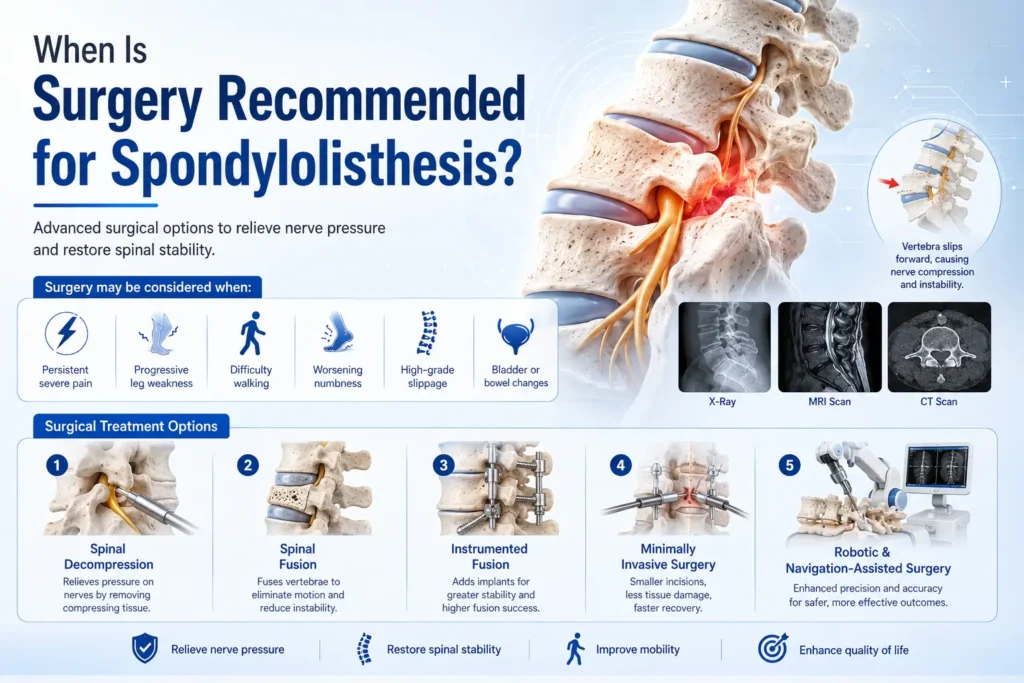
When Is Surgery Recommended?
Surgery may be considered when:
- Severe pain persists despite conservative treatment
- Symptoms continue for several months
- Progressive leg weakness develops
- Walking becomes increasingly difficult
- Numbness worsens
- Significant nerve compression is seen on MRI
- High-grade vertebral slippage causes spinal instability
- Bladder or bowel function is affected (medical emergency)
The decision to proceed with surgery is based on the overall clinical picture rather than imaging alone.
Surgical Treatment for Spondylolisthesis
Modern spine surgery is designed to relieve pressure on nerves while restoring stability to the spine.
The surgical approach depends on the severity and location of the condition.
- Spinal Decompression Surgery
When compressed nerves are responsible for leg pain or numbness, decompression surgery removes the structures placing pressure on the nerves.
This may involve removing portions of bone, thickened ligaments, or damaged tissue.
Benefits include:
- Relief from leg pain
- Reduced numbness
- Improved walking ability
- Better nerve function
- Spinal Fusion Surgery
Fusion surgery stabilizes unstable vertebrae by joining two or more spinal bones together.
Bone grafts and specialized implants are used to encourage the vertebrae to heal into a single stable unit.
This procedure is commonly recommended for patients with significant spinal instability.
- Instrumented Fusion
Modern spinal fusion often uses:
- Titanium screws
- Rods
- Interbody cages
These implants improve spinal stability while the bones fuse naturally over time.
- Minimally Invasive Spine Surgery
Whenever appropriate, minimally invasive techniques may be used.
Compared with traditional open surgery, these approaches often involve:
- Smaller incisions
- Less muscle injury
- Reduced blood loss
- Less postoperative pain
- Faster recovery
- Earlier return to daily activities
Not every patient is a candidate, and suitability depends on the individual condition.
- Robotic and Navigation-Assisted Spine Surgery
For selected patients, advanced surgical navigation and robotic-assisted technologies may enhance precision during implant placement.
Potential advantages include:
- Greater surgical accuracy
- Improved implant positioning
- Better visualization
- Increased safety in complex cases
The choice of technology depends on the patient’s anatomy and surgical requirements.
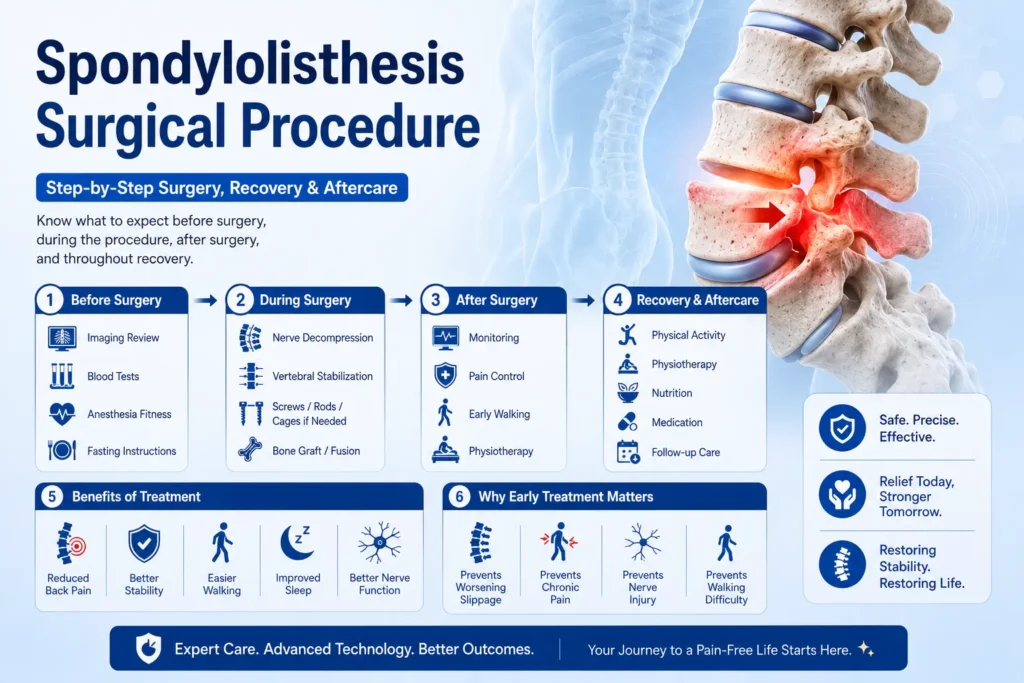
Step-by-Step Surgical Procedure
Understanding what to expect can help reduce anxiety before surgery.
- Before Surgery
Your care team will:
- Review imaging studies
- Conduct routine blood tests
- Assess medical fitness for anesthesia
- Explain the procedure and recovery process
- Discuss medications that may need to be adjusted
You will receive detailed instructions about fasting and hospital admission.
- During Surgery
The procedure is performed under general anesthesia.
Depending on the condition, surgery may include:
- Removal of pressure from spinal nerves
- Stabilization of the slipped vertebra
- Placement of screws, rods, or cages if required
- Bone grafting to promote spinal fusion
The duration of surgery varies based on the complexity of the case.
- Immediately After Surgery
Following the procedure:
- Vital signs are closely monitored
- Pain is managed with appropriate medication
- Walking often begins within the first day, depending on the procedure
- Physiotherapy may start during the hospital stay
Early mobilization helps reduce complications and supports recovery.
Benefits of Spondylolisthesis Treatment
Appropriate treatment can significantly improve quality of life.
Potential benefits include:
- Reduced back pain
- Relief from leg pain
- Improved spinal stability
- Better posture
- Easier walking
- Increased physical activity
- Improved sleep
- Greater independence
- Better nerve function
- Reduced risk of worsening spinal instability
Results vary depending on the severity of the condition, overall health, and adherence to rehabilitation.
Why Early Treatment Matters
Many people ignore persistent back pain, assuming it will resolve on its own. While mild symptoms may improve with rest, untreated spondylolisthesis can progress over time.
Early evaluation allows treatment before significant nerve damage or spinal instability develops.
Delaying treatment may increase the risk of:
- Progressive vertebral slippage
- Chronic pain
- Permanent nerve injury
- Muscle weakness
- Walking difficulties
- Reduced quality of life
- More complex surgery if intervention becomes necessary
Seeking timely medical advice can help preserve spinal function and improve long-term outcomes.
Recovery and Aftercare
Recovery does not end when treatment is completed. A structured rehabilitation plan is essential for restoring strength, flexibility, and confidence.
- Physical Activity
Recovery programs are introduced gradually.
Patients are encouraged to:
- Walk regularly
- Avoid prolonged bed rest
- Increase activity levels as advised
- Perform prescribed exercises consistently
- Physiotherapy
Rehabilitation focuses on:
- Core strengthening
- Flexibility
- Balance training
- Posture correction
- Functional movement
The program is adjusted as healing progresses.
- Nutrition
A balanced diet supports tissue repair and bone health.
Helpful nutrients include:
- Protein
- Calcium
- Vitamin D
- Magnesium
- Fruits and vegetables
- Adequate hydration
Maintaining a healthy body weight also reduces stress on the spine.
- Medication
Pain-relieving or anti-inflammatory medication may be prescribed for a limited period.
Patients should take medicines only as directed and report any unusual symptoms during recovery.
- Follow-Up Care
Regular follow-up appointments allow your surgeon to:
- Monitor healing
- Review recovery progress
- Assess spinal stability
- Adjust rehabilitation when needed
- Address any new concerns promptly
Successful long-term outcomes depend on both appropriate treatment and continued commitment to rehabilitation.

Emergency Cases
Please feel welcome to contact our friendly reception staff with any general or medical equiry call us.
Frequently Asked Questions
1. What is spondylolisthesis?
Spondylolisthesis is a condition in which one vertebra slips forward over the vertebra below it. This can reduce spinal stability and place pressure on nearby nerves, leading to lower back pain, leg pain, numbness, or weakness. The condition may develop due to aging, stress fractures, congenital abnormalities, trauma, or spinal degeneration.
2. What are the common symptoms of spondylolisthesis?
Symptoms vary depending on the severity of the condition. Common symptoms include:
- Persistent lower back pain
- Pain radiating to one or both legs
- Numbness or tingling
- Muscle weakness
- Tight hamstrings
- Difficulty standing or walking for long periods
- Poor balance
- Increased pain during activity
Some people with mild spondylolisthesis may have no symptoms and discover the condition only during imaging for another reason.
3. What is the difference between spondylosis and spondylolisthesis?
This is one of the most frequently searched questions.
Spondylosis refers to age-related wear and tear of the spine, including degeneration of the discs and joints.
Spondylolisthesis occurs when one vertebra slips forward over another, causing spinal instability and sometimes nerve compression.
Although both conditions can occur together, they are different diagnoses and require different treatment approaches.
4. Can spondylolisthesis heal without surgery?
Yes. Many patients improve with non-surgical treatment, especially those with mild or moderate vertebral slippage.
Conservative treatment may include:
- Physiotherapy
- Pain-relieving medication
- Lifestyle modifications
- Activity modification
- Core strengthening exercises
- Image-guided injections in selected cases
Surgery is generally considered only when symptoms persist despite appropriate conservative care or when nerve function is affected.
5. When is surgery recommended for spondylolisthesis?
Surgery may be advised if:
- Pain remains severe despite several months of treatment
- Walking becomes increasingly difficult
- Progressive leg weakness develops
- Numbness worsens
- Significant spinal instability is present
- Imaging confirms nerve compression that matches the patient's symptoms
- Bladder or bowel control is affected (medical emergency)
The decision is based on clinical findings, imaging, and the patient's overall health and goals.
6. Is walking good for spondylolisthesis?
Yes. Walking is generally considered one of the safest low-impact activities for most patients.
It helps:
- Improve circulation
- Maintain mobility
- Strengthen supporting muscles
- Reduce stiffness
- Support recovery
However, the amount of walking should be tailored to your symptoms and guided by your treating specialist or physiotherapist.
7. Can exercise make spondylolisthesis worse?
Some exercises can increase spinal stress, especially those involving repeated bending backward, heavy lifting, or high-impact movements.
Safe exercises usually focus on:
- Core strengthening
- Flexibility
- Controlled stretching
- Stability training
An individualized rehabilitation program is recommended rather than self-prescribing exercises.
8. How is spondylolisthesis diagnosed?
Diagnosis usually includes:
- Detailed medical history
- Physical examination
- Standing X-rays
- MRI scan
- CT scan when necessary
- Neurological assessment
These tests help determine the degree of vertebral slippage, spinal stability, and whether nerves are being compressed.
9. What happens if spondylolisthesis is left untreated?
Not every case progresses, but untreated symptomatic spondylolisthesis may lead to:
- Increasing pain
- Progressive vertebral slippage
- Chronic nerve compression
- Muscle weakness
- Difficulty walking
- Reduced quality of life
- Permanent nerve damage in severe cases
Early assessment allows treatment before complications become more difficult to manage.
10. How long does recovery take after surgery?
Recovery varies depending on:
- The type of surgery
- Overall health
- Age
- Physical fitness
- Severity of the condition
- Commitment to rehabilitation
Many patients begin walking within a day after surgery. Light daily activities often resume within a few weeks, while complete recovery and spinal fusion may take several months. Your surgeon will provide guidance based on your individual progress.
11. Can spondylolisthesis return after treatment?
When surgery is performed successfully and the spine heals appropriately, recurrence at the treated level is uncommon. However, age-related degeneration may affect other spinal segments over time.
Maintaining good posture, a healthy weight, regular exercise, and follow-up care helps support long-term spine health.
12. Is spondylolisthesis common in older adults?
Yes. Degenerative spondylolisthesis is most commonly seen in adults over 50 years of age due to gradual wear of the spinal joints, discs, and supporting ligaments.
Women are slightly more likely than men to develop this form of the condition.
13. Can young people develop spondylolisthesis?
Yes. Younger patients may develop isthmic spondylolisthesis due to stress fractures in the spine, especially if they participate in sports involving repeated back extension such as gymnastics, cricket, football, wrestling, or weightlifting.
Early diagnosis allows many young athletes to recover without surgery.
14. Which doctor should I consult for spondylolisthesis treatment in Mumbai?
Patients with persistent back pain, leg pain, or neurological symptoms should consult a spine specialist experienced in diagnosing and treating spinal disorders.
Dr. Mazda Turel evaluates each patient individually and recommends the most appropriate treatment based on the severity of the condition and the patient's functional goals.
15. How do I know if I need urgent medical attention?
Seek immediate medical evaluation if you experience:
- Sudden leg weakness
- Difficulty walking that rapidly worsens
- Loss of bladder or bowel control
- Numbness around the groin or saddle area
- Severe pain following a major accident or fall
These symptoms may indicate significant nerve compression and require urgent assessment.