Introduction: Why Stroke Happens “All of a Sudden”
A brain stroke can feel sudden. One moment everything is normal, and the next moment a person may have slurred speech, weakness in one arm, or even collapse. But in many cases, the truth is simple: a stroke doesn’t happen in one day.
Most strokes build up silently over months or years especially when the body is fighting high blood pressure (BP), high blood sugar (diabetes), and high cholesterol. These three conditions slowly damage blood vessels and increase the chances of a blockage or bleeding inside the brain.
If you’re searching for brain stroke causes, this blog will help you understand the real link between BP, sugar, and cholesterol plus how to reduce risk before it’s too late.
What Is a Brain Stroke? (Simple Meaning)
A brain stroke happens when the brain does not get enough blood and oxygen. Brain cells are extremely sensitive if blood flow stops even for a few minutes, brain cells can start dying.
There are 2 main types of stroke:
1) Ischemic Stroke (Most Common)
This happens when a blood vessel in the brain gets blocked.
Blocked = no blood supply = brain damage.
2) Hemorrhagic Stroke
This happens when a blood vessel in the brain bursts and bleeds.
Burst = bleeding in brain = pressure + damage.
The Real Truth: Why BP, Sugar & Cholesterol Are a Dangerous Combo
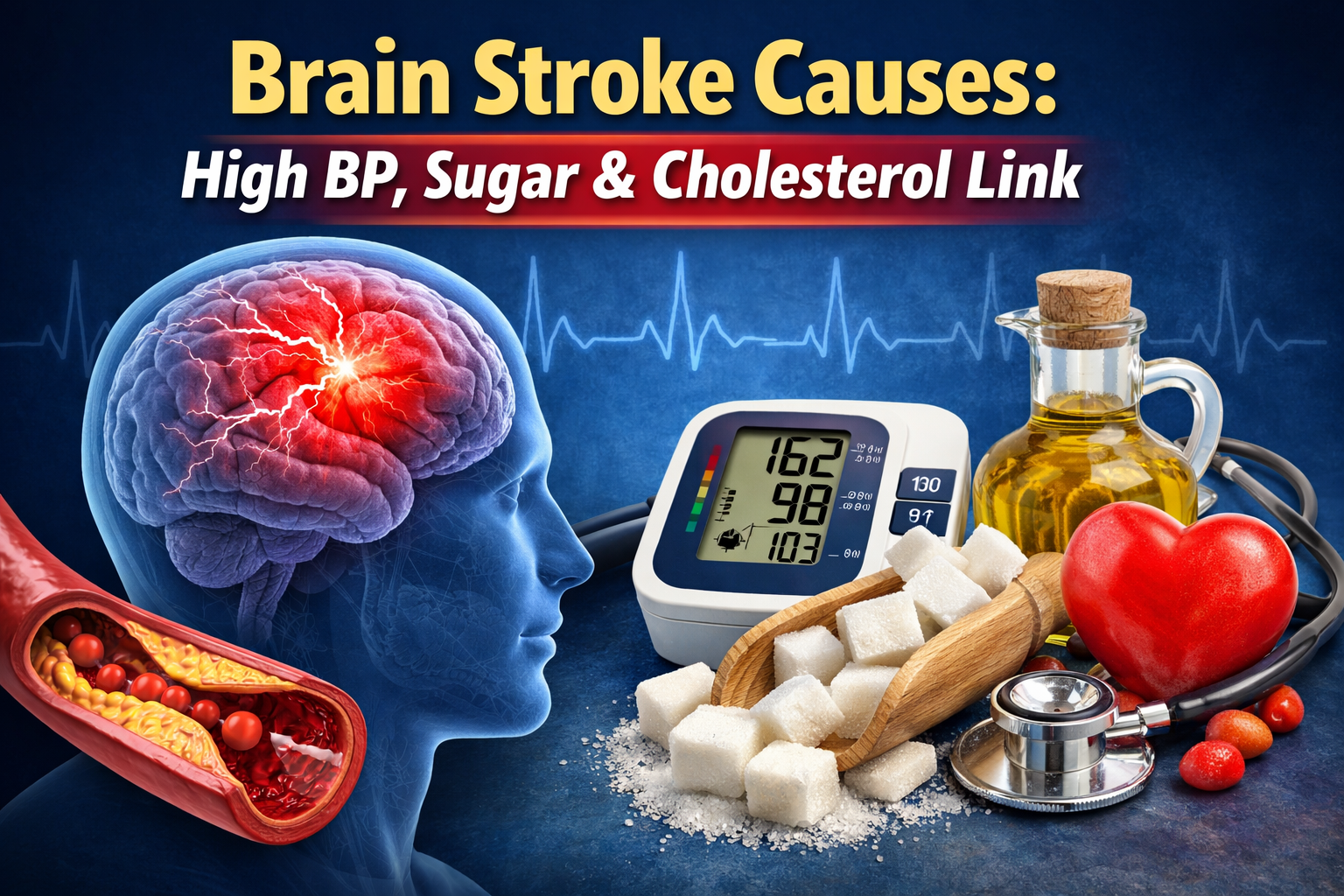
High BP, high sugar, and high cholesterol are like a “slow poison” for blood vessels. Alone, each can increase stroke risk. But together, they become a powerful trigger.
Here’s what they do inside your body:
- High BP weakens vessel walls
- High sugar damages vessel lining
- High cholesterol creates blockages
So basically:
BP breaks the pipe → sugar spoils the inner wall → cholesterol clogs the pipe.
That’s why doctors take these three seriously.
Brain Stroke Causes: High Blood Pressure (Hypertension)
High blood pressure is one of the biggest reasons behind stroke. Many people have it for years without feeling anything.
Why high BP causes stroke
Blood vessels are meant to carry blood smoothly. But when pressure becomes too high:
- the vessel wall gets weak
- the vessel becomes stiff (hard)
- tiny brain vessels can tear or burst
- plaque (fat deposits) breaks and forms a clot
High BP can lead to:
Ischemic stroke (blockage)
Hemorrhagic stroke (bleeding)
“Silent BP” is the most dangerous
A lot of people say:
“But I don’t have symptoms.”
Yes and that’s why it’s called the silent killer.
Quick BP range guide:
- Normal: 120/80
- High: 140/90 or more
If your BP is frequently above 140/90, it’s not “normal stress” it needs control.
Brain Stroke Causes: High Blood Sugar (Diabetes)
Diabetes doesn’t just affect sugar levels. It affects your entire blood circulation system.
How high sugar damages the brain vessels
When sugar stays high for long:
- it damages the inner lining of arteries (called endothelium)
(endothelium = protective inner layer of blood vessels) - arteries become narrow
- inflammation increases
- blood becomes thicker and stickier
- clot risk becomes higher
Why diabetes is linked to stroke risk
People with diabetes often also have:
- weight gain
- high BP
- high cholesterol
- weak heart health
This creates the perfect environment for stroke.
Important note
Even if you’re “borderline diabetic” or pre-diabetic, the risk begins from there.
Brain Stroke Causes: High Cholesterol (Lipids)
Cholesterol is not always bad. Your body actually needs a certain amount of cholesterol to support hormone production and help repair cells. But the problem happens when bad cholesterol rises too much.
Types of cholesterol (simple explanation)
- LDL = Bad cholesterol (clogs arteries)
- HDL = Good cholesterol (removes extra fats)
When LDL is high, it forms fatty deposits called plaque.
What plaque does
Over time, plaque:
- narrows blood vessels
- reduces blood flow to the brain
- increases chances of blockage
- may break suddenly and form a clot
This leads to ischemic stroke.
The Chain Reaction: How These 3 Create a Stroke
Let’s connect it like a real story inside the body:
- High sugar damages vessel lining
- High cholesterol sticks to damaged areas and forms plaque
- High BP pushes against weak vessels and plaque
- A clot forms or a vessel bursts
- Brain blood flow stops
- Stroke happens
That’s why controlling just one is not enough. You need to manage all three.
Other Brain Stroke Causes You Should Know (Powerful Risk Factors)
1) Smoking and Tobacco
Smoking increases blood thickness and damages vessel walls.
It also reduces oxygen supply in blood.
2) Obesity and Belly Fat
Extra fat increases insulin resistance, BP, and cholesterol.
3) Stress and Poor Sleep
Stress raises BP, increases sugar cravings, and disturbs hormones.
4) Lack of Physical Activity
Sitting long hours slows blood circulation and increases weight gain.
5) Heart Problems (Like Atrial Fibrillation)
Atrial fibrillation (AFib) is an irregular heartbeat that can form clots and send them to the brain.
(Atrial fibrillation = heart rhythm disorder where the heart beats unevenly)
6) Family History
If stroke runs in your family, your risk is naturally higher but lifestyle still plays a big role.
Early Signs of Stroke You Should Never Ignore
Many people miss early symptoms and waste precious time. Stroke needs urgent treatment.
Use FAST to spot warning signs:
F – Face drooping
One side of the face looks uneven
A – Arm weakness
One arm feels weak or numb
S – Speech difficulty
Slurred speech or unable to speak properly
T – Time to call emergency
Every minute matters
Other signs include:
- sudden dizziness
- loss of balance
- blurred vision
- severe headache
- confusion
If any of these happen, don’t “wait and watch”. Act immediately.
Why Women Should Take Stroke Risks Seriously (Hormonal Angle)
Most people talk about stroke risk in men, but women are not safe either.
Women may have extra risk factors like:
- pregnancy-related BP issues
- PCOS and insulin resistance
- hormonal changes during menopause
- birth control pills (in some cases)
Quick fertility-industry connection (important)
In the fertility space, many women deal with:
- hormonal imbalance
- thyroid issues
- weight gain
- insulin resistance (especially PCOS)
These issues can slowly push up sugar levels, cholesterol levels, and BP, increasing stroke risk later in life.
That’s why fertility health is not only about getting pregnant
It’s also about protecting the heart and brain long-term.
Tests That Help You Detect Stroke Risk Early
If you want to prevent stroke, you need data not guesswork.
Basic tests
- Blood pressure check
- Fasting blood sugar
- HbA1c test (3-month sugar average)
(HbA1c = shows average blood sugar of last 90 days) - Lipid profile (cholesterol test)
Additional helpful tests (if doctor suggests)
- ECG (heart rhythm)
- 2D Echo (heart function)
- Carotid Doppler (neck vessel narrowing)
- MRI/CT brain (if symptoms appear)
How to Prevent Stroke Naturally (Real-Life Practical Steps)
1) Control BP with daily habits
- Reduce salt
- Avoid packaged foods
- Walk 30 minutes daily
- Manage stress
- Take medicines regularly if prescribed
2) Keep sugar stable
- Reduce sugary drinks
- Eat more fiber (vegetables, dals, salads)
- Add protein in every meal
- Avoid long gaps between meals
- Sleep 7–8 hours
3) Improve cholesterol levels
- Avoid deep fried items daily
- Eat nuts in small quantity
- Add omega-3 foods (fish, flaxseeds)
- Increase fruits and veggies
- Do strength training 2–3 days/week
4) Stop smoking and tobacco
Even “one cigarette a day” increases risk.
Your vessels start healing within weeks after quitting.
5) Don’t ignore weight and waist size
Belly fat is not only cosmetic
It signals high insulin resistance and rising BP.
Diet Tips That Actually Work (Easy Indian Style)
You don’t need a fancy diet. You need a consistent one.
Morning
- Warm water + light walk
- Protein breakfast: eggs / paneer / sprouts
Lunch
- Dal + roti + sabzi + salad
- Add curd if digestion supports it
Evening
- Nuts (small portion)
- Fruit (not fruit juice)
Dinner
- Light and early
- Avoid oily food at night
Biggest change:
Try finishing dinner at least 2–3 hours before sleep.
Common Myths People Believe About Brain Stroke Causes
Myth 1: “Stroke only happens to old people”
Truth: Stroke cases in young adults are rising due to stress, smoking, obesity, and diabetes.
Myth 2: “One high BP reading is nothing to worry about.”
Truth: BP may fluctuate, but repeated high readings are dangerous.
Myth 3: “Diabetes only affects sugar”
Truth: It affects the heart, kidneys, eyes, nerves, and brain circulation.
Myth 4: “Cholesterol medicine is harmful”
Truth: Medicines are given when benefits are higher than risks. Never stop them without medical advice.
When to See a Specialist
You should consult a doctor if:
- BP stays high often
- you have diabetes and HbA1c is uncontrolled
- cholesterol is high despite diet
- you experience dizziness, weakness, or speech changes
- stroke risk factors run in your family
For expert neurosurgical guidance and advanced brain care, you can explore Dr. Mazda Turel here:
https://mazdaturel.com/brain-tumor-surgeon-in-mumbai/
Conclusion: Protect Your Brain Before It Shouts for Help
When we talk about brain stroke causes, the biggest truth is this:
Stroke is not “bad luck.”
In many cases, it is the result of long-term damage from:
- uncontrolled high BP
- high blood sugar
- high cholesterol
The good news?
You can prevent most strokes by controlling these conditions early. Start small: check your BP, do your blood tests, walk daily, and don’t ignore warning signs.
Because once a stroke happens, recovery can take months… and some damage can be permanent.
Prevention is easier. Treatment is urgent. Awareness is everything.
FAQs (Brain Stroke Causes)
1) What is the main reason for brain stroke?
The most common brain stroke causes include high blood pressure, diabetes, and high cholesterol, as they damage and block brain blood vessels.
2) Can high sugar cause stroke even if BP is normal?
Yes. High sugar can damage blood vessel lining and increase clot risk, even if BP seems normal.
3) Does cholesterol directly cause stroke?
High LDL cholesterol forms plaque that narrows arteries. This can block blood flow to the brain and cause an ischemic stroke.
4) What BP level is considered risky for stroke?
Repeated readings above 140/90 are risky and should be managed with lifestyle changes and doctor guidance.
5) Can a young person get a stroke?
Yes. Poor lifestyle, smoking, obesity, uncontrolled sugar, and stress can cause stroke even in young adults.
6) What are the first warning signs of stroke?
Face drooping, arm weakness, and speech difficulty are key signs. Use FAST and seek emergency help immediately.