
When you decide to wave at a friend, pick up a glass of water, or type a message on your phone — these are all examples of voluntary actions. They are movements you consciously decide to do, unlike breathing, blinking, or your heartbeat, which happen without your control.
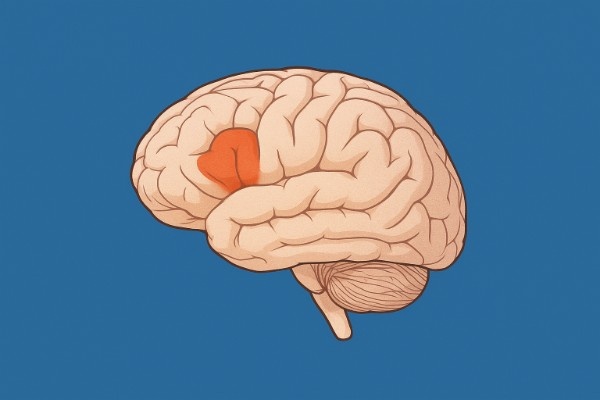
But this brings us to a fascinating question: which part of the brain controls voluntary action? The short answer is that the primary motor cortex, located in the frontal lobe of the brain, plays the leading role. However, it does not work alone — other brain regions like the cerebellum and basal ganglia also help in coordination and precision.
In this blog, we’ll break down:
- What voluntary actions are
- The exact brain regions responsible
- How the brain and body communicate to make movements happen
- Conditions that affect voluntary movement
- Ways to improve voluntary motor control
What Are Voluntary Actions?
Voluntary actions are movements you consciously control. They are initiated by thought and require the involvement of the brain’s higher centers.
Examples of voluntary actions include:
- Deciding to walk across the room
- Writing in your notebook
- Smiling at a joke
- Kicking a football
- Playing a musical instrument
In contrast, involuntary actions are automatic and do not require conscious effort. For example:
- Your heart beating
- Digestion of food
- Reflexes like withdrawing your hand from a hot surface
This distinction is important because it shows how voluntary actions need brain involvement, while involuntary ones are mostly regulated by the spinal cord, brainstem, or autonomic nervous system.
Which Part of the Brain Controls Voluntary Actions?
The primary motor cortex is the main part of the brain responsible for voluntary actions. It is located in the frontal lobe of the cerebrum, right in front of the central sulcus (a groove in the brain).
This area acts like a control panel. Whenever you decide to move a part of your body, the motor cortex sends signals through the spinal cord and peripheral nerves to your muscles.
The Motor Cortex Explained
The motor cortex itself is divided into three main regions:
- Primary Motor Cortex (M1):
- Found in the precentral gyrus of the frontal lobe.
- Directly controls voluntary movement.
- Each part of this cortex corresponds to a body region (called the “motor homunculus”). For instance, one area controls hand movement, while another controls the legs.
- Premotor Cortex:
- Involved in planning movements before they happen.
- For example, if you’re preparing to throw a ball, the premotor cortex organizes the action.
- Supplementary Motor Area (SMA):
- Helps coordinate movements on both sides of the body.
- Useful in complex activities like playing the piano or typing with both hands.
So, when we ask “which part of the brain controls voluntary action?”, the primary motor cortex is the leader, but it relies on these supportive regions to fine-tune the process.
How the Brain and Body Work Together
The process of voluntary movement is not as simple as the brain sending one signal. It’s a complex communication pathway:
- Decision-Making:
- You decide to move (for example, to lift your hand).
- This decision starts in the prefrontal cortex, the part of the brain linked to planning and thinking.
- Planning:
- The premotor cortex and supplementary motor area map out the action.
- The premotor cortex and supplementary motor area map out the action.
- Execution:
- The primary motor cortex generates signals and sends them down the spinal cord.
- The primary motor cortex generates signals and sends them down the spinal cord.
- Transmission:
- Nerve pathways (called motor neurons) carry the signals to the specific muscles.
- Nerve pathways (called motor neurons) carry the signals to the specific muscles.
- Movement:
- The muscles contract, and the action (like lifting your hand) happens.
- Feedback:
- The cerebellum checks whether the movement was smooth and balanced.
- If not, it sends corrective signals for adjustments.
This system is incredibly fast — signals travel at up to 120 meters per second!
Other Brain Parts Supporting Voluntary Movement
While the motor cortex is the main control center, several other brain regions assist in voluntary actions:
1. Cerebellum
- Located at the back of the brain.
- Maintains balance, posture, and coordination.
- Ensures movements are smooth rather than jerky.
2. Basal Ganglia
- A group of structures deep inside the brain.
- Helps start and stop movements.
- Ensures movements are not excessive but well-regulated.
3. Brainstem
- Connects the brain to the spinal cord.
- Relays motor commands and ensures coordination between both sides of the body.
Together, these regions create a teamwork system where movements are precise, controlled, and adaptable.
Disorders That Affect Voluntary Actions
Because voluntary actions depend on brain function, any damage or disease in the motor cortex or related structures can affect movement.
Some common conditions include:
1. Stroke
- Occurs when blood supply to part of the brain is interrupted.
- Can cause weakness or paralysis on one side of the body.
2. Parkinson’s Disease
- A disorder of the basal ganglia.
- Causes tremors, stiffness, and difficulty initiating voluntary movement.
3. Cerebral Palsy
- A group of disorders caused by brain damage during early development.
- Affects muscle tone, posture, and voluntary movements.
4. Brain Injury
- Trauma to the motor cortex can lead to partial or complete loss of movement in specific body parts.
5. Multiple Sclerosis (MS)
- A condition where nerve fibers lose their protective covering (myelin).
- Slows down or blocks communication between the brain and muscles.
These conditions highlight how critical the brain is in controlling even the simplest actions we take for granted.
Can We Improve Voluntary Motor Control?
Yes. While some disorders are permanent, there are many ways to strengthen voluntary motor control and keep the brain healthy.
1. Physical Exercise
- Activities like walking, yoga, and dancing improve muscle-brain coordination.
- Exercise boosts blood flow to the brain, keeping it active.
2. Brain Training
- Puzzle games, learning new skills, or playing musical instruments keep the motor cortex sharp.
3. Physical Therapy
- Essential for people recovering from stroke or brain injury.
- Helps retrain muscles and improve movement.
4. Balanced Diet & Rest
- Proper nutrition (especially omega-3 fatty acids) supports brain health.
- Adequate sleep ensures proper brain function.
5. Rehabilitation Technology
- Tools like robotic exoskeletons and electrical stimulation therapy help patients regain voluntary movement.
Voluntary vs Involuntary Actions: A Quick Recap
|
Feature |
Voluntary Actions |
Involuntary Actions |
|
Control |
Conscious (brain-directed) |
Automatic (no conscious effort) |
|
Examples |
Walking, writing, speaking |
Heartbeat, digestion, reflexes |
|
Main Brain Area |
Motor cortex (frontal lobe) |
Brainstem, spinal cord, hypothalamus |
|
Energy Use |
Requires mental focus and energy |
Happens naturally, without effort |
Conclusion
So, which part of the brain controls voluntary action?
The answer lies in the primary motor cortex of the frontal lobe, supported by the premotor cortex, supplementary motor area, cerebellum, and basal ganglia.
Every time you decide to move, your brain launches a series of precise signals that travel through nerves and muscles, allowing you to act. From the simplest wave to complex tasks like playing the violin, your brain is constantly at work.
Understanding this not only makes us appreciate the amazing power of the human brain but also shows why protecting brain health is so vital.
FAQs About Life After Brain Surgery
Q1: What is a voluntary action?
A voluntary action is a movement that you consciously control, like walking or writing.
Q2: Which part of the brain controls voluntary action?
The primary motor cortex in the frontal lobe is the main control center.
Q3: What is the difference between voluntary and involuntary actions?
Voluntary actions are consciously controlled, while involuntary ones (like heartbeat) happen automatically.
Q4: How does the cerebellum help in voluntary movement?
It ensures movements are smooth, coordinated, and balanced.
Q5: Can voluntary control be regained after a stroke?
Yes, with rehabilitation and therapy, many patients can regain partial or full control.
3 thoughts on “Which Part of the Brain Controls Voluntary Action? | Full Guide”
Выражаю благодарность за крутой заметку,
я сам недавно исследовал такое:
)
How does primary motor cortex or frontal lube affect to ablitiy to urinate or move bowel since it is voluntary.
pblairrox@aol.com