What is cervical pain?
It’s one of those problems people often ignore at first – a slight stiffness in the neck, a dull ache after long hours at work, or discomfort while turning your head. But over time, this small issue can quietly turn into something that affects your daily life, sleep, and even your mood.
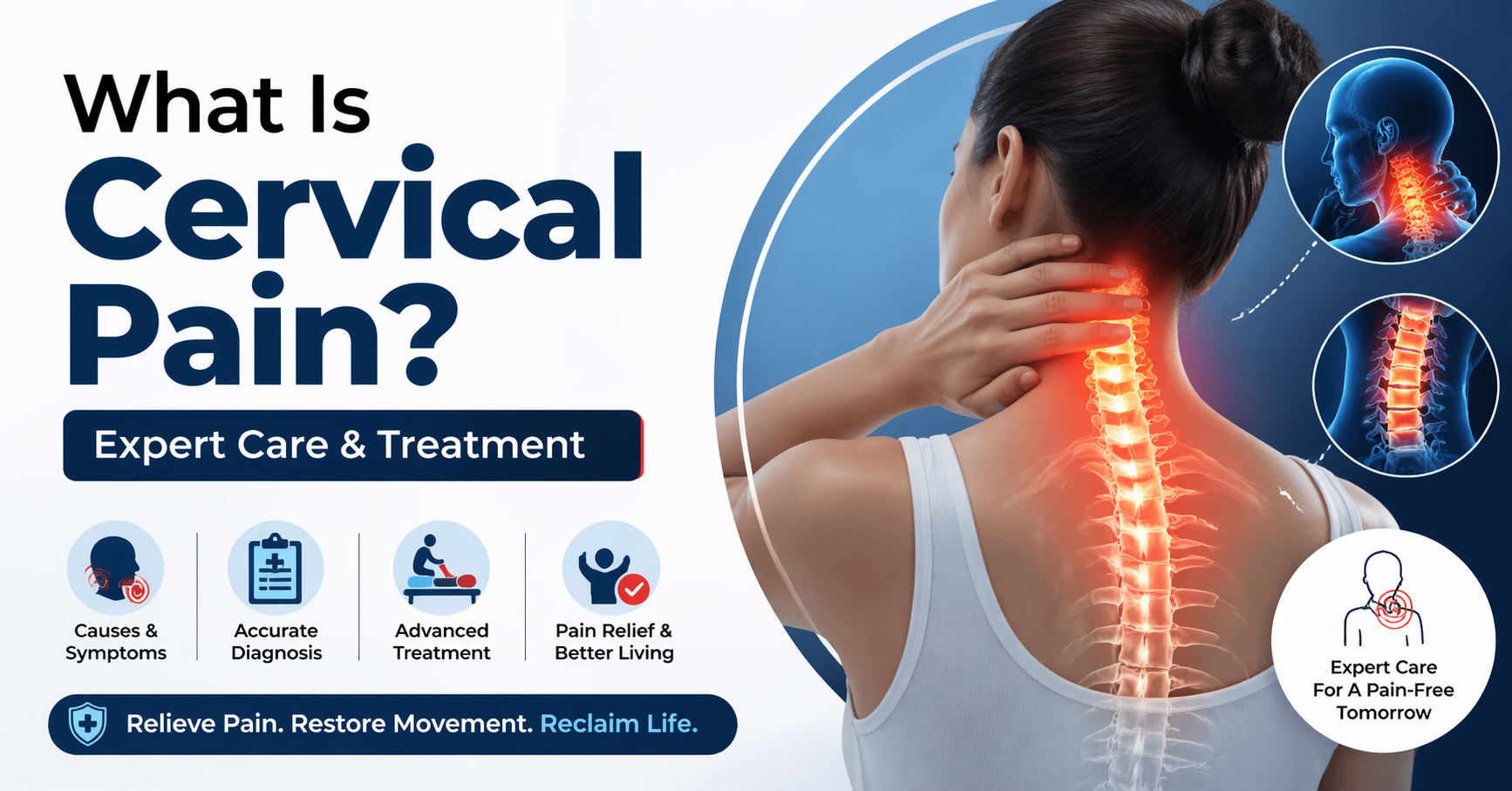
Cervical pain refers to discomfort or pain in the neck region (cervical spine) – the part of your spine that supports your head and allows movement in multiple directions. Because this area carries a lot of responsibility, even minor strain can lead to noticeable pain.
In today’s screen-heavy lifestyle, cervical pain is no longer limited to older adults. It’s now common among:
- Working professionals
- Students
- Mobile users
- People with poor posture
The good news? Most cases can be managed and even prevented – with the right understanding and care.
Understanding Cervical Pain
The cervical spine consists of seven vertebrae (C1–C7), discs, nerves, and muscles working together. When any of these structures get irritated, compressed, or inflamed, it leads to cervical pain.
This pain can feel different for everyone:
- Sharp or stabbing
- Dull and constant
- Radiating to shoulders or arms
- Associated with stiffness or reduced movement
Sometimes, it’s just muscular. But in other cases, it may involve nerve compression or disc issues, which need proper medical attention.
Common Causes of Cervical Pain
Cervical pain doesn’t happen randomly. There’s almost always a trigger behind it.
1. Poor Posture
The most common reason today.
Sitting with:
- Forward head posture
- Slouched shoulders
- Long hours on laptop or phone
This creates strain on neck muscles and spine.
2. Muscle Strain
Simple daily habits can cause it:
- Sleeping in an awkward position
- Sudden neck movement
- Carrying heavy bags
3. Cervical Spondylosis
Age-related wear and tear of the spine.
It can lead to:
- Stiffness
- Chronic pain
- Reduced flexibility
4. Herniated Disc
When a spinal disc slips or bulges, it can press on nearby nerves.
This may cause:
- Pain radiating to arms
- Tingling or numbness
- Weakness
5. Injury or Trauma
Accidents or sudden jerks (like whiplash) can damage cervical structures.
6. Nerve Compression
When nerves in the neck get compressed, symptoms go beyond pain:
- Burning sensation
- Electric shock-like pain
- Arm discomfort
Symptoms of Cervical Pain
Cervical pain is not always just “neck pain.” It often comes with multiple signs.
Common Symptoms:
- Persistent neck ache
- Stiffness or difficulty turning the head
- Pain spreading to shoulders or arms
- Headaches (especially from the back of the head)
- Muscle tightness
Advanced Symptoms:
- Numbness in hands
- Tingling sensation
- Weak grip strength
- Loss of balance (in severe cases)
If symptoms go beyond simple stiffness, it’s important not to ignore them.
When Should You See a Specialist?
Many people wait too long, hoping the pain will go away on its own.
You should consult a specialist if:
- Pain lasts more than 1–2 weeks
- It keeps coming back
- Pain radiates to arms
- You feel numbness or weakness
- Daily activities are getting affected
In such cases, getting evaluated by an expert like a spine specialist can help identify the root cause early.
If you’re looking for advanced evaluation and treatment, you can explore care options here:
Dr Mazda Turel Spine Specialist Page
Diagnosis of Cervical Pain
A proper diagnosis is the key to effective treatment.
Doctors usually follow:
1. Physical Examination
- Range of motion
- Pain points
- Reflexes
2. Imaging Tests
- X-ray
- MRI
- CT scan
These help identify:
- Disc issues
- Nerve compression
- Degeneration
Treatment Options for Cervical Pain
Treatment depends on the severity and cause. Most cases can be managed without surgery.
1. Rest and Lifestyle Changes
- Avoid long screen time
- Maintain proper posture
- Use ergonomic chairs
2. Medications
Doctors may prescribe:
- Pain relievers
- Muscle relaxants
- Anti-inflammatory medicines
3. Physiotherapy
One of the most effective treatments.
Includes:
- Neck strengthening exercises
- Stretching
- Posture correction
4. Heat and Cold Therapy
- Ice packs reduce inflammation
- Heat relaxes muscles
5. Cervical Collar (Short-Term)
Helps reduce strain, but should not be used for long durations.
6. Advanced Treatments
If conservative methods don’t work:
- Injections
- Nerve block procedures
7. Surgical Treatment (Rare Cases)
Surgery is considered when:
- Severe nerve compression
- Loss of function
- Chronic, unmanageable pain
Modern techniques focus on:
- Minimally invasive procedures
- Faster recovery
For expert evaluation and advanced spine care, you can consult through this page:
https://mazdaturel.com/best-spine-specialist-in-mumbai/
Home Remedies for Cervical Pain Relief
Simple habits can make a big difference.
✔ Improve Your Posture
- Keep screen at eye level
- Sit straight with back support
✔ Take Frequent Breaks
Every 30–40 minutes:
- Stretch your neck
- Move around
✔ Neck Exercises
Gentle movements:
- Side bends
- Neck rotations
- Chin tucks
✔ Use the Right Pillow
- Not too high
- Not too flat
✔ Stay Active
Avoid long periods of inactivity.
Prevention Tips
Prevention is easier than treatment.
- Avoid looking down at your phone for long
- Maintain a neutral spine while working
- Strengthen neck and upper back muscles
- Stay hydrated
- Manage stress (it tightens muscles)
How Cervical Pain Affects Daily Life
Many people underestimate it.
But cervical pain can:
- Reduce productivity
- Affect sleep quality
- Cause constant fatigue
- Limit movement
Over time, it can even impact mental well-being due to ongoing discomfort.
Real Talk: Why People Ignore Cervical Pain
Because it starts small.
Most people think:
“It’s just a normal neck pain.”
But here’s the reality:
- Early-stage pain is easier to treat
- Delayed treatment can lead to complications
Ignoring it doesn’t fix it – it only delays recovery.
Expert Approach to Cervical Pain
An experienced spine specialist doesn’t just treat symptoms.
They focus on:
- Root cause
- Long-term relief
- Preventing recurrence
Treatment is usually a mix of:
- Medical care
- Lifestyle correction
- Rehabilitation
That’s what makes the difference between temporary relief and lasting recovery.
Conclusion
So, what is cervical pain?
It’s not just a minor discomfort – it’s your body’s way of telling you something isn’t right.
The sooner you understand it, the easier it is to manage.
Whether it’s due to posture, stress, or a deeper spinal issue, the key lies in:
- Early attention
- Right treatment
- Consistent care
Don’t wait for the pain to control your routine. Take action early and give your spine the care it deserves.
1. What is cervical pain in simple terms?
Cervical pain is discomfort or pain in the neck area, usually caused by muscle strain, poor posture, or spine-related issues.
2. Is cervical pain serious?
Not always. Many cases are mild, but if it involves nerve compression or lasts long, it needs medical attention.
3. Can cervical pain go away on its own?
Yes, mild cases can improve with rest and posture correction. But persistent pain should be evaluated.
4. How long does cervical pain last?
It depends on the cause. It can last a few days (muscle strain) or longer if related to spine conditions.
5. What is the best treatment for cervical pain?
Physiotherapy, posture correction, and medications are common treatments. Severe cases may need advanced care.
6. Can cervical pain cause headaches?
Yes, it can cause tension headaches, especially at the back of the head.
7. When should I see a doctor for cervical pain?
If pain lasts more than 1–2 weeks, spreads to arms, or causes numbness or weakness.
8. Can exercise help cervical pain?
Yes, gentle neck exercises and strengthening routines can reduce pain and prevent recurrence.