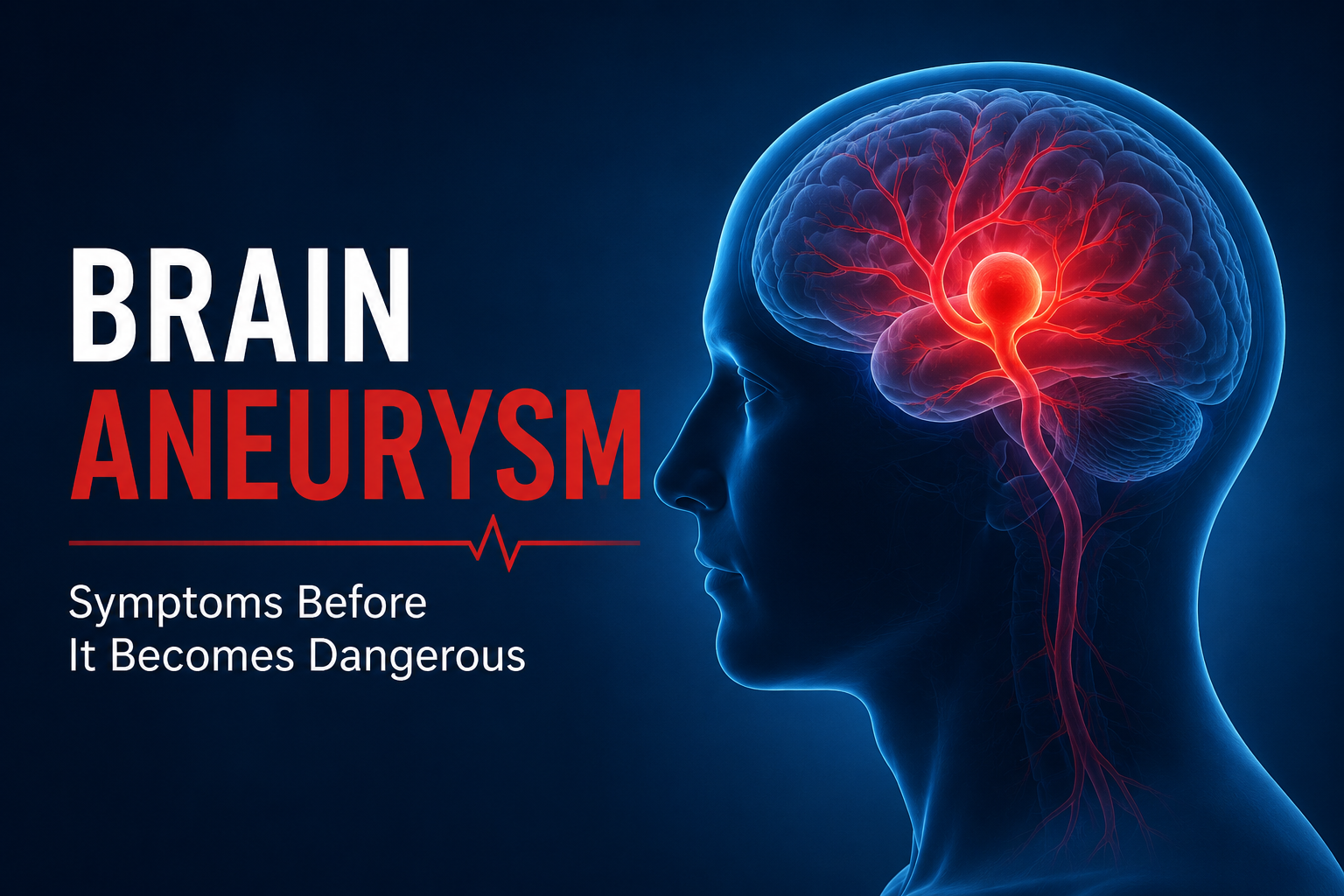
A brain aneurysm can be a silent condition until it becomes serious. Many people may not know they have one because small aneurysms may not always cause symptoms. However, when an aneurysm grows, leaks, or ruptures, it can become a medical emergency.
Understanding early warning signs and knowing when to seek medical help is important. Symptoms such as sudden severe headache, blurred vision, nausea, vomiting, eye pain, weakness, or neurological changes should never be ignored. Timely aneurysm treatment can help reduce the risk of serious complications in selected cases.
A brain aneurysm is related to blood vessels in the brain. It usually forms when a weak area in the wall of a blood vessel bulges outward. If the aneurysm ruptures, bleeding can occur inside or around the brain. This can cause sudden and severe symptoms that require urgent medical care.
This guide explains what a brain aneurysm is, common symptoms, warning signs, diagnosis, treatment options, recovery expectations, and when to consult a neurosurgeon.
A brain aneurysm is a bulging or balloon-like swelling in a blood vessel of the brain. It happens when a part of the blood vessel wall becomes weak. Over time, blood pressure inside the vessel may cause that weak area to expand.
Some aneurysms remain small and may not cause symptoms. Others may grow large enough to press on nearby brain structures or nerves. The most dangerous situation occurs when an aneurysm ruptures and causes bleeding.
A ruptured brain aneurysm can lead to a serious condition where bleeding affects the brain and surrounding spaces. This is why sudden severe headache or neurological symptoms should be treated urgently.
Why Brain Aneurysms Can Be Dangerous
A brain aneurysm becomes dangerous mainly because of the risk of rupture. When an aneurysm ruptures, blood leaks into areas around the brain. This can increase pressure inside the skull, irritate brain tissues, and affect normal brain function.
Possible complications may include:
- Bleeding around the brain
- Increased pressure in the skull
- Stroke-like symptoms
- Loss of consciousness
- Seizures
- Weakness or paralysis
- Vision problems
- Speech difficulty
- Life-threatening neurological emergency
Not every aneurysm ruptures, but a ruptured aneurysm needs urgent medical attention.
Brain Aneurysm Symptoms Before It Becomes Dangerous
Brain aneurysm symptoms depend on whether the aneurysm is unruptured, leaking, or ruptured.
Some unruptured aneurysms may cause no symptoms. However, if an aneurysm presses on nearby nerves or brain structures, symptoms may appear.
Possible symptoms before rupture may include:
Headache
A persistent or unusual headache may occur in some cases. However, headaches are common and usually have many other causes. A sudden, extremely severe headache is more concerning.
Blurred or Double Vision
If an aneurysm presses on nerves related to vision, it may cause blurred vision, double vision, or difficulty focusing.
Pain Around the Eye
Some patients may experience pain behind or around one eye.
Drooping Eyelid
Pressure on certain nerves may cause eyelid drooping.
Numbness or Weakness
Aneurysm-related pressure or bleeding can sometimes affect sensation or strength.
Nausea and Vomiting
Nausea and vomiting may occur with sudden headache or increased pressure in the head.
Seizures
In some cases, bleeding or irritation in the brain may trigger seizures.
Symptoms of a Ruptured Brain Aneurysm
A ruptured brain aneurysm is a medical emergency. Symptoms usually appear suddenly and can be severe.
Warning signs may include:
- Sudden severe headache
- Nausea and vomiting
- Neck stiffness
- Blurred or double vision
- Sensitivity to light
- Confusion
- Drowsiness
- Loss of consciousness
- Weakness on one side
- Speech difficulty
- Seizure
- Difficulty walking
- Sudden collapse
A sudden severe headache, especially if it is unlike any previous headache, should be taken seriously.
When Should You Seek Emergency Help?
Immediate medical care is needed if a person experiences:
- Sudden severe headache
- Headache with vomiting
- Loss of consciousness
- Seizure
- Sudden weakness
- Sudden speech difficulty
- Sudden vision changes
- Confusion
- Neck stiffness with headache
- Collapse
Do not wait for symptoms to improve on their own when neurological warning signs are present.
What Causes a Brain Aneurysm?
A brain aneurysm develops when a blood vessel wall becomes weak. Several factors may contribute to this weakness.
Possible risk factors include:
- High blood pressure
- Smoking
- Family history of aneurysm
- Certain blood vessel conditions
- Age-related vessel changes
- Previous aneurysm
- Head injury in some cases
- Certain infections or inflammatory conditions
Some people may have a higher risk due to inherited or structural factors. However, many aneurysms are discovered unexpectedly during brain imaging done for other reasons.
How Is a Brain Aneurysm Diagnosed?
Diagnosis usually begins with clinical evaluation and brain imaging. A doctor may ask about symptoms, headache pattern, neurological changes, medical history, family history, and risk factors.
Common evaluation methods may include:
Neurological Examination
The doctor checks brain and nerve function, including movement, speech, vision, reflexes, coordination, and alertness.
Brain Imaging
Imaging helps detect bleeding, aneurysm location, size, and related brain effects.
CT Scan
A CT scan may be used urgently when bleeding is suspected.
MRI
MRI may provide detailed brain imaging in selected cases.
Angiography
Angiography helps visualize blood vessels and understand aneurysm structure more clearly.
The choice of tests depends on symptoms, urgency, and the doctor’s assessment.
What Is Aneurysm Treatment?
Aneurysm treatment depends on whether the aneurysm has ruptured, its size, location, shape, patient age, symptoms, general health, and risk of future rupture.
Treatment may involve observation, medical management, endovascular treatment, or surgical treatment.
The goal of treatment is to reduce the risk of bleeding or re-bleeding while protecting normal brain function.
Observation and Monitoring
Not every unruptured aneurysm needs immediate surgery. Some small aneurysms may be monitored with regular imaging and medical management.
Observation may be considered when:
- The aneurysm is small
- It is not causing symptoms
- Risk of rupture appears low
- Surgery risk is higher than observation risk
- The patient’s overall health requires careful planning
Monitoring should always be guided by a specialist.
Medical Management
Medical management may include controlling risk factors that can increase stress on blood vessels.
This may involve:
- Blood pressure control
- Stopping smoking
- Managing cholesterol
- Healthy lifestyle changes
- Regular follow-up
- Monitoring symptoms
- Imaging follow-up when advised
Medicines do not usually remove an aneurysm, but medical care can help reduce risks linked to vessel health.
Surgical Clipping
Surgical clipping is a procedure in which a neurosurgeon places a clip at the base of the aneurysm to stop blood from entering it. This helps secure the aneurysm from bleeding or re-bleeding.
Dr. Mazda Turel’s website includes personal surgical writings where aneurysm clipping is discussed in the context of ruptured intracranial aneurysm surgery. In one article, he describes the intention of placing a clip on an aneurysm to secure it from re-bleeding while protecting the parent vessel.
Surgical clipping requires careful planning and expert microsurgical technique because brain blood vessels are delicate and important.
Endovascular Treatment
Endovascular treatment is another approach for selected aneurysms. It is performed through the blood vessels rather than directly opening the skull. Depending on the case, coils, stents, or other devices may be used to reduce blood flow into the aneurysm.
The suitability of endovascular treatment depends on aneurysm size, shape, location, and patient-specific factors.
A neurosurgical or neurovascular team evaluates which approach is safer and more suitable.
Emergency Treatment for Ruptured Aneurysm
A ruptured aneurysm requires urgent hospital care. The treatment plan may involve stabilizing the patient, managing pressure inside the skull, preventing re-bleeding, and securing the aneurysm.
Emergency care may include:
- Intensive monitoring
- Brain imaging
- Blood pressure management
- Seizure control if needed
- Treatment to secure the aneurysm
- Management of bleeding-related complications
- Rehabilitation planning if needed
Every ruptured aneurysm is different. Treatment decisions depend on the patient’s condition and imaging findings.
Risks of Brain Aneurysm Treatment
Like any brain or blood vessel procedure, aneurysm treatment has risks. The exact risks depend on aneurysm location, rupture status, patient health, and treatment type.
Possible risks may include:
- Bleeding
- Stroke
- Vessel narrowing or blockage
- Infection
- Swelling
- Seizures
- Weakness
- Speech or vision changes
- Memory or cognitive changes
- Anesthesia-related risks
A specialist explains patient-specific risks before treatment.
Recovery After Aneurysm Treatment
Recovery depends on whether the aneurysm was ruptured or unruptured, the treatment method, and the patient’s neurological condition.
Recovery may include:
- Hospital monitoring
- Medicines
- Follow-up imaging
- Wound care after surgery
- Activity restrictions
- Neurological observation
- Physiotherapy if needed
- Speech or occupational therapy if required
- Regular follow-up visits
Patients treated for unruptured aneurysms may recover differently from patients treated after rupture. Ruptured aneurysms may require longer recovery and rehabilitation.
Can Brain Aneurysms Be Prevented?
Not all brain aneurysms can be prevented. However, patients can reduce certain risk factors that affect blood vessel health.
Helpful steps include:
- Control blood pressure
- Avoid smoking
- Follow medical advice for vascular risk factors
- Manage diabetes and cholesterol if present
- Maintain a healthy lifestyle
- Avoid ignoring sudden neurological symptoms
- Attend follow-up imaging when advised
Patients with a family history of aneurysm should discuss screening concerns with their doctor.
Brain Aneurysm vs Migraine: How to Know the Difference?
Headaches are common and most are not caused by aneurysms. Migraine, tension headache, sinus problems, stress, and posture issues can all cause headaches.
However, aneurysm-related warning signs may include:
- Sudden worst-ever headache
- Headache with vomiting
- Headache with neck stiffness
- Headache with fainting
- Headache with vision changes
- Headache with weakness
- Headache with seizure
- Headache with confusion
A sudden and severe headache should not be assumed to be migraine without evaluation.
Brain Aneurysm and Vision Problems
A brain aneurysm may sometimes cause vision symptoms if it presses on nerves related to eye movement or vision.
Possible symptoms include:
- Blurred vision
- Double vision
- Drooping eyelid
- Eye pain
- Unequal pupils
- Difficulty moving the eye
Vision symptoms with headache or neurological changes should be assessed urgently.
Brain Aneurysm and Nausea
Nausea and vomiting can occur for many reasons. However, when nausea appears with sudden severe headache, neck stiffness, confusion, or fainting, it may indicate a serious neurological problem.
In such cases, urgent medical attention is important.
A neurosurgical opinion may be needed when:
- A brain aneurysm is found on imaging
- Aneurysm rupture is suspected
- Symptoms suggest pressure on nerves or brain structures
- There is sudden severe headache
- A neurologist or physician recommends vascular neurosurgical assessment
- Treatment options need to be discussed
- A second opinion is required for aneurysm management
Consultation helps determine whether observation, surgery, endovascular treatment, or urgent care is needed.
Dr. Mazda K. Turel’s official website lists brain care as one of his specialty areas and includes cerebrovascular surgery under brain-related services. His profile mentions specialization in cerebrovascular surgery, with emphasis on brain arterial bypasses, from Huashan Hospital, Fudan University, Shanghai, China.
The website also presents Dr. Turel as a Mumbai-based neurosurgeon practicing at Wockhardt Hospital, Mumbai Central, with care focused on brain, spine, and peripheral nerve conditions.
His writings on the website include aneurysm surgery experiences and discussions around ruptured intracranial aneurysm surgery, clipping, and surgical challenges.
Questions to Ask Before Aneurysm Treatment
Patients and families should ask clear questions before treatment decisions.
Useful questions include:
- Is the aneurysm ruptured or unruptured?
- Where is the aneurysm located?
- What is its size and shape?
- What is the risk of rupture?
- Can it be safely monitored?
- What treatment options are available?
- Is clipping or endovascular treatment more suitable?
- What are the risks of treatment?
- What recovery should we expect?
- Will follow-up imaging be needed?
Clear communication helps patients make informed decisions.
Conclusion
A brain aneurysm can remain silent, but when symptoms appear, they should be taken seriously. Headache, blurred vision, nausea, vomiting, eye pain, weakness, seizures, or sudden neurological changes may require urgent medical attention.
Timely aneurysm treatment can help prevent complications in selected cases, especially when an aneurysm is at risk of rupture or has already ruptured. Treatment decisions depend on the aneurysm’s size, location, rupture status, and the patient’s overall condition.
Patients should not ignore sudden severe headaches or neurological warning signs. Early evaluation by a specialist can help identify the problem and guide the safest treatment plan.
What is a brain aneurysm?
A brain aneurysm is a bulging or balloon-like swelling in a blood vessel in the brain caused by weakness in the vessel wall.
What are common brain aneurysm symptoms?
Symptoms may include headache, blurred vision, double vision, eye pain, nausea, vomiting, weakness, confusion, or seizures. Some aneurysms may cause no symptoms until they rupture.
What does a ruptured aneurysm feel like?
A ruptured aneurysm may cause a sudden severe headache, vomiting, neck stiffness, loss of consciousness, seizure, weakness, or neurological changes.
Is a brain aneurysm always dangerous?
Not every aneurysm ruptures, but some can become dangerous. The risk depends on size, location, shape, symptoms, and patient-specific factors.
What is aneurysm treatment?
Aneurysm treatment may include observation, medical management, surgical clipping, or endovascular treatment depending on the aneurysm and patient condition.
Can aneurysm treatment prevent rupture?
In selected cases, treatment can help secure the aneurysm and reduce the risk of rupture or re-bleeding. The decision depends on specialist evaluation.
When should I see a neurosurgeon for an aneurysm?
You should consult a neurosurgeon if an aneurysm is found on imaging, symptoms are concerning, rupture is suspected, or treatment options need expert evaluation.
Is aneurysm surgery risky?
Aneurysm surgery has risks because it involves delicate brain blood vessels. The risks depend on aneurysm location, rupture status, patient health, and treatment approach.