A skull base tumor may first show up as a problem with vision, hearing, facial sensation, swallowing, balance, or smell rather than as a typical “brain tumor” symptom. This happens because skull base tumor symptoms are strongly influenced by the tumor’s location and which nerves, blood vessels, brain structures, or sinuses are affected.
The skull base lies beneath the brain and behind the eyes and nose. Several cranial nerves and major blood vessels pass through this compact area, so even a noncancerous tumor can cause neurological problems if it compresses an important structure.
Symptoms alone cannot identify the type of tumor. A detailed neurological examination, hearing or vision testing when relevant, and imaging such as MRI or CT are usually needed to understand the cause.
Why Do Skull Base Tumor Symptoms Vary So Much?
Skull base tumor symptoms depend on the tumor’s exact position, size, growth pattern, and the structures it presses on. A tumor near the optic nerves may affect vision, while one near the hearing and balance nerves may cause hearing loss or unsteadiness. Tumors lower in the skull base may instead affect swallowing, voice, or tongue movement.
The skull base contains pathways for many of the cranial nerves—the nerves that connect the brain with the eyes, face, ears, tongue, throat, and other structures.
This helps explain why the symptoms may appear unrelated at first. A patient may initially visit an ophthalmologist for double vision, an ENT specialist for hearing loss, or a dentist or neurologist for persistent facial numbness.
Skull base tumors may also grow slowly and produce few symptoms initially. Some are discovered incidentally during scans performed for another reason.
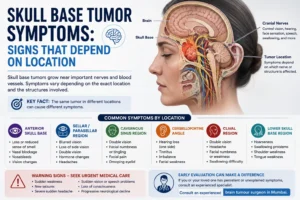
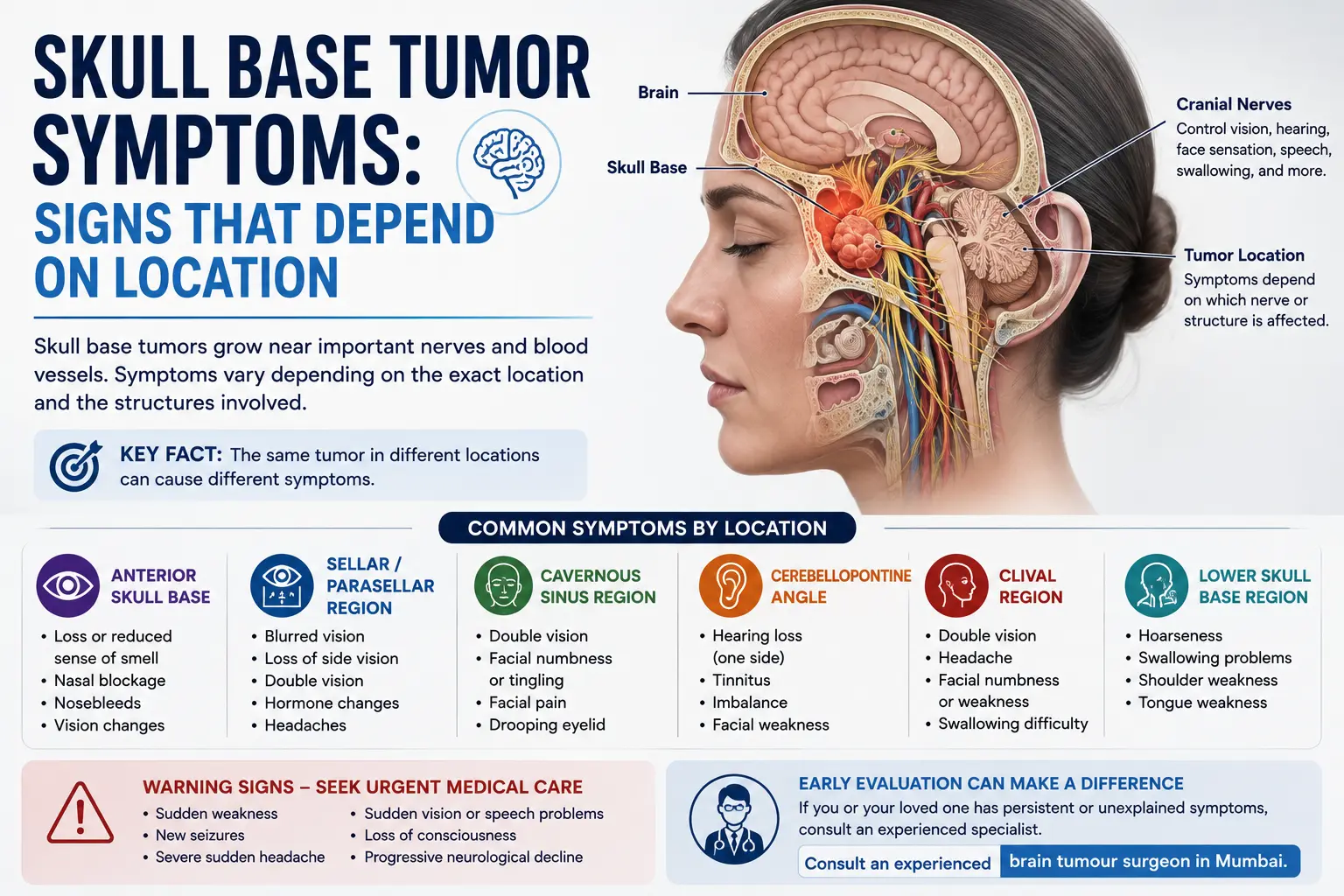
Skull Base Tumor Signs by Location
A useful way to understand these tumors is to look at the part of the skull base involved.
Location | Structures Commonly Nearby | Possible Symptoms |
Anterior skull base | Smell pathways, eyes, nasal cavity and sinuses | Reduced smell, nasal blockage, nosebleeds, vision changes |
Sellar/parasellar region | Pituitary gland, optic nerves, cavernous sinus | Visual-field loss, double vision, headaches, hormone changes |
Sphenoid/cavernous sinus region | Eye-movement nerves, trigeminal nerve, carotid artery | Double vision, facial numbness or pain, abnormal eye movement |
Cerebellopontine angle | Hearing, balance and facial nerves | One-sided hearing loss, tinnitus, imbalance, facial symptoms |
Clivus | Brainstem and eye-movement nerves | Double vision, headache, facial symptoms, swallowing problems |
Jugular foramen/lower skull base | Nerves involved in voice and swallowing | Hoarseness, swallowing difficulty, shoulder or tongue-related weakness |
These are patterns rather than rules. The same tumor location can produce different symptoms in different patients.
Anterior Skull Base Tumors: Smell, Nose and Vision Changes
The anterior skull base lies behind the forehead, eyes, nose, and upper sinuses.
Tumors in this region can involve the structures responsible for smell or extend toward the eye sockets and nasal passages.
Possible skull base lesion symptoms include:
- Reduced or lost sense of smell
- Persistent nasal blockage
- Recurrent nosebleeds
- Headache
- Blurred or reduced vision
- Changes involving one eye
- Facial pressure
Johns Hopkins notes that tumors involving the skull base and nose may affect breathing and the sense of smell, while Mayo Clinic includes smell changes and nosebleeds among possible skull base tumor symptoms.
These symptoms are much more commonly caused by non-tumor conditions such as sinus disease. Persistent, progressive, or unexplained symptoms require medical assessment rather than self-diagnosis.
Sellar and Parasellar Tumors: Vision and Hormone Symptoms
The sellar region contains the pituitary gland. Immediately above it lies the optic chiasm, where important visual nerve fibres cross.
A tumor in or around this area may cause:
- Loss of side or peripheral vision
- Blurred vision
- Reduced visual clarity
- Double vision
- Headache
- Hormonal abnormalities
Pituitary tumors are one example of skull base tumors that can produce both visual and hormonal symptoms.
Depending on the hormone involved, a patient may experience changes in menstrual periods, fertility, sexual function, growth-related features, cortisol-related symptoms, or thyroid function.
The type of symptom depends on whether the tumor produces excess hormones, reduces normal pituitary function, or simply compresses nearby structures.
Cavernous Sinus and Sphenoid Region: Double Vision and Facial Symptoms
The cavernous sinus is a small but anatomically crowded region on either side of the pituitary gland.
Several nerves controlling eye movement travel through or beside it, along with part of the trigeminal nerve involved in facial sensation.
Tumors involving this area may therefore produce cranial nerve tumor symptoms such as:
- Double vision
- Difficulty moving one eye
- Drooping of the eyelid
- Facial numbness
- Facial tingling
- Facial pain
- Headache
A patient may notice that double vision is worse when looking in a particular direction because one of the nerves controlling eye movement is not functioning normally.
These symptoms require neurological assessment because vascular problems, inflammation, diabetes-related nerve problems, and other disorders can produce similar findings.
Cerebellopontine Angle Tumors: Hearing and Balance Changes
The cerebellopontine angle lies between the cerebellum and brainstem and contains several important cranial nerves.
A vestibular schwannoma, also known as an acoustic neuroma, is a recognised tumor in this region.
Possible symptoms include:
- Hearing loss that is worse in one ear
- Persistent tinnitus in one ear
- Reduced speech clarity
- Unsteadiness
- Balance problems
- Facial numbness
- Facial weakness in selected larger tumors
Mayo Clinic includes hearing loss, ringing in the ears, balance problems and facial neurological symptoms among possible effects of skull base tumors.
Because hearing loss often develops slowly, patients may compensate without realising how different the two ears have become.
Persistent one-sided hearing loss usually deserves formal hearing assessment.
Clival Skull Base Tumors: Headache, Double Vision and Nerve Problems
The clivus is a bone in the central skull base, directly in front of the brainstem.
Chordoma is one tumor type that can develop in this area.
Because of the clivus’s position, symptoms can involve cranial nerves responsible for eye movement, facial function, speech, and swallowing.
Possible signs include:
- Double vision
- Headache
- Facial numbness
- Facial weakness
- Speech changes
- Swallowing difficulty
Johns Hopkins lists headache, double vision, facial numbness, facial paralysis, speech changes, and swallowing problems among possible symptoms of skull base chordoma.
These symptoms are not specific to chordoma. Imaging is needed to determine whether a skull base lesion is present and what it may represent.
Lower Skull Base Tumors: Voice and Swallowing Symptoms
Cranial nerves involved in swallowing, voice production, shoulder movement, and tongue control pass through the lower skull base.
A tumor affecting these nerves may cause:
- Hoarseness
- Difficulty swallowing
- Coughing or choking during meals
- Changes in speech
- Shoulder weakness
- Tongue weakness or abnormal tongue movement
Mayo Clinic includes hoarseness and problems with swallowing or breathing among recognised skull base tumor symptoms.
Progressive swallowing difficulties need medical attention because they can eventually affect nutrition or the ability to protect the airway.
Can Skull Base Tumors Cause Headaches?
Yes, but headache is not specific enough to diagnose a skull base tumor.
Headache can develop because of:
- Pressure on nearby structures
- Involvement of pain-sensitive tissues
- Obstruction of normal cerebrospinal fluid pathways in selected tumors
- Associated neurological effects
Headache is listed among common skull base tumor symptoms by both Johns Hopkins and Mayo Clinic.
However, migraine, tension-type headache, sinus problems, sleep disturbance, and many other conditions are far more common explanations.
Concern increases when a new or changing headache appears together with neurological symptoms such as double vision, progressive weakness, swallowing difficulty, hearing loss, or loss of balance.
How Is a Skull Base Tumor Diagnosed?
Skull base tumor diagnosis usually combines a neurological examination with imaging such as MRI or CT. Additional testing may include hearing tests, visual-field assessment, hormone blood tests, nasal examination, or biopsy depending on where the lesion is located and what type of tumor is suspected.
Neurological Examination
The doctor may assess:
- Vision
- Eye movements
- Hearing
- Facial sensation
- Facial movement
- Speech
- Swallowing
- Strength
- Reflexes
- Balance and coordination
These findings may help identify which cranial nerves or brain regions are involved.
MRI
MRI provides detailed images of the skull base, brain, cranial nerves, and nearby soft tissues.
It can help determine:
- Tumor location
- Size
- Extension into nearby structures
- Relationship with nerves and blood vessels
- Brainstem or brain compression
CT Scan
CT is particularly useful for assessing bone.
Because some skull base tumors arise from or alter bone, MRI and CT may provide complementary information.
Mayo Clinic lists MRI and CT among the core imaging tests used to identify the size and location of skull base tumors and assess pressure on surrounding structures.
Hearing, Vision or Hormone Tests
If the lesion lies near a hearing nerve, optic pathway, or pituitary gland, focused testing may be needed.
Mayo Clinic specifically notes that hearing and vision tests can help detect nerve compression, while blood tests may be used when a tumor could affect hormone function.
Biopsy
Some tumors require tissue examination for a definitive diagnosis.
Whether a biopsy is needed depends on the tumor’s location, imaging appearance, suspected diagnosis, and treatment plan. In other cases, tissue is obtained during surgical removal.
What Are the Treatment Options?
Treatment cannot be decided simply from the phrase “skull base tumor.”
Skull base tumors include many different conditions, and some are benign while others are malignant.
Depending on the diagnosis, management may involve:
- Observation with follow-up imaging
- Surgery
- Stereotactic radiosurgery
- Fractionated radiation therapy
- Drug or systemic cancer treatment for selected malignant tumors
- A combination of treatments
Treatment planning considers the tumor’s type, size, growth, symptoms, location, relationship with nerves and blood vessels, age, and general health. Mayo Clinic notes that the aim is to control or remove the tumor while minimising damage to nearby tissues.
Because of the complex anatomy, treatment may involve neurosurgery, ENT/head-and-neck surgery, ophthalmology, endocrinology, radiation oncology, or medical oncology depending on the tumor.
Which Skull Base Tumor Warning Signs Need Urgent Attention?
Many skull base tumors grow slowly. However, some symptoms should not simply be watched at home.
Seek urgent medical assessment for:
- Sudden major loss of vision
- Sudden facial, arm, or leg weakness
- Loss of consciousness
- A new seizure
- Sudden difficulty speaking
- Severe sudden headache with neurological symptoms
- Rapidly worsening confusion
- New serious difficulty breathing or swallowing
These symptoms can have causes other than a skull base tumor, including stroke, bleeding, infection, and other neurological emergencies.
Gradual hearing loss, facial numbness, double vision, swallowing difficulty, or progressive balance changes also deserve medical evaluation even when they are not emergencies.
When Should You Consult a Neurosurgeon?
Neurosurgical review becomes relevant when MRI or CT identifies a skull base mass involving the brain, cranial nerves, brainstem, or other structures where surgical assessment may be needed.
A consultation may address:
- What type of lesion the imaging suggests
- Which cranial nerves are involved
- Whether the tumor is growing
- Whether observation is reasonable
- Whether biopsy is needed
- Whether surgery is possible
- Whether an endoscopic or open approach may be appropriate
- Whether radiation is an alternative
- Which neurological functions need to be protected
Patients with a suspected or confirmed skull base lesion may seek evaluation from a brain tumor surgeon in Mumbai to review the imaging and understand the available options.
Dr. Mazda K. Turel can assess the patient’s neurological findings and scans before discussing whether monitoring, surgery, radiation, further testing, or multidisciplinary evaluation may be appropriate.
Conclusion
Skull base tumor symptoms often make more sense once the tumor’s location is understood. A lesion near the optic pathways may affect vision, one near the hearing and balance nerves may cause one-sided hearing loss or unsteadiness, and tumors lower in the skull base may interfere with voice or swallowing.
These symptoms cannot confirm a skull base tumor on their own. Many have common ear, eye, sinus, vascular, or neurological explanations.
MRI, CT, cranial nerve examination, and targeted hearing, visual, hormonal, or tissue testing help establish the diagnosis. Because the skull base contains many important nerves and blood vessels in a small space, treatment needs to be planned around both tumor control and preservation of neurological function. Specialist review is particularly useful when imaging shows a lesion close to these critical structures.
Frequently Asked Questions
What are usually the first skull base tumor symptoms?
Early skull base tumor symptoms depend on location. Some patients notice slowly worsening hearing in one ear, double vision, facial numbness, reduced smell, headaches, or balance problems. Tumors lower in the skull base may instead affect swallowing or the voice. These symptoms have many other causes, so imaging and clinical examination are needed.
Can a skull base tumor cause facial numbness?
Yes. Several cranial nerves responsible for facial sensation pass through the skull base. A tumor pressing on the trigeminal nerve or nearby structures can cause numbness, tingling, or facial pain. Skull base chordomas and other lesions can produce facial nerve-related symptoms, but facial numbness alone does not identify the cause.
Why can a skull base tumor cause double vision?
The nerves controlling eye movement pass through the skull base. A tumor pressing on one of these nerves can prevent the eyes from remaining properly aligned, causing two images of one object. Double vision may occur with tumors involving the cavernous sinus, clivus, or other central skull base locations.
Are all skull base tumors cancerous?
No. Skull base tumors include both benign and malignant conditions. Examples of commonly noncancerous tumors include meningioma, vestibular schwannoma, and many pituitary tumors, while chordoma, chondrosarcoma, and certain sinonasal tumors may be malignant. Even a benign tumor can cause serious symptoms if it compresses important nerves or brain structures.
Can a skull base tumor affect hearing?
Yes. Tumors near the hearing and balance nerve or middle/posterior skull base may cause hearing loss, tinnitus, dizziness, or imbalance. Persistent hearing loss that is clearly worse in one ear should be evaluated because several ear and neurological conditions can produce this pattern.
Can MRI diagnose a skull base tumor?
MRI is highly useful for identifying skull base masses and showing their relationship with nerves, blood vessels, and the brain. CT may provide additional information about bone involvement. However, imaging does not always establish the exact tumor type. Some lesions require biopsy or tissue obtained during surgery for definitive diagnosis.
Does every skull base tumor need surgery?
No. Some small, stable, asymptomatic tumors may be observed. Others may be treated with surgery, focused radiation, conventional radiation, or other therapies. The choice depends on tumor type, growth, location, neurological symptoms, age, overall health, and how closely the lesion involves important nerves or blood vessels.