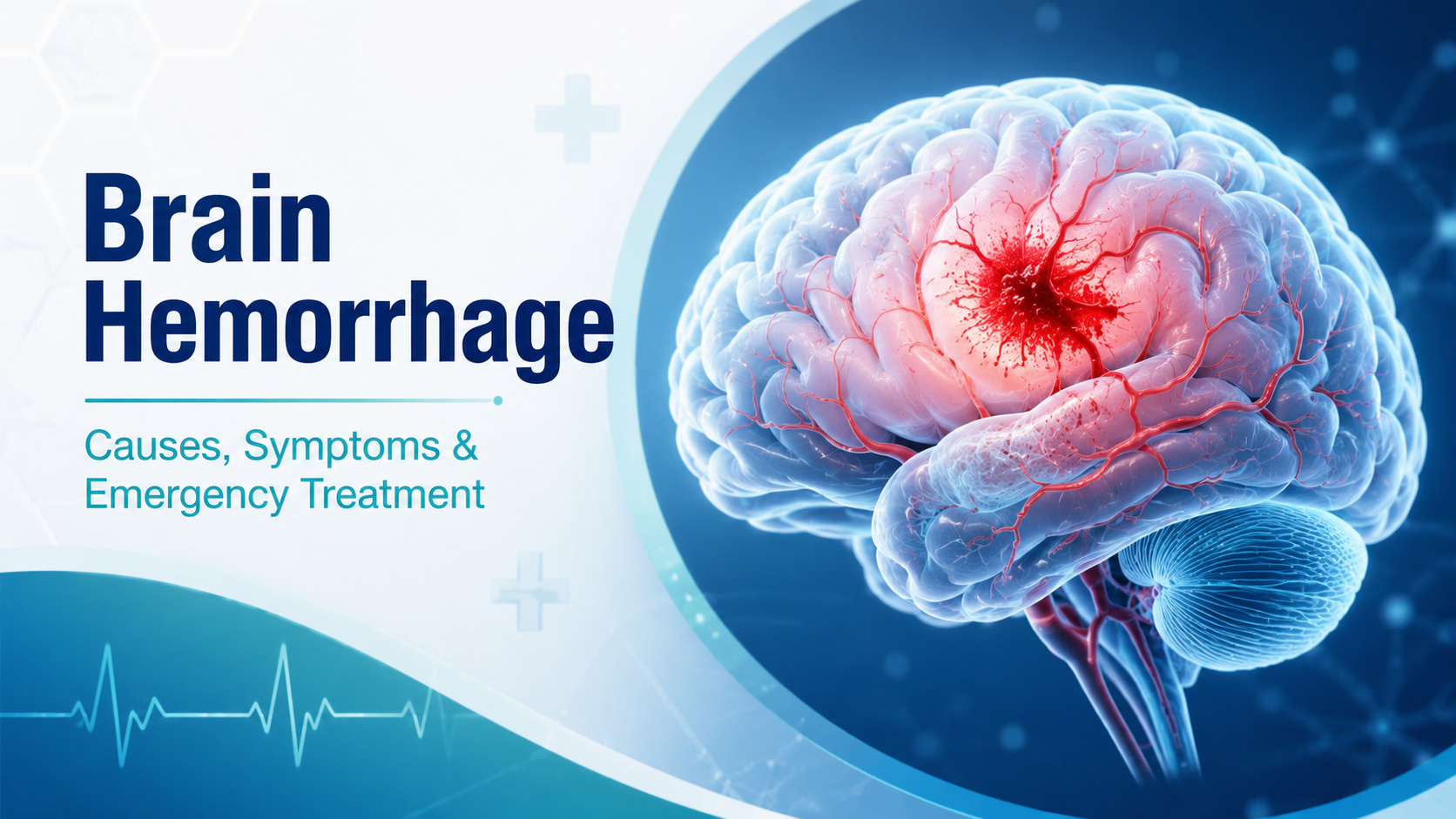
A brain hemorrhage is a serious medical emergency where bleeding occurs inside or around the brain. It can happen suddenly and may lead to severe symptoms such as headache, vomiting, weakness, confusion, seizures, loss of consciousness, or difficulty speaking. Because the brain controls movement, speech, memory, balance, breathing, and many other essential functions, bleeding in or around the brain must be evaluated immediately.
Brain hemorrhage treatment depends on the cause of bleeding, location of the hemorrhage, amount of blood, pressure on the brain, neurological condition of the patient, and overall health. Some patients may require emergency stabilization and monitoring, while others may need neurosurgical intervention to remove a blood clot, relieve pressure, or treat the underlying cause.
Early medical care is important because brain hemorrhage can worsen quickly. Timely diagnosis, imaging, emergency management, and specialist treatment can help reduce complications and improve recovery chances.
This guide explains what brain hemorrhage means, common causes, warning symptoms, emergency treatment options, recovery expectations, and when to consult a neurosurgeon.
What Is a Brain Hemorrhage?
A brain hemorrhage means bleeding inside the brain tissue or in the spaces surrounding the brain. This bleeding can damage brain cells directly and may also increase pressure inside the skull.
The skull is a closed space. When bleeding occurs, the collected blood may press on brain tissue. This pressure can affect blood flow, nerve signals, and normal brain function.
Brain hemorrhage may occur due to high blood pressure, trauma, aneurysm rupture, blood vessel abnormalities, tumors, blood-thinning medicines, or other medical causes.
A brain hemorrhage is also sometimes described as a bleeding stroke or hemorrhagic stroke when bleeding occurs within the brain.
A brain hemorrhage can become dangerous because bleeding may rapidly increase pressure inside the skull. When pressure rises, brain tissue may not receive enough oxygen and blood supply. This can cause neurological damage.
Possible complications include:
- Stroke-like symptoms
- Brain swelling
- Seizures
- Loss of consciousness
- Weakness or paralysis
- Speech difficulty
- Memory or thinking problems
- Breathing difficulty in severe cases
- Coma
- Life-threatening neurological emergency
The seriousness depends on the size, location, cause, and speed of bleeding.
Common Causes of Brain Hemorrhage
Brain hemorrhage can occur due to different reasons. Identifying the cause is important because treatment depends on why the bleeding happened.
High Blood Pressure
Long-standing high blood pressure is one of the important causes of bleeding inside the brain. It can weaken small blood vessels over time, making them more likely to rupture.
Dr. Mazda Turel’s article “The Surgical Stroke” describes a case where brain bleeding was discussed in relation to high blood pressure, while also noting that a large blood clot can sometimes hide other causes such as tumor, arteriovenous malformation, or aneurysm.
Head Injury or Trauma
A fall, accident, road injury, sports injury, or direct blow to the head can cause bleeding in or around the brain. Even if symptoms appear mild at first, head injury-related bleeding can worsen over time.
Brain Aneurysm
An aneurysm is a weak bulging area in a blood vessel. If it ruptures, it can cause sudden bleeding around the brain.
Arteriovenous Malformation
An arteriovenous malformation is an abnormal connection between arteries and veins. If it ruptures, it can cause bleeding.
Blood-Thinning Medicines
Patients taking blood thinners may have a higher risk of bleeding, especially after injury or when other risk factors are present.
Brain Tumor
Some tumors may bleed or cause bleeding-like symptoms. Imaging is needed to identify the cause.
Blood Disorders
Certain medical conditions affecting clotting can increase bleeding risk.
Types of Brain Hemorrhage
Brain hemorrhage may be classified based on where bleeding occurs.
Intracerebral Hemorrhage
This occurs inside the brain tissue. It may cause weakness, speech difficulty, altered consciousness, headache, vomiting, or seizures.
Subarachnoid Hemorrhage
This occurs in the space around the brain and is often associated with aneurysm rupture. A sudden severe headache may be a warning sign.
Subdural Hematoma
This occurs between the brain surface and its outer covering. It may develop after head injury and can sometimes progress slowly, especially in older adults.
Epidural Hematoma
This usually occurs after trauma and may involve bleeding between the skull and the outer covering of the brain.
Each type requires different evaluation and treatment planning.
Brain Hemorrhage Symptoms
Brain hemorrhage symptoms can appear suddenly or gradually, depending on the cause and location.
Common symptoms include:
Sudden Severe Headache
A sudden, intense headache may be a warning sign, especially if it is different from usual headaches.
Vomiting or Nausea
Vomiting with headache or neurological symptoms can indicate increased pressure inside the skull.
Weakness on One Side
Weakness or paralysis of the face, arm, or leg may occur when bleeding affects movement-related brain areas.
Difficulty Speaking
Some patients may struggle to speak, understand words, or form sentences.
Confusion or Drowsiness
Bleeding can affect alertness, awareness, and thinking.
Seizures
A seizure may occur when bleeding irritates brain tissue.
Vision Problems
Blurred vision, double vision, or loss of vision may occur depending on the affected area.
Loss of Balance
Patients may experience dizziness, unsteadiness, or difficulty walking.
Loss of Consciousness
Severe bleeding can cause fainting, coma, or reduced responsiveness.
Warning Signs That Need Emergency Care
Immediate emergency care is needed if a person develops:
- Sudden severe headache
- Weakness on one side
- Face drooping
- Speech difficulty
- Repeated vomiting
- Seizure
- Confusion
- Drowsiness
- Sudden vision changes
- Loss of balance
- Head injury followed by worsening symptoms
- Loss of consciousness
Do not wait for these symptoms to improve on their own.
How Brain Hemorrhage Is Diagnosed
Brain hemorrhage diagnosis usually begins with emergency clinical assessment and imaging.
Neurological Examination
Doctors check consciousness, speech, eye movement, limb strength, reflexes, sensation, coordination, and breathing.
CT Scan
A CT scan is often used in emergencies to detect bleeding quickly.
MRI
MRI may be advised in selected cases for more detailed brain evaluation.
Angiography
If an aneurysm, arteriovenous malformation, or blood vessel abnormality is suspected, angiography may help evaluate brain blood vessels.
Blood Tests
Blood tests may check clotting status, blood counts, sugar, kidney function, and medication-related factors.
Fast diagnosis is important because treatment decisions depend on the type and severity of bleeding.
What Is Brain Hemorrhage Treatment?
Brain hemorrhage treatment focuses on stabilizing the patient, controlling bleeding-related complications, reducing pressure on the brain, protecting neurological function, and treating the cause of bleeding.
Dr. Mazda Turel’s brain hemorrhage treatment page states that quick evaluation, accurate imaging, emergency stabilization, and the right neurosurgical decision are important in brain hemorrhage care. It also mentions that the goal is to control bleeding, reduce pressure on the brain, protect neurological function, and support recovery.
Treatment may involve emergency medicines, ICU monitoring, surgery, aneurysm treatment, clot removal, pressure control, and rehabilitation depending on the condition.
Emergency Stabilization
The first step in brain hemorrhage treatment is stabilizing the patient. This may include:
- Monitoring breathing
- Controlling blood pressure
- Managing seizures if present
- Checking oxygen levels
- Managing brain swelling
- Reviewing blood-thinning medicines
- Preparing for urgent imaging
- ICU admission if needed
Emergency stabilization helps prevent further deterioration while doctors identify the cause and severity.
When Is Surgery Needed?
Surgery may be needed when bleeding causes significant pressure, when a large clot is present, or when the cause requires surgical treatment.
Surgery may be considered in cases such as:
- Large blood clot compressing the brain
- Worsening consciousness
- Significant brain swelling
- Bleeding due to aneurysm
- Bleeding due to arteriovenous malformation
- Traumatic hematoma
- Hydrocephalus or fluid pressure
- Neurological worsening despite medical care
The decision depends on imaging findings, clinical condition, age, medical history, and surgical risk.
Surgical Options for Brain Hemorrhage
The type of surgery depends on the cause and location of bleeding.
Craniotomy
A craniotomy involves opening part of the skull to access the brain for surgical repair or clot removal. Dr. Mazda Turel’s website explains craniotomy as an operation to open the skull to access the brain for surgical repair.
Hematoma Evacuation
If a blood clot is causing dangerous pressure, surgery may be done to remove the clot.
Aneurysm Clipping
If bleeding is caused by a ruptured aneurysm, clipping may be used in selected cases to secure the aneurysm.
Decompression
In some severe cases, surgery may be needed to relieve pressure on the brain.
CSF Diversion
If bleeding causes fluid buildup or hydrocephalus, a drain may be placed to reduce pressure.
Non-Surgical Management
Not every brain hemorrhage needs surgery. Some patients may be managed with careful monitoring and medicines.
Non-surgical management may include:
- ICU observation
- Blood pressure control
- Anti-seizure medicines if needed
- Reversal of blood thinners when appropriate
- Brain swelling management
- Repeat imaging
- Neurological monitoring
- Rehabilitation planning
This approach may be used when bleeding is small, stable, and not causing major pressure.
Brain Hemorrhage Due to High Blood Pressure
High blood pressure-related brain hemorrhage often occurs suddenly. It may cause weakness, confusion, headache, vomiting, or reduced consciousness.
Treatment focuses on stabilizing the patient, controlling blood pressure, monitoring brain pressure, and deciding whether surgery is needed.
Patients with high blood pressure should take long-term control seriously because uncontrolled blood pressure increases the risk of serious brain and heart complications.
Brain Hemorrhage After Head Injury
A head injury can cause bleeding immediately or after some time. Symptoms may worsen gradually, especially in older adults or patients taking blood thinners.
Warning signs after head injury include:
- Increasing headache
- Repeated vomiting
- Drowsiness
- Confusion
- Seizure
- Weakness
- Unequal pupils
- Loss of consciousness
- Behavior changes
Any worsening symptom after head injury should be evaluated urgently.
Brain Hemorrhage and Aneurysm Rupture
A ruptured aneurysm can cause bleeding around the brain. It may present with a sudden severe headache, vomiting, neck stiffness, drowsiness, or collapse.
Aneurysm-related bleeding usually requires urgent specialist care. Treatment may involve securing the aneurysm to reduce the risk of re-bleeding.
Dr. Mazda Turel’s website includes cerebrovascular surgery among brain-related services and mentions his specialization in cerebrovascular surgery, with emphasis on brain arterial bypasses, from Huashan Hospital, Fudan University, Shanghai, China.
Recovery After Brain Hemorrhage
Recovery after brain hemorrhage varies widely. It depends on the cause, bleeding size, brain area affected, treatment timing, patient age, and overall health.
Recovery may include:
- ICU care
- Medicines
- Repeat imaging
- Physiotherapy
- Speech therapy
- Occupational therapy
- Cognitive rehabilitation
- Long-term neurological follow-up
- Lifestyle modification
- Blood pressure control
Some patients recover well, while others may have lasting neurological difficulties. Rehabilitation plays an important role in improving function.
Possible Long-Term Effects
Depending on the affected brain area, long-term effects may include:
- Weakness
- Speech difficulty
- Memory problems
- Balance issues
- Seizures
- Vision problems
- Personality or mood changes
- Difficulty swallowing
- Reduced independence
Early treatment and structured rehabilitation can support recovery.
Can Brain Hemorrhage Be Prevented?
Not all brain hemorrhages can be prevented, but risk may be reduced by managing known risk factors.
Helpful steps include:
- Control blood pressure
- Avoid smoking
- Take medicines as prescribed
- Follow medical advice for blood thinners
- Manage diabetes and cholesterol
- Use helmets and seatbelts
- Avoid ignoring severe headaches
- Treat aneurysm or vascular malformation when advised
- Attend follow-up appointments
Prevention depends on the underlying risk factors.
Brain Hemorrhage Treatment with Dr. Mazda K. Turel
Dr. Mazda K. Turel provides brain hemorrhage treatment in Mumbai with an emergency-focused approach, according to his official website. His brain hemorrhage treatment page mentions quick evaluation, accurate imaging, emergency stabilization, and neurosurgical decision-making as important parts of care.
Dr. Turel is presented on his website as a Mumbai-based neurosurgeon practicing at Wockhardt Hospital, Mumbai Central. The website lists brain, spine, and peripheral nerve conditions among his care areas and states that he has 15+ years of experience.
His website also lists brain-related services including brain tumors, cerebrovascular surgery, epilepsy surgery, head injury, stroke surgery, craniofacial pain surgery, and endoscopic surgery.
A neurosurgeon may be needed when brain bleeding is suspected, confirmed on imaging, or causing neurological symptoms.
Consultation may be required when there is:
- Brain hemorrhage on CT or MRI
- Reduced consciousness
- Large blood clot
- Brain swelling
- Weakness or paralysis
- Seizures
- Head injury-related bleeding
- Aneurysm rupture
- AVM-related bleeding
- Need for surgery or ICU care
A neurosurgical opinion helps decide whether emergency surgery, monitoring, or another treatment approach is needed.
Questions Families Should Ask
Brain hemorrhage can be frightening for families. Asking clear questions can help them understand the situation.
Useful questions include:
- Where is the bleeding located?
- What caused the hemorrhage?
- Is the bleeding increasing?
- Is there pressure on the brain?
- Does the patient need surgery?
- What are the risks of treatment?
- What are the recovery expectations?
- Will ICU care be needed?
- Is rehabilitation required?
- What warning signs should we watch for?
Clear communication helps families make informed decisions.
Conclusion
Brain hemorrhage treatment is time-sensitive and depends on the cause, severity, bleeding location, pressure on the brain, and patient condition. A brain hemorrhage can cause sudden headache, vomiting, weakness, speech difficulty, seizures, confusion, or loss of consciousness.
Early medical care is important because brain bleeding can worsen quickly. Emergency stabilization, accurate imaging, neurological monitoring, and timely neurosurgical decisions can help reduce complications.
Patients and families should not ignore sudden severe headache, weakness, confusion, seizures, or symptoms after head injury. Prompt evaluation by a medical team can help identify the cause and guide the right treatment path.
Frequently Asked Questions
What is brain hemorrhage?
Brain hemorrhage means bleeding inside or around the brain. It can damage brain tissue and increase pressure inside the skull.
What are common symptoms of brain hemorrhage?
Common symptoms include sudden severe headache, vomiting, weakness, speech difficulty, confusion, seizures, vision problems, drowsiness, and loss of consciousness.
What causes brain hemorrhage?
Common causes include high blood pressure, head injury, aneurysm rupture, blood vessel abnormalities, tumors, blood-thinning medicines, and clotting disorders.
Is brain hemorrhage an emergency?
Yes. Brain hemorrhage can be life-threatening and needs urgent medical evaluation.
What is brain hemorrhage treatment?
Brain hemorrhage treatment may include emergency stabilization, ICU care, medicines, blood pressure control, surgery, clot removal, aneurysm treatment, and rehabilitation depending on the cause and severity.
Does every brain hemorrhage need surgery?
No. Some cases can be managed with monitoring and medicines. Surgery may be needed when there is significant pressure, a large clot, worsening symptoms, or a treatable surgical cause.
Can patients recover after brain hemorrhage?
Recovery depends on the cause, size, location, treatment timing, and neurological condition. Rehabilitation may help improve strength, speech, balance, and daily function.
When should I see a neurosurgeon?
A neurosurgeon should be consulted when brain bleeding is suspected or confirmed, especially if there is weakness, drowsiness, seizures, large clot, head injury, aneurysm, or worsening symptoms.