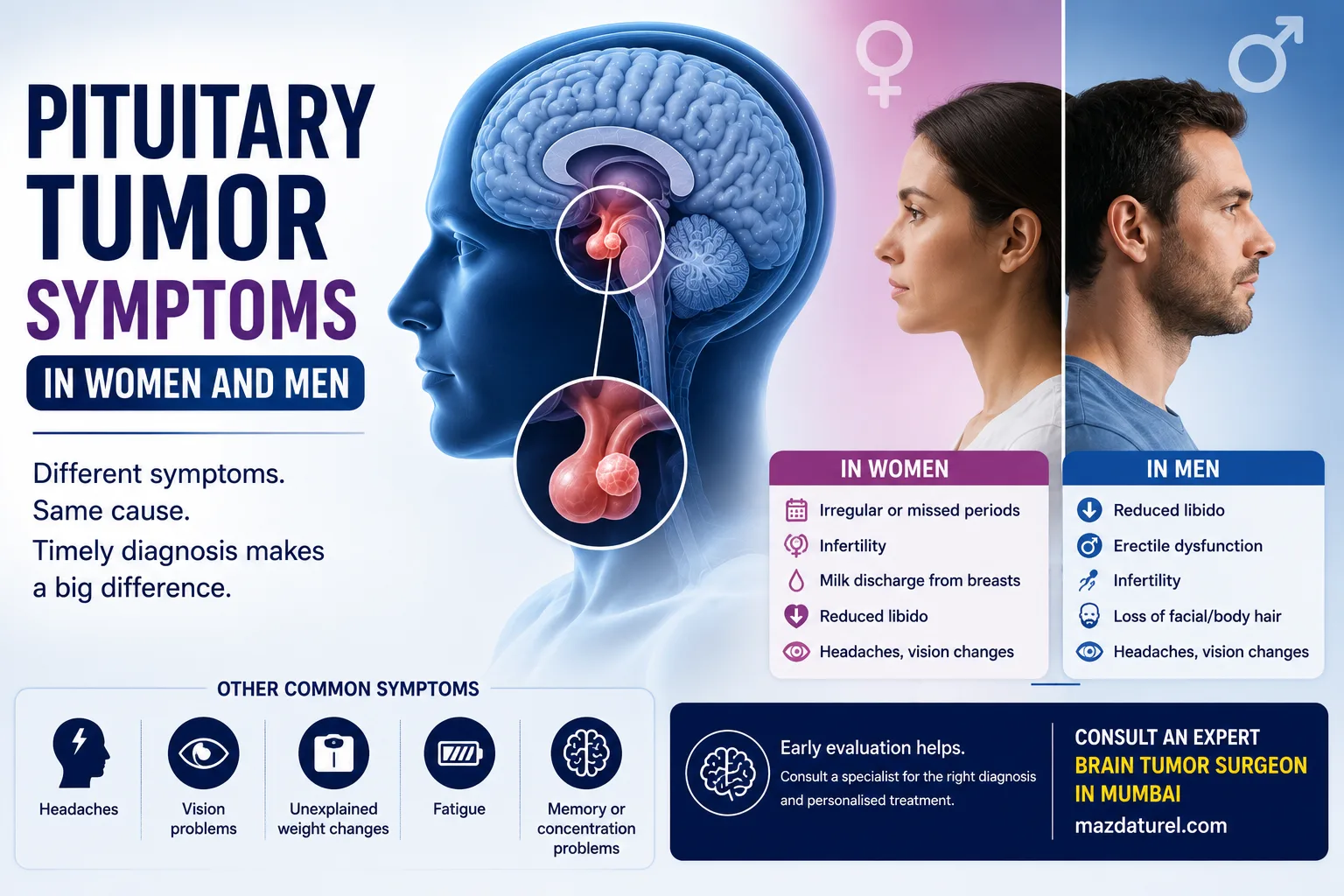
Pituitary tumors can affect much more than the head. Because the pituitary gland controls several hormones, pituitary tumor symptoms may include menstrual changes, fertility problems, sexual difficulties, unexplained body changes, headaches, or vision problems. The pattern can differ between women and men, especially when the tumor produces excess prolactin or interferes with normal sex hormone production.
Some pituitary tumors produce excessive hormones, while others cause symptoms mainly because they become large enough to press on the gland or nearby optic nerves. Some cause no noticeable symptoms at all.
Most pituitary tumors are pituitary adenomas and are not cancerous.
Recognising the symptom pattern can help guide appropriate hormonal testing, eye assessment, MRI scanning, and specialist review.
Pituitary Tumor Symptoms: Hormone Changes vs Pressure Symptoms
Pituitary tumor symptoms usually develop in two ways: the tumor may produce too much of a particular hormone, or a larger tumor may press on the normal pituitary gland and nearby structures. Hormonal symptoms depend on which hormone is affected, while pressure symptoms commonly include headache and changes in vision.
This distinction is useful because a very small functioning tumor may cause obvious hormonal problems despite producing little pressure on the brain.
In contrast, a nonfunctioning tumor may grow for some time before symptoms develop.
Possible general symptoms include:
- Headaches
- Blurred or reduced vision
- Loss of peripheral vision
- Reduced energy
- Changes in menstrual periods
- Reduced sex drive
- Fertility problems
- Erectile difficulties
- Changes in body hair
- Unexplained physical changes related to hormone excess
Not every headache, irregular period, fertility problem, or sexual symptom is caused by a pituitary tumor. These problems have many more common causes, so diagnosis requires proper medical assessment.
Pituitary Tumor Signs in Women
Pituitary tumor signs in women often become noticeable when the tumor interferes with prolactin, estrogen, or other reproductive hormones.
Irregular or Missing Periods
Menstrual periods may become irregular, lighter than usual, or stop completely.
This can occur when a prolactin-producing pituitary adenoma, known as a prolactinoma, raises prolactin levels. Excess prolactin can reduce the hormonal signals needed for normal menstrual cycles.
Large nonfunctioning tumors may also disrupt normal pituitary hormone production and cause menstrual changes.
Unexpected Breast Milk Production
Milk-like discharge from the breasts when someone is not pregnant or breastfeeding is called galactorrhea.
This can occur with elevated prolactin levels and is a recognised symptom of prolactinoma.
Medication and other medical conditions can also raise prolactin, so this symptom alone does not establish a tumor diagnosis.
Difficulty Becoming Pregnant
Changes in prolactin, LH, FSH, estrogen, or other pituitary-controlled hormones may interfere with ovulation and fertility.
A pituitary problem may therefore be considered when infertility occurs together with irregular periods, breast discharge, headaches, visual symptoms, or abnormal hormone test results.
Reduced Sex Drive or Vaginal Dryness
Lower estrogen levels may contribute to reduced libido or discomfort during sex.
These symptoms are not specific to pituitary disease but may form part of the hormonal picture when combined with other findings.
Pituitary Tumor Signs in Men
Pituitary tumor signs in men can sometimes remain unnoticed longer because there may be no early menstrual-type warning sign.
Erectile Dysfunction
Excess prolactin can reduce testosterone production and contribute to erectile problems.
Men with prolactinoma may also experience reduced sexual interest and fertility problems.
Reduced Sex Drive
Low testosterone resulting from pituitary dysfunction may cause a gradual decline in libido.
If this occurs with headaches, vision problems, loss of body hair, or unexplained fatigue, hormonal evaluation may be appropriate.
Reduced Facial or Body Hair
Pituitary hormone deficiency can reduce testosterone and lead to less facial or body hair.
NCI also lists loss of facial hair and erectile dysfunction among possible symptoms when pituitary function becomes reduced.
Breast Enlargement
Some men with elevated prolactin or reduced testosterone may develop breast tissue enlargement, called gynecomastia.
Again, this symptom has several possible causes and should not automatically be attributed to a pituitary tumor.
What Pituitary Tumor Hormone Symptoms Can Affect Both Women and Men?
Not all functioning pituitary tumors affect reproductive hormones.
Different tumor cells can produce different hormones, creating very different symptom patterns.
Too Much Growth Hormone
A growth hormone-producing pituitary adenoma can cause acromegaly in adults.
Changes often develop gradually and may include:
- Larger hands or feet
- Rings or shoes becoming tight
- Coarser facial features
- Prominent jaw or brow
- Increased sweating
- Joint pain
- Snoring or sleep apnoea
- Numbness or tingling in the hands
Growth hormone causes the liver to produce insulin-like growth factor 1, or IGF-1, which contributes to the tissue and bone changes seen in acromegaly.
Because these changes may happen over years, patients sometimes recognise them only after comparing older photographs or noticing changes in shoe or ring size.
Too Much ACTH
Some pituitary tumors produce excessive adrenocorticotropic hormone, or ACTH.
ACTH stimulates the adrenal glands to produce cortisol. Too much cortisol from a pituitary ACTH-producing tumor causes Cushing disease.
Possible features include:
- Weight gain around the trunk
- A rounder face
- Thin arms and legs
- Easy bruising
- Purple or pink stretch marks
- Muscle weakness
- Mood changes
- Acne
- Increased body or facial hair
- Menstrual changes
These symptoms can overlap with many more common medical conditions. Hormone testing is necessary before Cushing disease can be diagnosed.
Too Much Thyroid-Stimulating Hormone
Rare pituitary tumors can produce too much thyroid-stimulating hormone, or TSH.
This can result in features of an overactive thyroid, including:
- Palpitations
- Tremor
- Weight loss
- Difficulty sleeping
- Sweating
- Frequent bowel movements
What Happens When a Pituitary Tumor Causes Too Little Hormone?
A large pituitary tumor can compress normal pituitary tissue and reduce its ability to produce hormones. This is called hypopituitarism.
Symptoms depend on which hormones become deficient and may include:
- Persistent tiredness
- Weakness
- Reduced sex drive
- Menstrual changes
- Erectile dysfunction
- Loss of body hair
- Feeling unusually cold
- Unexplained changes in weight
Some hormone deficiencies can have significant health effects, which is why hormonal blood tests form an important part of pituitary tumor evaluation.
Why Can a Pituitary Tumor Affect Vision?
The pituitary gland lies close to the optic nerves and optic chiasm, where important visual nerve fibres cross.
As a tumor grows upward, it may compress these structures.
Possible visual symptoms include:
- Blurred vision
- Reduced peripheral vision
- Difficulty noticing objects at the sides
- Reduced overall vision
- Occasionally double vision
Visual field loss is a recognised presentation of pituitary tumors, and formal visual field testing may be used during diagnosis.
Visual loss may develop gradually enough that the patient initially adapts without noticing how much peripheral vision has changed.
Persistent or progressive unexplained vision changes deserve medical assessment.
How Are Pituitary Tumor Symptoms Investigated?
Symptoms alone cannot confirm a pituitary tumor.
Doctors usually combine hormonal assessment, neurological examination, eye testing, and imaging.
Hormone Blood Tests
Blood tests may measure hormones produced by the pituitary gland and the glands it controls.
Depending on the suspected condition, testing may include:
- Prolactin
- Cortisol and ACTH-related testing
- Growth hormone and IGF-1
- Thyroid hormones and TSH
- Testosterone or estrogen
- LH and FSH
Some patients require specialised dynamic hormone tests or urine testing.
MRI of the Pituitary
MRI with detailed views of the pituitary region is the main imaging method used to identify and assess pituitary tumors.
It helps doctors evaluate the tumor’s:
- Size
- Location
- Relationship with the optic nerves
- Extension into nearby structures
NCI identifies MRI as the imaging modality of choice for pituitary disorders.
Visual Field Examination
If a tumor lies close to the visual pathways, formal visual field testing may measure central and peripheral vision in each eye.
The results can help determine whether the tumor is affecting the optic pathways and can also be useful during follow-up.
How Are Pituitary Tumors Treated?
Treatment varies substantially according to the tumor type.
Possible approaches include:
- Observation with follow-up MRI and hormone testing
- Medication
- Surgery
- Radiation therapy
- A combination of treatments
Prolactinomas Often Start With Medication
Prolactin-producing tumors are unusual among brain and skull-base tumors because medicines are often the initial treatment.
Drug therapy can reduce prolactin production and may also shrink the tumor. Surgery may be considered when medication is ineffective, poorly tolerated, or unsuitable.
Other Functioning Tumors May Require Surgery
ACTH-, growth hormone-, and TSH-producing pituitary tumors may require surgery depending on the diagnosis and individual circumstances.
A common surgical route is transsphenoidal surgery, in which the surgeon reaches the pituitary region through the nose and sphenoid sinus rather than through a large opening in the skull.
Treatment planning may involve endocrinologists, neurosurgeons, ophthalmologists, radiation specialists, and other clinicians.
When Do Pituitary Symptoms Need Emergency Care?
Most pituitary tumors develop slowly, but a rare complication called pituitary apoplexy can occur when sudden bleeding or loss of blood supply affects the tumor.
Seek emergency medical care for a combination of symptoms such as:
- Sudden, extremely severe headache
- Sudden loss or major deterioration of vision
- New double vision
- Repeated vomiting
- Increasing confusion
- Unusual drowsiness or loss of consciousness
Pituitary apoplexy is a medical emergency and may require urgent hormone treatment and, in selected cases, surgery.
A sudden severe headache or abrupt vision change should never be assumed to be caused by a known pituitary tumor without urgent assessment, because other neurological emergencies can produce similar symptoms.
When Should You Consult a Neurosurgeon?
A neurosurgical review becomes relevant when MRI identifies a pituitary tumor that is compressing visual pathways, producing neurological symptoms, or may require surgical treatment.
A neurosurgeon may assess:
- Tumor size and location
- Relationship with the optic nerves
- Hormonal findings
- Visual field results
- Whether medication should be tried first
- Whether surgery is appropriate
- Whether observation is reasonable
- Potential risks and expected benefits of treatment
Patients requiring surgical assessment may seek evaluation from a brain tumor surgeon in Mumbai to review the scan and discuss whether a neurosurgical approach has a role.
Dr. Mazda K. Turel can review imaging alongside neurological, visual, and hormonal findings before discussing treatment options. Pituitary tumor care is often multidisciplinary, particularly when hormone abnormalities are present.
Conclusion
Pituitary tumor symptoms can look very different in women and men because the pituitary gland influences reproductive hormones, growth, thyroid function, cortisol production, and several other body systems. Women may notice menstrual or fertility changes, while men may develop erectile problems or reduced libido, but either sex can experience headaches, visual changes, fatigue, or symptoms of hormone excess.
These signs do not diagnose a pituitary tumor by themselves. Hormone tests, visual assessment, and a dedicated pituitary MRI are often needed to understand the cause.
Treatment is equally individual. Some tumors respond well to medication, some can be monitored, and others may require surgery or radiation. Sudden severe headache with abrupt vision changes or confusion requires urgent medical assessment because pituitary apoplexy is a medical emergency.
Frequently Asked Questions
What are the first pituitary tumor symptoms?
There is no single first symptom. Some patients develop hormonal changes such as irregular periods, breast discharge, erectile dysfunction, reduced libido, or changes in physical appearance. Others first notice headaches or reduced peripheral vision. Some pituitary tumors are found incidentally before they cause any symptoms.
What are common pituitary tumor signs in women?
Possible pituitary tumor signs in women include irregular or absent periods, difficulty becoming pregnant, milky breast discharge outside pregnancy or breastfeeding, reduced sex drive, and vaginal dryness. ACTH- or growth hormone-producing tumors can cause different physical changes. These symptoms have many other possible causes, so hormonal testing and medical evaluation are necessary.
What are common pituitary tumor signs in men?
Men may develop reduced libido, erectile dysfunction, fertility problems, decreased facial or body hair, or breast enlargement, particularly when prolactin is elevated or testosterone production is reduced. Large tumors may also cause headaches and vision problems. Men can also develop hormone-related symptoms from ACTH, growth hormone, or TSH-producing tumors.
Can a pituitary tumor cause weight gain?
Yes, certain pituitary disorders can contribute to weight changes. An ACTH-producing tumor can cause Cushing disease, which may lead to weight gain concentrated around the trunk and face. Hormone deficiencies can also affect body weight and energy. Weight gain alone is extremely common and does not indicate a pituitary tumor.
Can a pituitary tumor affect fertility?
Yes. Pituitary tumors can interfere with hormones involved in ovulation, menstrual cycles, testosterone production, and sperm formation. Prolactinomas are a recognised cause of reproductive and fertility symptoms in both women and men. Whether fertility improves with treatment depends on the underlying hormonal problem and other individual factors.
Does every pituitary tumor require surgery?
No. Treatment depends on the tumor type, hormone production, size, symptoms, visual effects, and growth. Prolactinomas are commonly treated first with medication. Some small nonfunctioning tumors can be monitored. Surgery is more likely when a tumor causes visual compression, produces certain hormones, continues to grow, or cannot be adequately managed with medication.
Can a pituitary tumor be present without symptoms?
Yes. Some pituitary tumors cause no noticeable symptoms and are discovered during brain imaging performed for another reason. Whether such a tumor needs treatment depends on its size, hormonal activity, relationship with nearby structures, and whether it changes over time.